What dessert is actually for at a fundraiser
Every other event on this site is planned around what guests will enjoy. A fundraiser is planned around what guests will do — and every dollar spent on the room is a dollar that did not go to the cause. Dessert has to justify itself operationally, not aesthetically.
Fortunately it does, in three specific ways:
- It moves people past the auction. A silent auction only works if guests circulate. A dessert table placed at the far end of the auction tables is the cheapest crowd-routing tool available.
- It fills the gaps in a programme. Between the speeches and the ask, between the ask and the results, there is always a stretch where the room has nothing to do. That is where people check their phones and start thinking about the drive home.
- It holds the room after the ask. The moment after a donation appeal is when a fundraiser either keeps its momentum or empties. Something worth staying for is worth more than it costs.
Plan the table around those jobs and the budget question mostly answers itself: spend on the things that keep people in the room, not on the things that photograph well.
Non-profit pricing, and what to put in the request
We offer a discount on dessert catering for registered non-profits and community fundraisers. It is not automatic — mention the organisation in the quote request and the appropriate pricing tier gets applied to the proposal.
Three other things belong in that first message, because each one changes what we would suggest:
- The guest count and the room. One long table or several stations is a layout decision, and it depends on the space.
- The programme. Not just the start time — when the room sits, when it stands, when the auction closes.
- Dietary needs across the guest list. Community events tend to have the widest range of any event type, and it is much easier to plan a menu around restrictions than to remove items on the day.
Where a tight budget goes furthest
Two adjustments do most of the work, and neither one makes the table look cheap.
Fewer varieties, more of each. Most items carry a minimum of 10 pieces. Six varieties across 200 guests looks abundant; twelve varieties across the same 200 looks thin, because each one is present in small numbers. Repetition reads as generous — scarcity reads as running out.
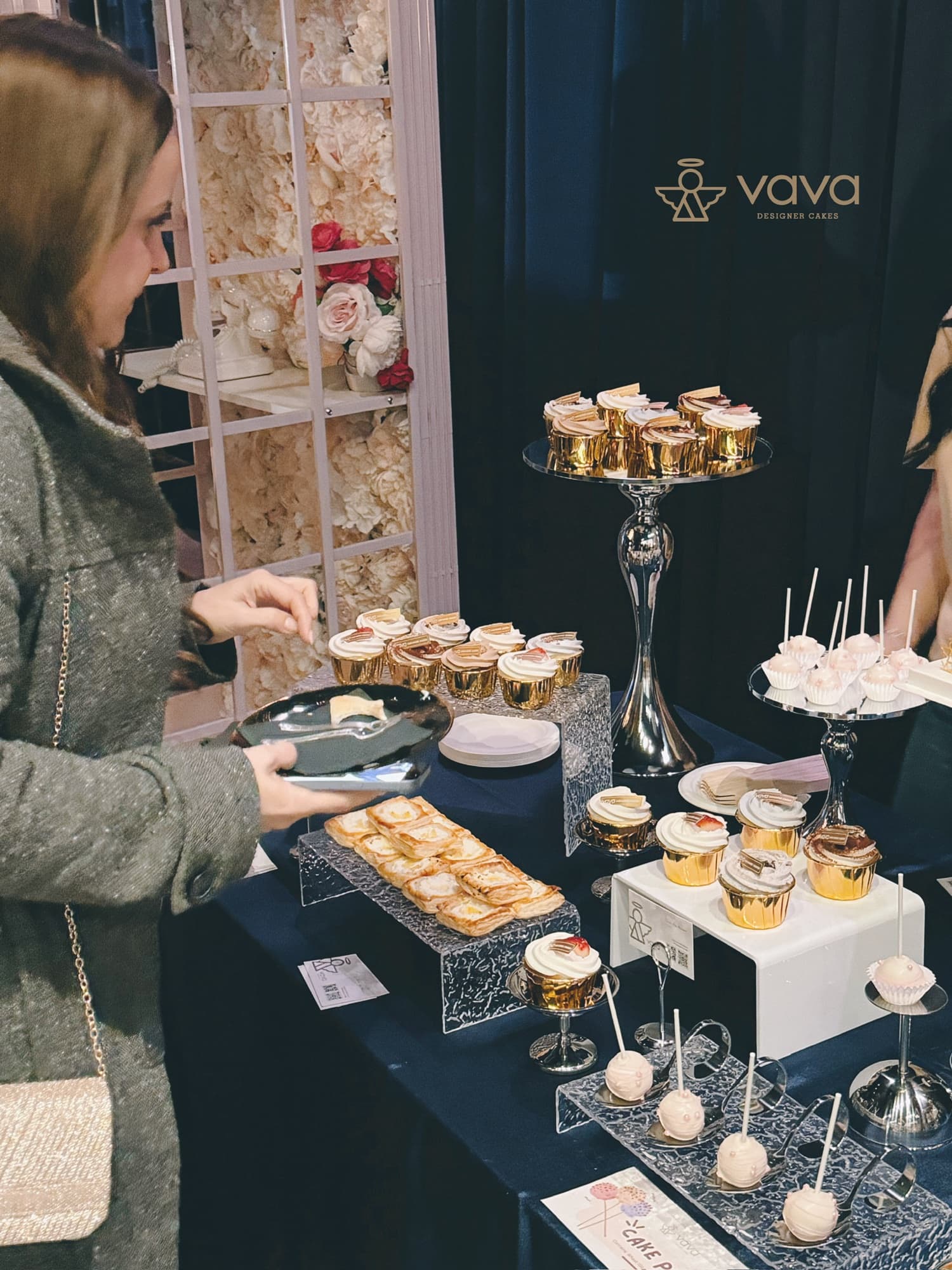
Platters over full styling. A styled table includes on-site design, props, and a team for 60 to 90 minutes before guests. At a fundraiser, that spend is often better redirected into more dessert for more people. The exception is a gala where the room itself is part of the fundraising pitch.
| Where it helps | Where it does not | |
|---|---|---|
| Styled table | Galas, donor receptions, anything photographed for a campaign | Church socials, festivals, volunteer nights |
| Platters | Most community fundraisers — more dessert per dollar | Events where the room is part of the ask |
| Fewer varieties | Almost always, above 100 guests | Small donor dinners, where variety is the point |
Scaling from 50 to 500
We scale from 50 to 500 or more guests, and the shape of the order changes on the way up rather than just the size.
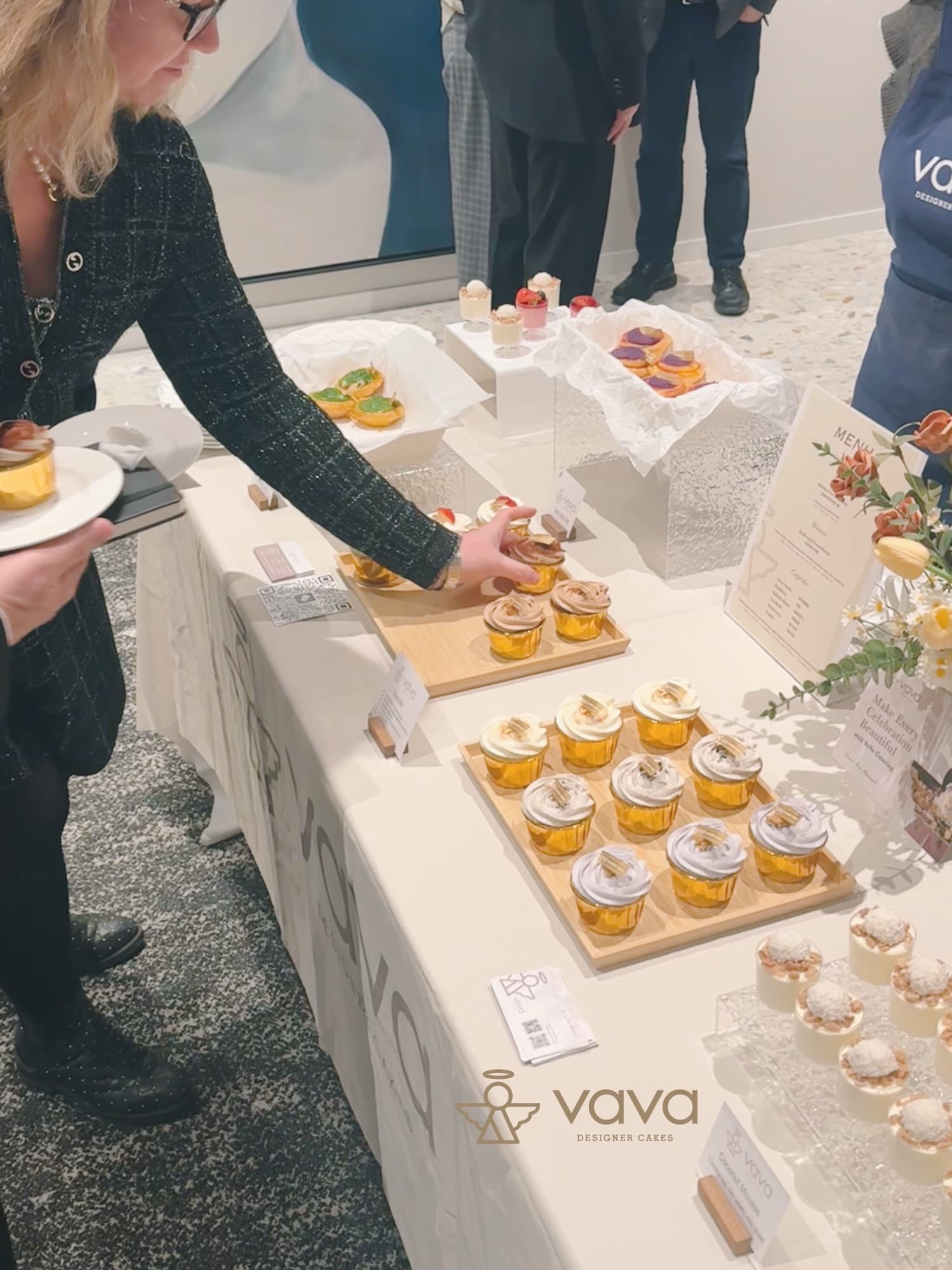
Above roughly 150 guests, one long table stops being the right answer. Two or three smaller stations shorten the queue, let you place dessert where you actually want people standing, and — the part that matters visually — each station still looks full late in the evening, when a single picked-over table would not.
Plan two to three pieces per guest regardless of scale. What changes is the distribution, not the maths.
Getting a proposal
Send the date, guest count, the organisation's name, and the programme if you have one. See community event catering for what a full setup includes, or dessert catering for the platter and drop-off formats that most fundraisers end up choosing.