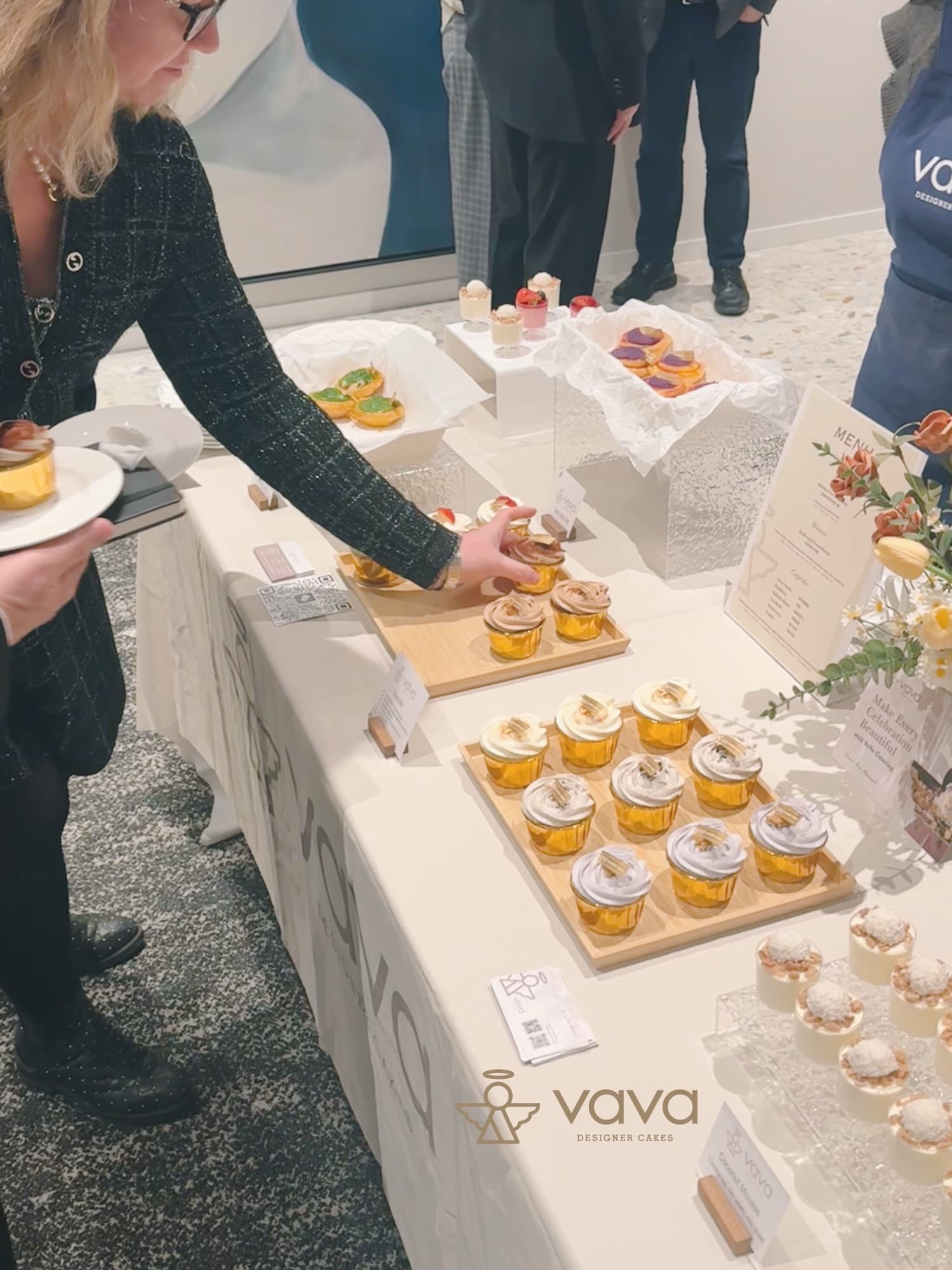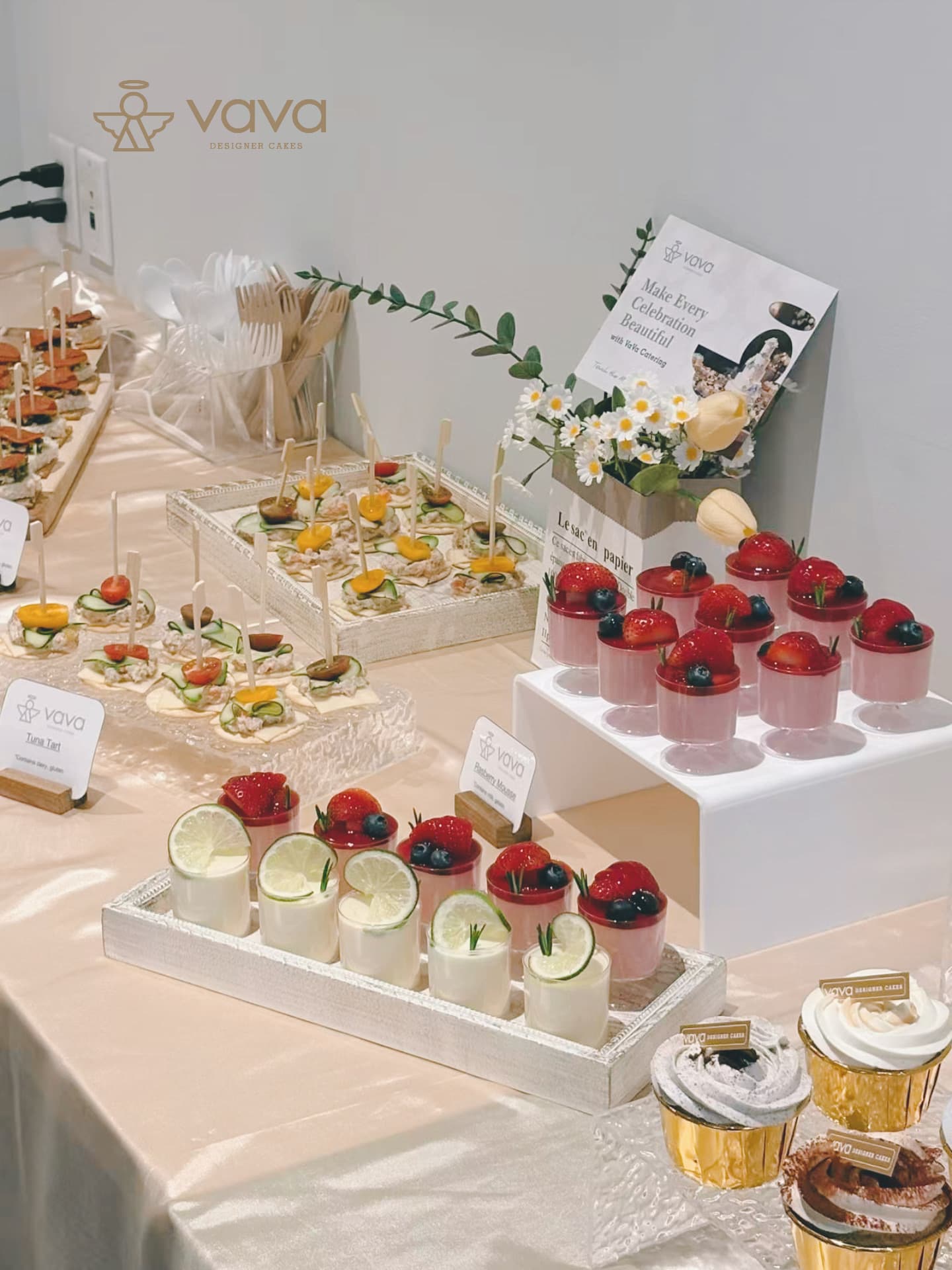
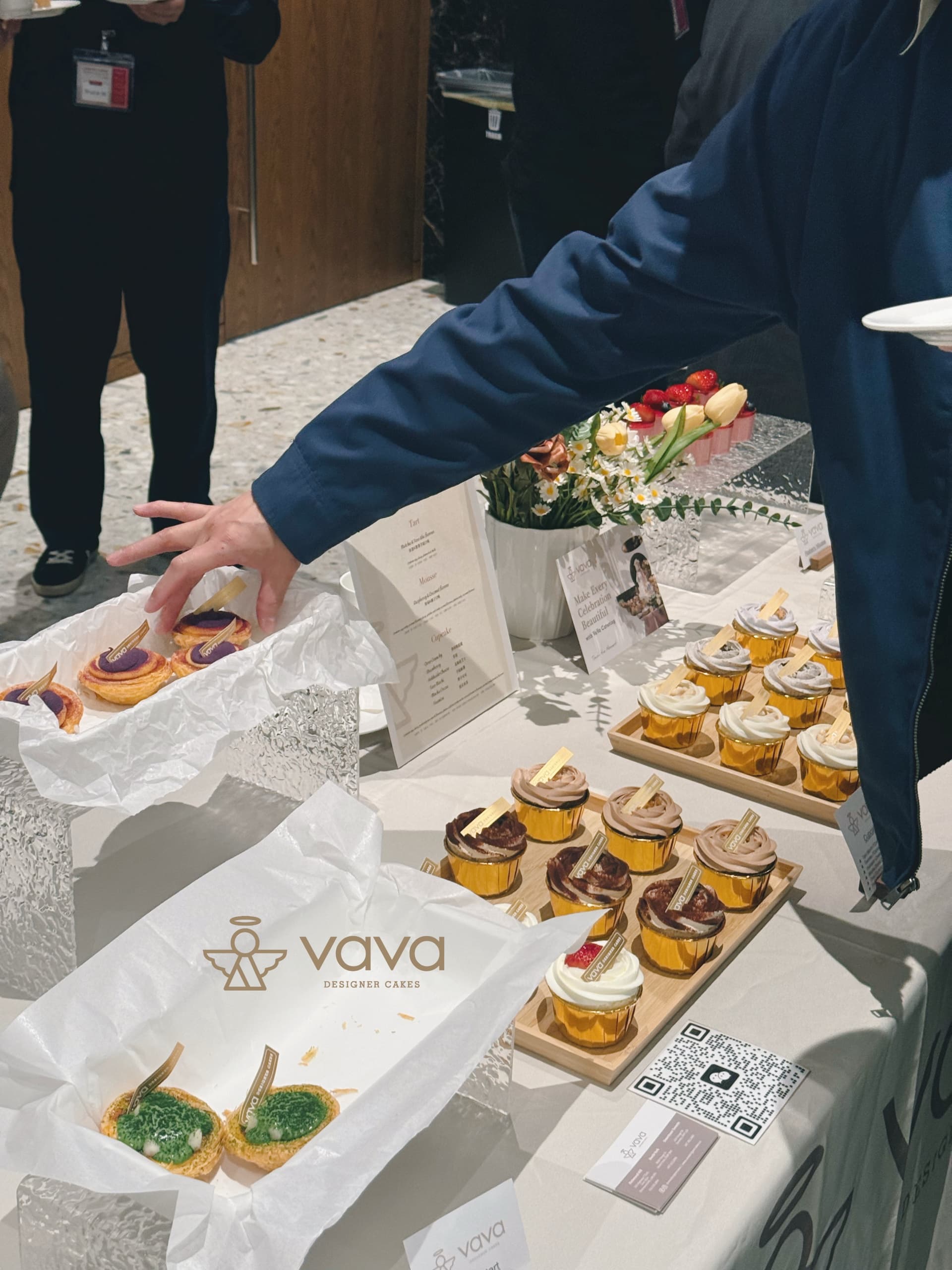
How long you actually need
Lead time depends entirely on what you are ordering, and the range across order types is wider than most people expect — from the same week to half a year.
| What you are ordering | Comfortable | Still possible |
|---|---|---|
| Dessert platters and trays | 1–2 weeks | Often the same week |
| Office tray delivery | 3–5 business days | Ask — depends on the day |
| Styled dessert table for an office event | 2–3 weeks | 2 weeks at a push |
| Styled dessert table, party or shower | 4–8 weeks | 3–4 weeks |
| Wedding dessert table | 3–6 months | 6–8 weeks, off-peak |
The pattern: the more of the order that is production, the shorter the notice; the more of it is design, the longer. A tray of desserts is a kitchen job. A styled table is a kitchen job plus colour-matching, prop sourcing, signage, and a team on-site.
What the extra weeks actually buy
The gap between a same-week tray and a six-week table is not caution. It is a list of things that have to happen in sequence:
- Colour matching. Building a dessert palette around your event's colours means deciding which items can carry which colours, which is a menu decision before it is a production one.
- Props. Risers, linens, stands, and signage are sourced and reserved for your date, then collected afterwards. That is a scheduling commitment, not a shelf.
- Production capacity. Desserts are made close to the event, so what matters is holding the slot rather than starting early.
- The on-site window. Someone has to be at your venue 60 to 90 minutes before guests, which is a person booked for a specific hour.
None of that is negotiable down to a few days, which is why a styled table has a floor that a tray does not.
May through October changes the maths
Peak wedding season runs May through October in the GTA, and it is the one stretch where the comfortable range becomes the actual range. Booking a wedding dessert table for a June Saturday six weeks out is a different proposition than the same request for a February one.
If your date sits in that window, treat the top of the range as the target rather than the fallback. It also buys the room to do things in a sensible order — tasting, then menu, then final numbers — instead of compressing all three into the last fortnight.
The three dates that are not your event date
Most booking timelines only track one date. There are actually four, and the other three are the ones that catch people out.
- The deposit. A 50% deposit confirms and reserves your date. Until it lands, the date is not held — a quote is not a booking, which is the single most common misunderstanding in this whole process.
- The 30-day line. Cancelling more than 30 days out refunds the deposit minus a small administrative fee. Inside 30 days it is non-refundable, because planning, sourcing, and scheduling have already happened. If there is any real chance the event moves, that line is worth knowing before you book, not after.
- Final numbers, 7 to 10 days out. This is when portions and pricing are confirmed. Small changes before it are routine; a large swing may need a revised proposal.
Working backwards from those, the practical minimum for a styled table is not "four weeks" — it is four weeks plus the time it takes you to decide, get a proposal back, and pay a deposit. That decision stretch is usually longer than people budget for.
When late still works
Being past the comfortable range is not the same as being out of options, and the honest answer depends on what you will flex.
- Flex the format. A generous platter spread delivered on short notice beats a styled table that cannot be built properly. This is the substitution that rescues most late requests.
- Flex the variety. Fewer dessert types is faster than more, and a table with six well-executed items does not look rushed.
- Do not flex the setup window. The 60-to-90-minute on-site block is the one thing that cannot be compressed without the table showing it.
The rule we would give anyone: ask rather than assume. A date that looks impossible on paper is sometimes simply free, and the only cost of asking is one email.
Starting
Send the date, an estimated guest count, and the type of event. That is enough for a proposal, and a proposal is enough to decide. See how it works for the full sequence, or dessert catering for what each format includes and the notice each one needs.