How Many Cakes Do I Need for 100 Guests?
For 100 guests, you need roughly 100 cake servings — which typically means a 3-tier cake (6"+9"+12" rounds) or two separate 2-tier cakes, primarily because standard dessert-portion sizing runs 1 inch wide by 2 inches deep per slice. That math holds whether you're planning a wedding in Vaughan or a milestone birthday in Scarborough. The real variable isn't the tier count — it's whether cake is your only dessert or one item on a fuller colour-matched dessert table.
How Much Cake Do I Need for 100 Guests? The Serving Math
A standalone wedding or celebration cake for 100 guests should yield at least 100 portions — most bakers cut dessert portions at 1"×2" per slice from a round tier. A classic 3-tier round configuration (6", 9", and 12" tiers) produces approximately 100–110 servings. If cake shares the table with other desserts, 60–70 cake portions is usually enough, since guests self-select across multiple items.
| Cake Configuration | Approximate Servings | Best For | What Moves the Quote |
|---|---|---|---|
| 2-tier round (8"+10") | 50–65 | Cake + large dessert spread | Flavour complexity, finish type, delivery zone |
| 3-tier round (6"+9"+12") | 95–115 | Cake as the primary dessert | Tier count, sugar-flower detail, custom colour work |
| 2 separate 2-tier cakes | 100–130 | Dual flavour offering, large layouts | Two setup locations, separate design hours |
| Half sheet cake (13"×18") | 48–54 | Casual birthdays, office events | Frosting style, custom printing vs. hand-piping |
| Full sheet cake (18"×26") | 96–108 | Large birthday or corporate event | Decoration complexity, fondant vs. buttercream |
Honestly, the sheet cake vs. tiered cake decision is more about presentation than portion count. A full sheet cake feeds 100 just as reliably as a 3-tier round — but it reads very differently on a styled wedding dessert table.
What Kind of Cake Can Serve 100 People?
Three cake formats reliably serve 100 guests: a 3-tier tiered round, a full sheet cake, or a combination of smaller tiers paired with a dessert spread. Each format serves 100 portions but differs sharply in visual scale, cutting logistics, and how it integrates with surrounding desserts. The choice usually comes down to venue style and whether a cutting ceremony matters to the couple or host.
- 3-tier round cake — the most photogenic; requires a cake stand and a designated cutting station
- Full sheet cake — easiest to portion quickly; suits banquet-hall service where speed matters
- Two 2-tier cakes — great for offering 2 flavours; works well when the room has two focal points
- Tiered cake + dessert table combo — reduces cake size to 60–70 servings; the rest of the guest count is covered by minis, tarts, and mousse cups
- Slab/quarter-sheet stack — a back-of-house efficiency move; display cake at the front, slice from sheet cakes behind the scenes
Does a Dessert Table Change How Much Cake You Need?
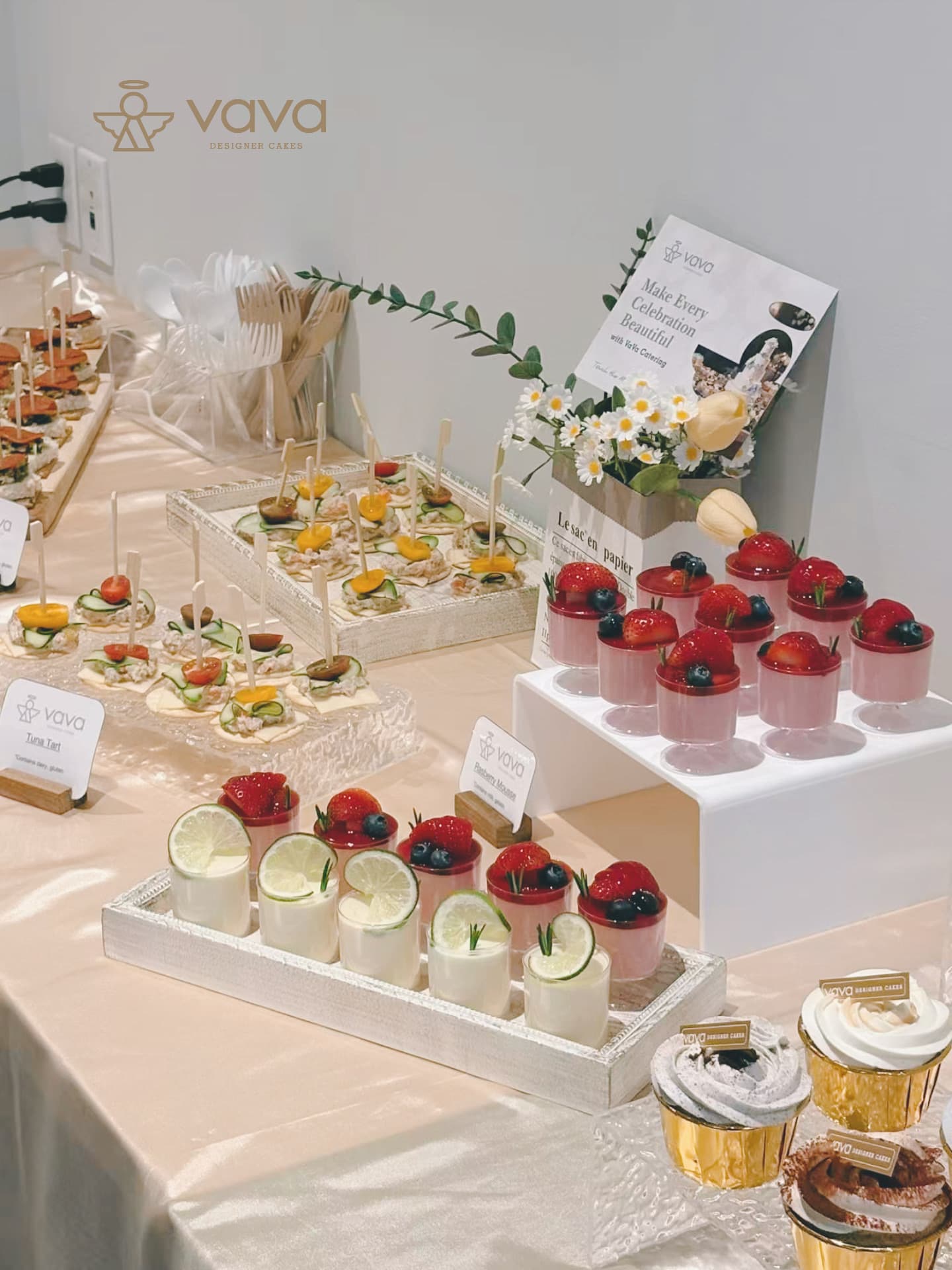
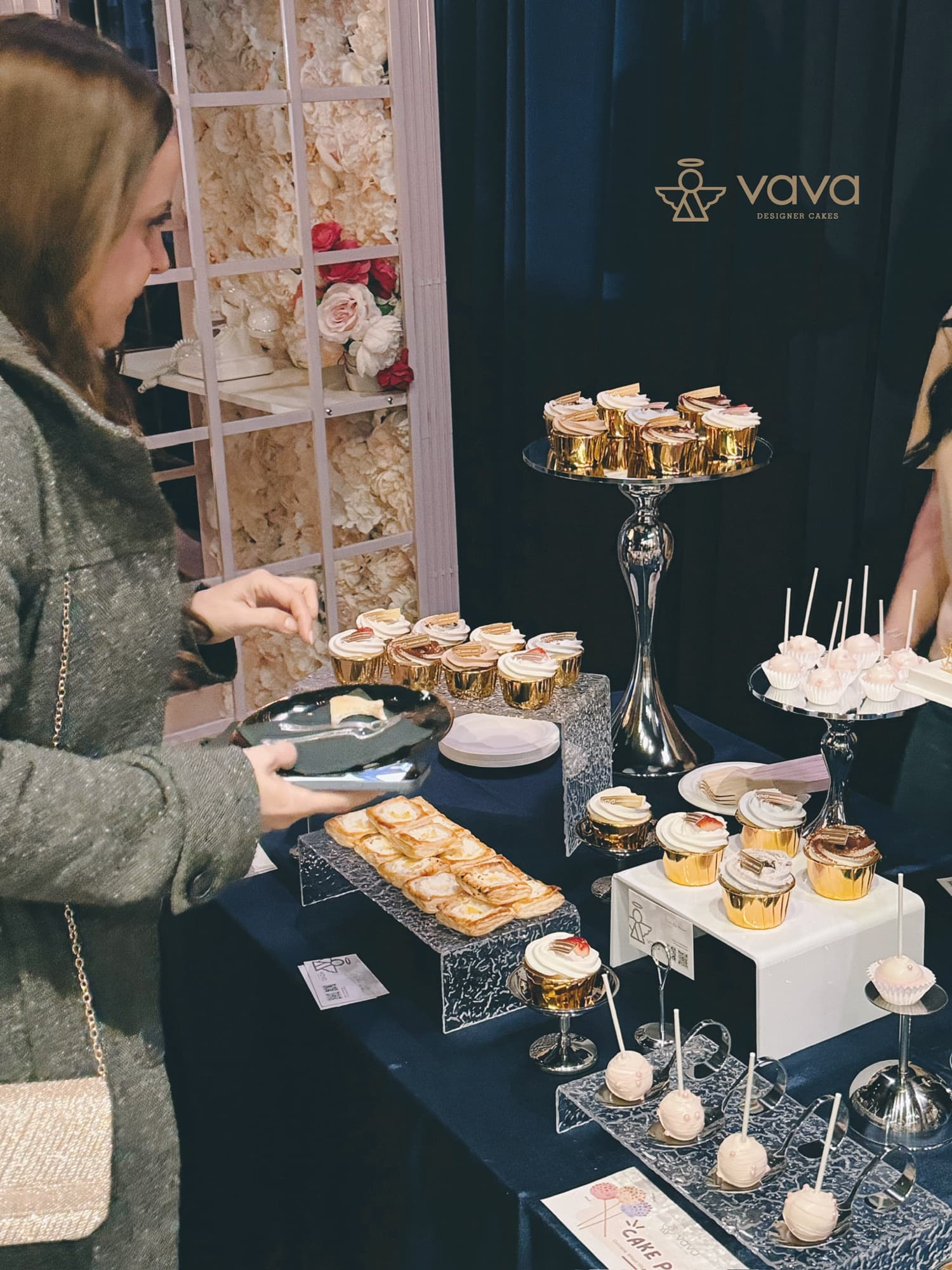
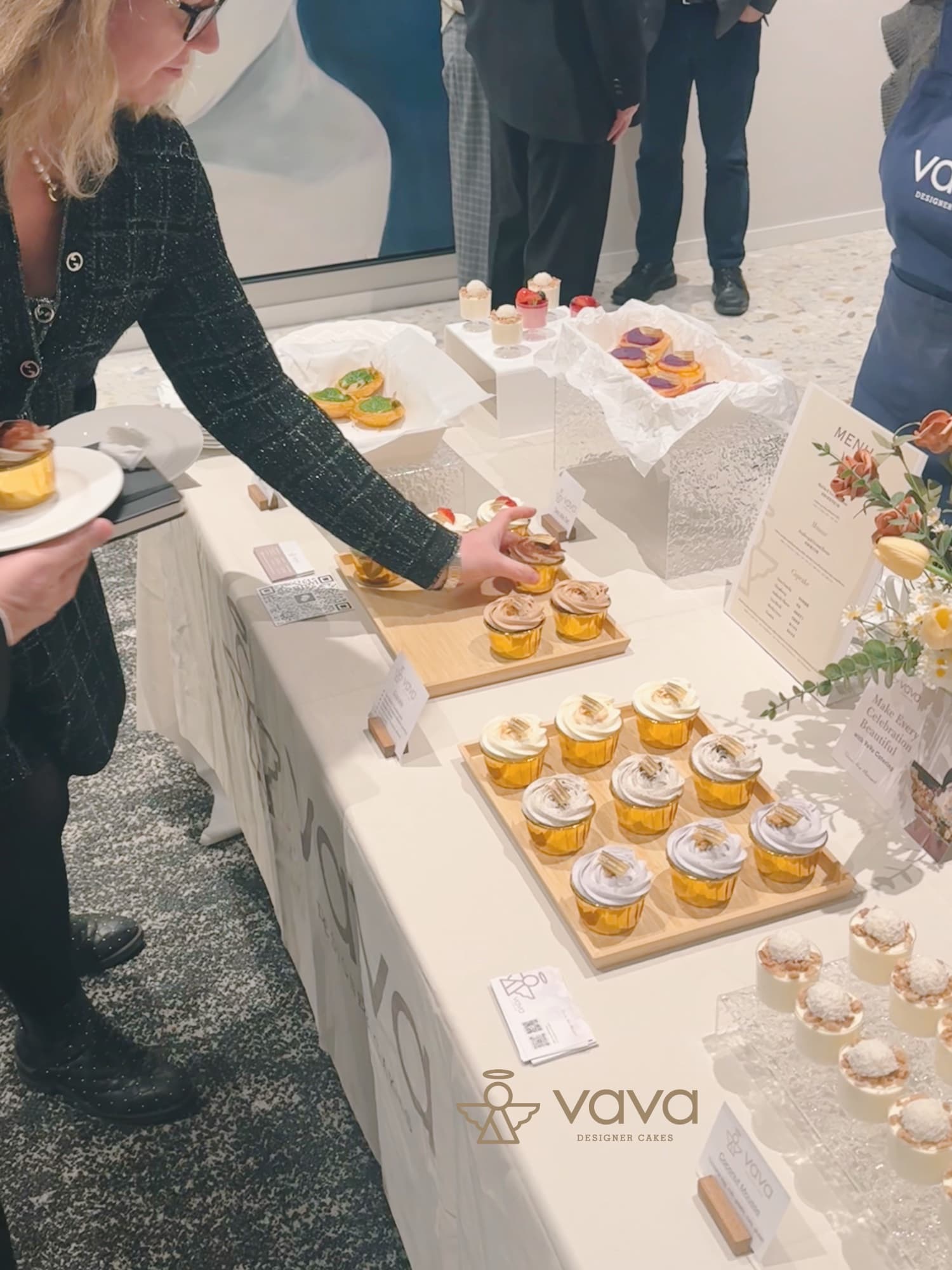
Yes — significantly. When a full custom dessert table is part of the event, most guests graze across 4–6 dessert types before reaching the cake. Our experience across GTA events consistently shows that a cake sized for 60–70 servings is sufficient when the table also carries mini chiffon cakes, macarons, tarts, and mousse cups. That's a meaningful reduction from the 100-serving standalone rule.
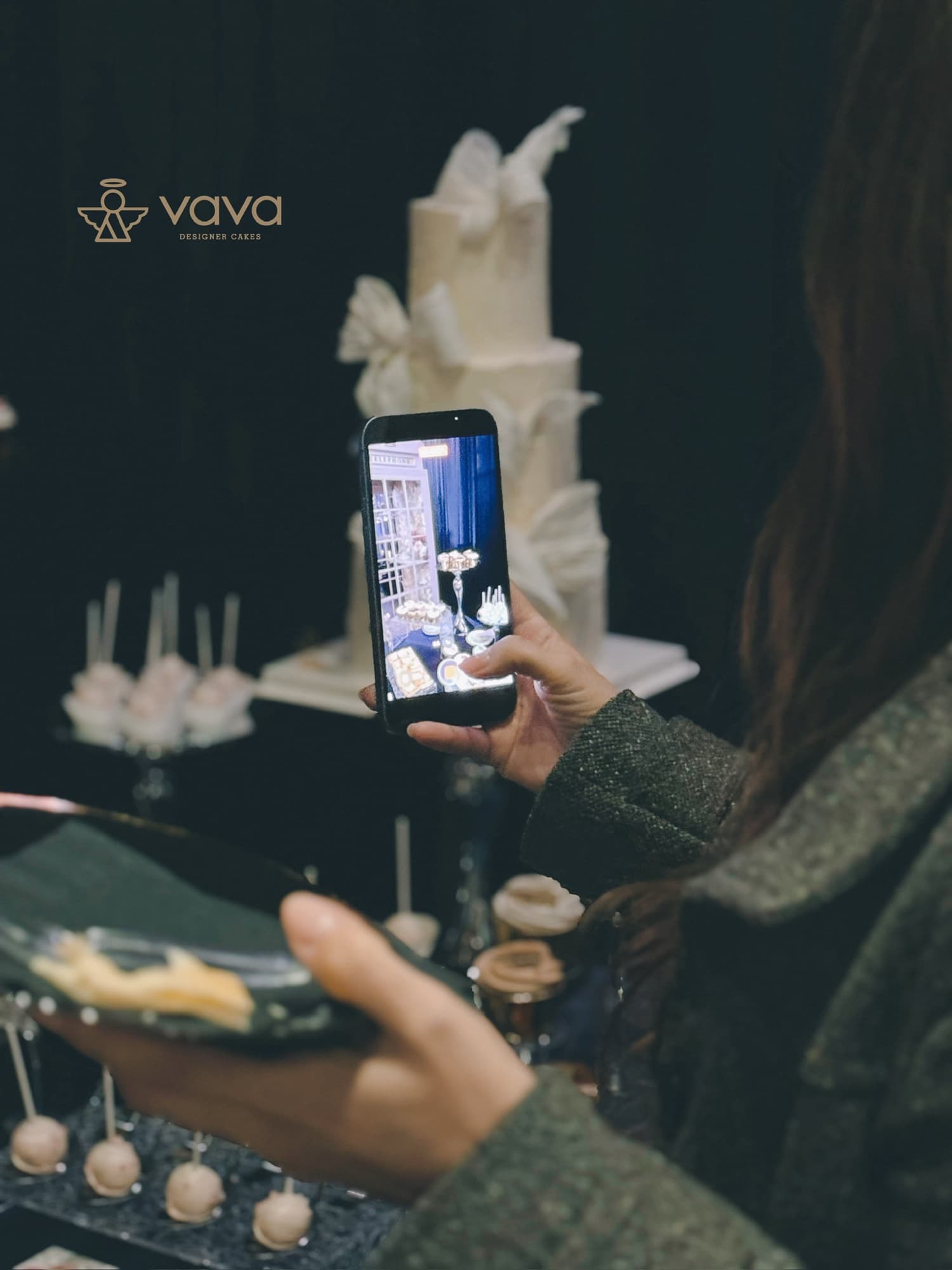
Here's the thing: the dessert table doesn't replace the cake's ceremonial role. The cutting moment still happens. The cake still needs to look proportional to the room. But you're no longer relying on it as the sole source of dessert, which means you can invest in taller, more detailed tiers rather than wider, plainer ones built purely for yield.
At Vava Dessert Tables, we pair our tables with VaVa Designer Cakes so both the cake and the spread are designed to the same event palette. The result is a cohesive moment — not a cake on one side of the room and a separate dessert station that looks like it came from a different event entirely.
How Much Wedding Cake Do I Need for 100 Guests?
A wedding cake for 100 guests should yield at least 100 dessert-sized portions if it's the primary sweet, or 60–70 portions if it's paired with a full dessert spread. Most wedding bakers size on a 1"×2" slice — that's the industry standard for a dessert course, not a generous dinner-plate slice. If your caterer is cutting at 1.5" wide, a 3-tier round may only yield 70–80 pieces, so confirm the cutting spec with your venue.
- Confirm cutting size with your venue or caterer before finalising tier count
- Add a 10% buffer — order for 110 guests if your headcount is 100; late RSVPs happen
- Account for the top tier — many couples preserve it for their first anniversary, which removes 12–20 servings from the available count
- Factor in children — kids often share a slice or skip cake; a guest list that's 20% children effectively reduces your needed yield
- Ask about a kitchen cake — a plain, unfrosted slab baked in the same flavour as your display cake, sliced out of sight, is a common way to hit 100 servings without scaling up the decorative tiers
What Builds a Cake Quote for 100 Guests?
Cake quotes for a 100-guest event are built in layers — and understanding those layers is more useful than any single number. Three factors compound the total: the cake itself (tier count, flavour, serving yield), the styling and design work (sugar flowers, custom colour-matching, hand-painted detail), and the logistics (delivery, setup, stand rental, on-site cutting service).
- Tier count and yield — more tiers = more labour, more structure, higher base
- Flavour complexity — a single-flavour vanilla sponge costs less than a 3-flavour build with fresh-fruit fillings on each tier
- Finish type — smooth fondant, textured buttercream, and hand-piped lace all carry different labour hours
- Sugar flowers and custom décor — individually sculpted blooms can add significant time; silk alternatives reduce this
- Delivery and setup — Richmond Hill to downtown Toronto is a different logistics equation than a local Markham venue
- On-site cutting service — some couples book a cake-cutting attendant; others leave it to the venue
If you're also booking a dessert catering package alongside the cake, the combined quote reflects shared delivery and setup — which is often more efficient than sourcing each separately. Reach out to us and we'll map out what a combined cake-and-table moment looks like for your guest count and venue.
Things to Know Before You Order: Caveats and Common Mistakes
Ordering cake for 100 guests trips people up in predictable ways. The most common mistake is conflating servings on the baker's size chart with actual portions your venue will cut. Baker charts assume a precise 1"×2" slice. Busy banquet servers often cut wider. Build in a 10% buffer — it costs less than running short.
Lead time matters more than most people expect. In peak GTA wedding season (May through October), custom tiered cakes from reputable bakers book out 3–6 months in advance. A birthday cake for a Saturday in July? Lock that in by April. For corporate events in November and December, the holiday rush compresses availability fast — we see clients scrambling for December dates as early as September.
One more thing: dietary requirements now affect yield more than they used to. If 15 of your 100 guests are gluten-free, a separate gluten-free cake (or a dedicated gluten-free tier) is worth considering — sharing a cutting board and server introduces cross-contact risk. A sweet table with clearly labelled gluten-free items alongside the main cake is a cleaner solution for mixed-dietary guest lists.
Finally, venue logistics: check whether your venue has a cake-cutting fee, whether they provide a cake stand, and whether they have refrigerated storage if your cake has fresh-cream fillings. A mousse-filled chiffon cake cannot sit at room temperature for 4 hours without compromising texture — this is a real constraint that affects both cake design and table-refresh timing.
Frequently Asked Questions
- What is the 1-2-3-4 cake rule?
- The 1-2-3-4 cake rule is a classic baking ratio: 1 cup butter, 2 cups sugar, 3 cups flour, 4 eggs. It produces a reliable, sturdy vanilla layer cake — historically popular because the proportions are easy to scale. For 100 guests, you'd multiply this base recipe many times over, which is why tiered cakes are baked in separate layers rather than one enormous batter.
- How much would a 2-tier cake for 100 guests cost?
- A 2-tier cake typically yields 50–65 servings, which is not enough for 100 guests as a standalone dessert. If you're pairing it with a full dessert table, a 2-tier cake can work for the cutting moment. The quote is built from tier size, flavour, finish type, design complexity, and delivery logistics — there's no single flat figure.
- What kind of cake can serve 100 people?
- A 3-tier round cake (6"+9"+12"), a full sheet cake (18"×26"), or two separate 2-tier cakes each reliably serve 100 guests. The right choice depends on your event style, venue layout, and whether you want a cutting ceremony. Pairing a smaller tiered cake with a dessert table is the most popular approach we see at GTA events.
- Will a half sheet cake feed 50 people?
- Yes — a half sheet cake (13"×18") yields approximately 48–54 standard dessert portions when cut at 2"×2" squares. It's a practical choice for casual birthdays or office celebrations where presentation is secondary to efficiency. For a 100-guest event, you'd need two half sheets, or one full sheet cake.
- (common question we hear) How far in advance should I order a cake for 100 guests?
- For a custom tiered cake in the GTA, book at least 8–12 weeks ahead for off-peak dates, and 3–6 months ahead for May–October weekends. The more design detail involved — sugar flowers, hand-painting, custom colour-matching — the more lead time your baker needs. Last-minute orders under 4 weeks are rarely possible for fully custom work.