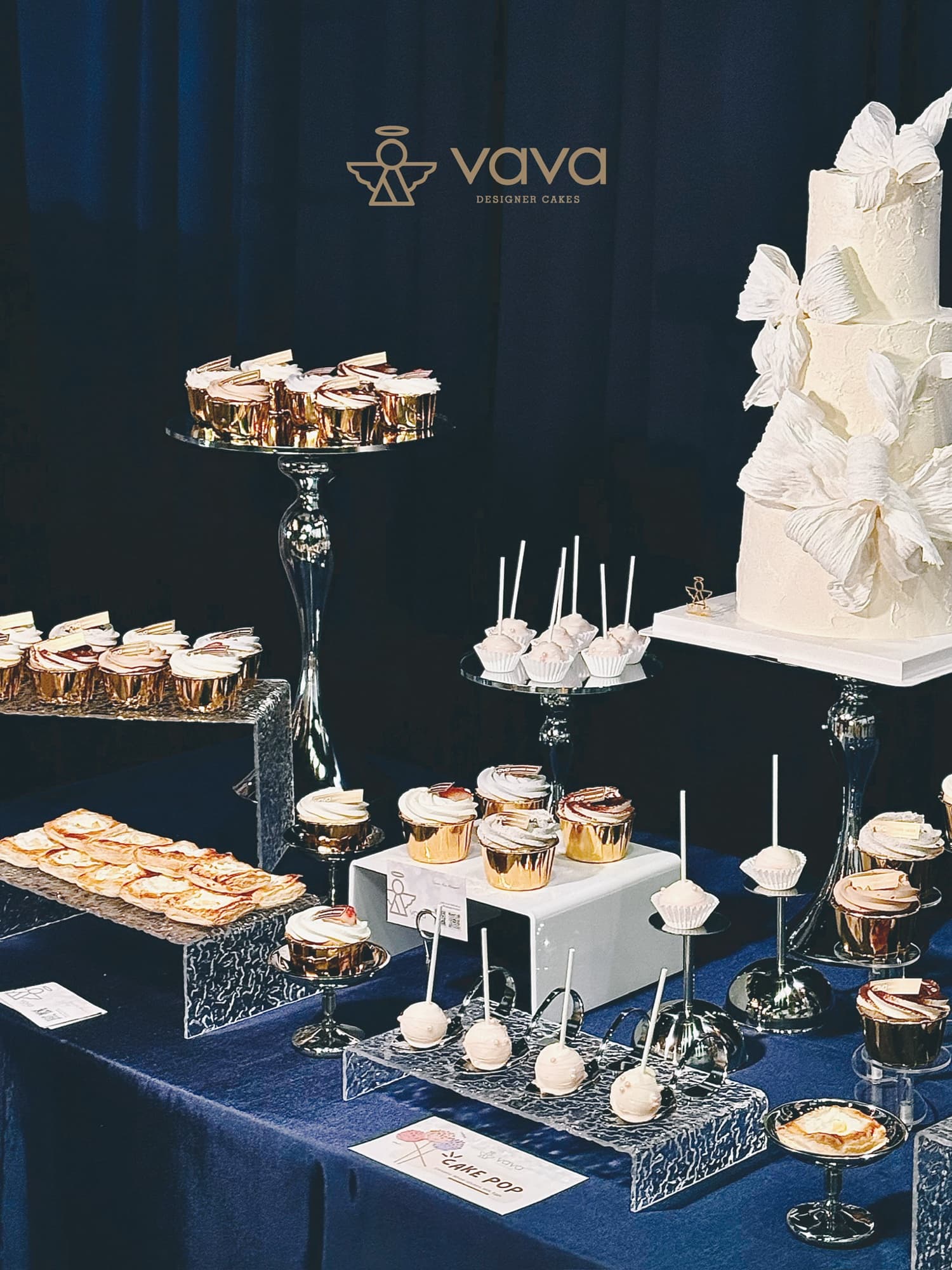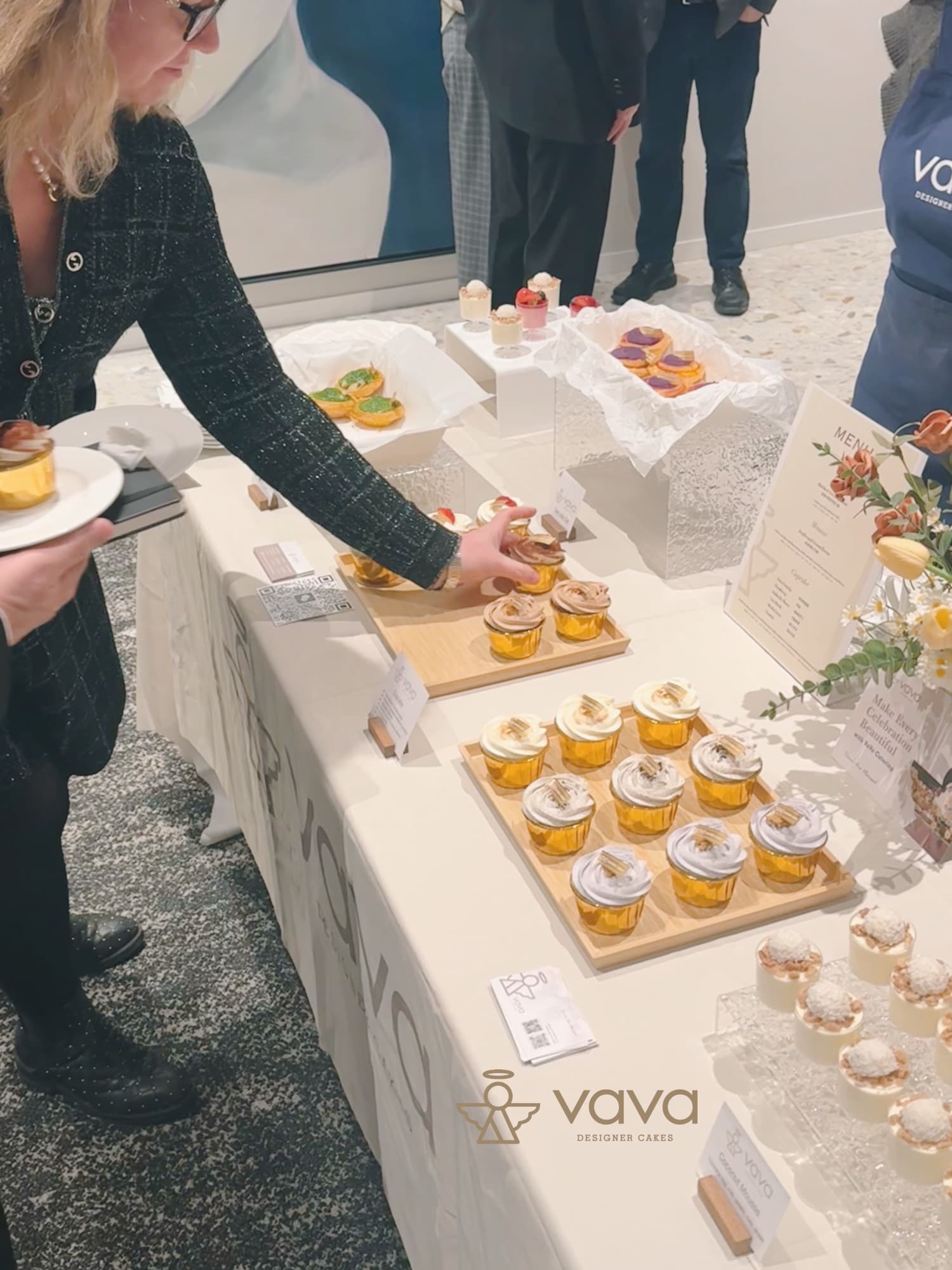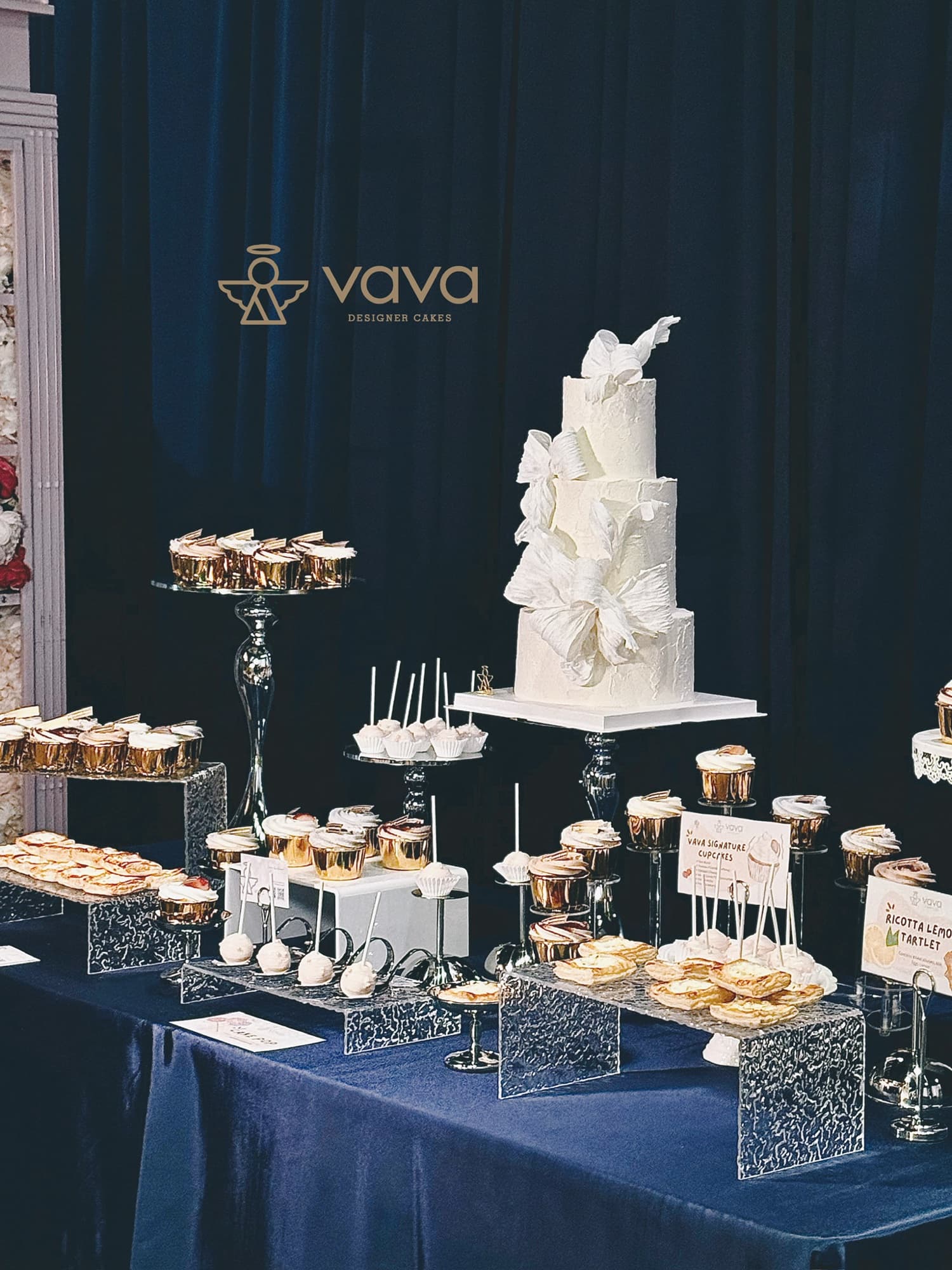
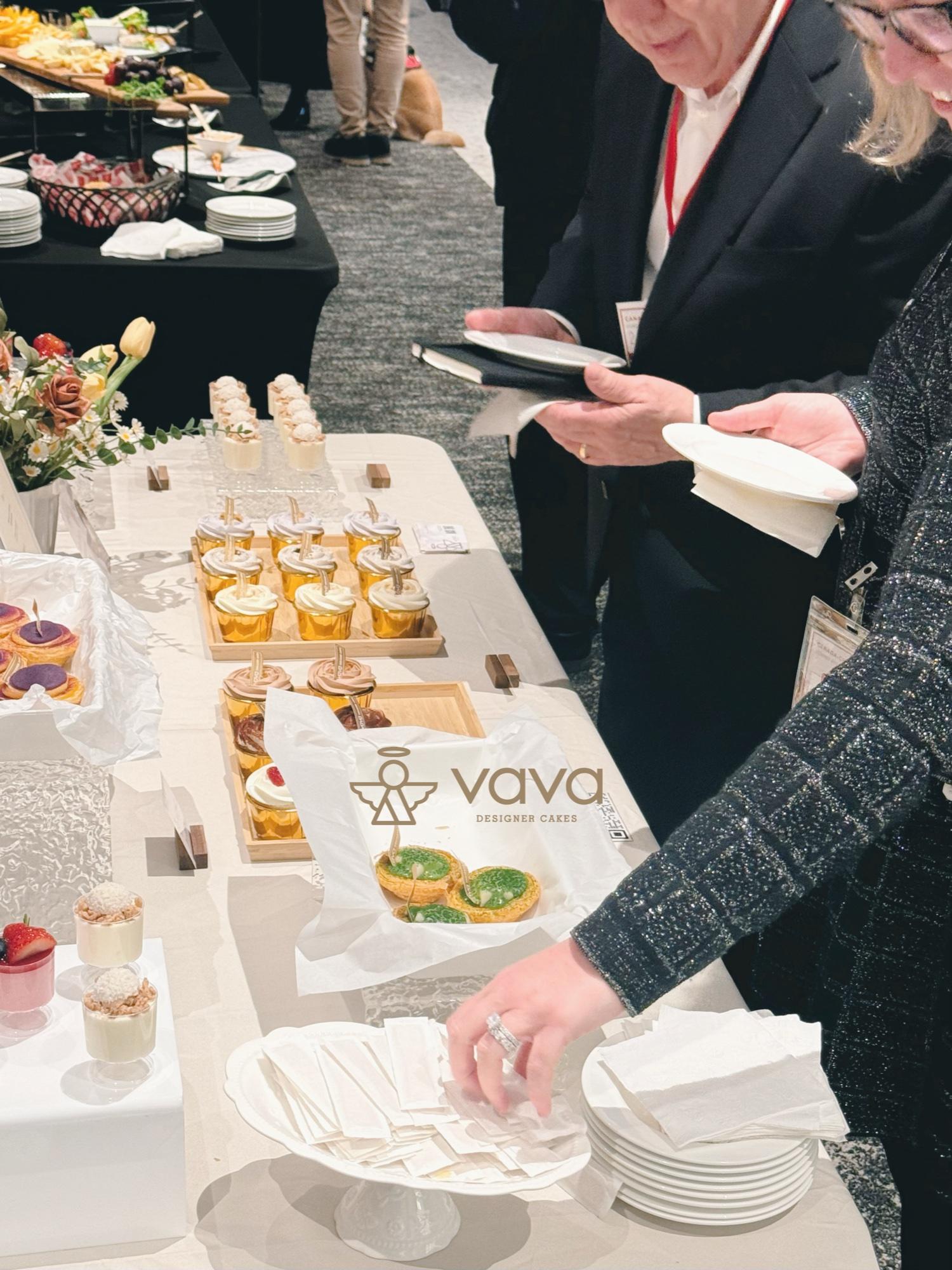
How Many Mini Desserts Per Person?
Plan on 3 to 5 mini desserts per person for most events, primarily because guests rarely stop at one piece when 6 or 7 varieties are displayed together — the visual spread actively encourages sampling. A seated dinner with a plated dessert course shifts that number down to 2; a standalone dessert reception with no other food pushes it to 6 or higher. The format of your event is the single biggest variable.
How Many Mini Desserts Per Person for a Wedding?
Wedding dessert tables typically land at 4 to 5 mini pieces per guest, primarily because receptions run 4–6 hours and the table stays open across multiple waves of guests. Couples who pair their table with a colour-matched wedding dessert spread often find that variety depth — not total piece count — determines whether guests feel satisfied. A table with 8 distinct items at 4 pieces per person reads more abundant than a table with 3 items at 6 pieces per person.
- Cocktail hour only: 2–3 pieces per person
- Dessert table alongside wedding cake: 3–4 pieces per person
- Dessert table replacing wedding cake: 5–6 pieces per person
- Late-night station (post-dinner add-on): 2–3 pieces per person
- Full reception, no other sweets: 6–8 pieces per person
The cake-plus-table combination is the most common format we see across GTA weddings. When a VaVa Designer Cakes wedding cake anchors the display and the surrounding minis are styled to match, guests treat the cake slice as their main and the minis as accompaniments — so 3 to 4 pieces per person is usually right for that setup.
How Many Bite-Size Desserts Per Person by Event Type?
Event format drives the per-person count more than any other single factor. A corporate lunch where dessert is one course among five needs far fewer pieces than a baby shower where the custom dessert table is the centrepiece of the room. The table below maps event type to a realistic piece-count range and the primary factor that moves the number.
| Event Type | Mini Pieces Per Person | What Moves the Quote |
|---|---|---|
| Wedding reception (cake + table) | 3–4 | Reception length, whether cake is cut early or late |
| Wedding reception (table only) | 5–6 | Guest count, variety depth, mid-reception refresh |
| Baby shower / bridal shower | 4–5 | Grazing time, whether a full lunch is served |
| Birthday party (adults) | 3–5 | Time of day, meal served alongside |
| Corporate event / conference | 2–3 | Session length, whether it's a working lunch |
| Cocktail reception (no dinner) | 5–7 | Event duration, savoury food volume |
| Graduation / milestone party | 4–5 | Guest age mix, afternoon vs. evening format |
The "what moves the number" column is never just one thing. The most common planning mistake we see is locking in a piece count before deciding on the event flow — then realising mid-planning that a 2-hour cocktail reception and a 5-hour sit-down dinner need completely different quantities.
How Many Mini Pastries Per Person — Does Variety Depth Matter?
Variety depth directly affects how many pieces each guest takes, and it's one of the most underestimated planning variables. When guests encounter 8 to 10 distinct items — lemon tarts, chocolate mousse cups, raspberry macarons, mini chiffon cakes, salted caramel squares — they sample more broadly and consume more total pieces than when only 3 or 4 options are on display. In our experience building sweet tables across the GTA, this pattern holds consistently across event types.
Here's the thing: guests who spot something unfamiliar almost always take it, even if they've already had their informal "quota." So what does that mean practically? In our experience, a table with 4 varieties might need 3 pieces per person; the same guest count with 8 varieties will likely need 4 to 4.5. Each meaningful jump in variety tends to nudge consumption upward by roughly half a piece per person — which is why we always ask couples how many distinct items they want before we confirm a total piece count.
- 4 varieties or fewer: plan toward the low end of your range
- 5–7 varieties: use the midpoint of your range
- 8–10 varieties: plan toward the high end, or add a 10% buffer
- Mid-reception refresh: add 1 extra piece per person if the table is restocked mid-event
We re-style and refresh mid-reception on many larger events — swapping in new pieces, adjusting the layout, rotating what's at eye level. That refresh triggers a second wave of grazing from guests who thought they were finished.
How Many Individual Desserts Per Person: Building Your Final Number
The fastest way to land on a reliable count is to work through these questions in order. Start with event format, then layer in meal context, then variety depth, then guest behaviour — are your guests the type to take one polite piece, or will they circle the table three times?
- Confirm the event format — seated dinner, cocktail reception, or full grazing event
- Identify the meal context — is the dessert table the only sweet, or does a cake share the role?
- Count your variety types — 4 or fewer vs. 5–10 options changes consumption meaningfully
- Factor in event duration — under 2 hours needs far less than a 5-hour reception
- Add a 10% buffer — for popular items that run out faster than expected
For a 100-guest wedding reception with a wedding cake and 7 mini dessert varieties running 4 hours, that math typically lands around 350 to 400 total pieces. For a 50-person baby shower with no other sweets and 6 varieties over 3 hours, plan closer to 225 to 250 pieces. These are planning anchors, not guarantees — your event quote will refine the number based on your specific setup.
What Builds a Dessert Table Quote?
Understanding what a quote is built from helps you plan smarter before you reach out. The per-person count is just the starting point; the final scope of a dessert catering engagement depends on several compounding layers, each of which can shift the total scope significantly.
- The items themselves: macarons, mousse cups, and mini chiffon cakes each carry different production complexity
- Styling and rentals: risers, linen, signage, and colour-matched vessels add a design layer beyond the food
- Delivery and setup labour: a table that takes 90 minutes to build on-site is scoped differently than a drop-off tray
- Venue logistics: downtown Toronto venues with loading-dock restrictions or Vaughan banquet halls with specific setup windows affect the labour component
- Mid-reception service: having a team member on-site to refresh and re-style the table mid-event is a separate line item
- Guest count: scaling from 80 to 200 guests doesn't just double the food — it changes the table footprint and staffing requirements
Things to Know Before You Finalise Your Count
A few planning realities that don't always make it into the standard advice. Children count differently — in our experience across GTA events, a guest list with a meaningful proportion of children tends to reduce average consumption noticeably, because kids take one piece and walk away rather than returning for seconds the way adults do at a styled table. We always ask couples and families about their adult-to-child ratio before confirming totals.
Time of day matters more than people expect. An afternoon shower at 2 p.m. where guests arrive having just had lunch will see lower consumption than an evening reception where the dessert table is the first sweet thing guests have encountered since dinner. The same 80 guests can consume very different quantities depending purely on when the event runs.
The 10% buffer rule exists for a reason. The most popular item on any table — at GTA events, in our experience it's often the mini chiffon cake or the macaron — will run out faster than the average. A buffer prevents the awkward moment where one item disappears an hour before the event ends while others remain untouched. For wedding dessert tables specifically, we always build in that buffer because the photo moment at the table typically happens in the first 30 minutes, and popular items take the heaviest hit early.
Finally, lead time shapes what's possible. Peak GTA wedding season runs May through October, and based on our booking patterns, dessert table bookings in that window consistently need 3 to 6 months of lead time for full custom styling. Shorter windows are sometimes possible outside peak season — reach out to check availability rather than assuming it's too late.
Frequently Asked Questions
- What is the average cost of desserts for a wedding?
- Wedding dessert table quotes are built from the items themselves, styling and rentals, delivery and setup labour, and venue logistics. What moves the total is guest count, variety depth, styling complexity, and whether on-site service is included. Request a custom quote for an accurate figure based on your specific event.
- Will a 1/4 sheet cake feed 20 people?
- A standard quarter-sheet cake yields approximately 20 to 24 servings when cut into 2×2-inch pieces. If it's the only dessert, that's a tight fit for 20 guests. Pairing it with a mini dessert spread gives you flexibility without over-ordering cake.
- How many desserts do I need for 100 guests?
- For 100 guests at a wedding reception with a cake plus a dessert table, plan 350 to 400 total mini pieces — roughly 3.5 to 4 per person. A standalone dessert reception with no other sweets needs 500 to 600 pieces. Event format and variety depth are the two biggest adjusters.
- How do you calculate desserts for a party?
- Start with your event format and duration, then layer in meal context (is dessert the only sweet?), variety count, and guest mix. Use 3–5 pieces per person as your baseline, adjust up for longer events or higher variety depth, then add a 10% buffer for popular items.
- How many mini desserts per guest for a cocktail reception?
- Plan 5 to 7 mini pieces per guest for a cocktail reception with no dinner service. The range moves based on event duration — a 2-hour cocktail hour sits closer to 5, while a 4-hour standing reception with no seated meal pushes toward 7 or higher.