Three structures, not three desserts
A macaron tower, a donut wall, and a cupcake tower are usually discussed as menu items. They are not. They are display structures that happen to be made of dessert, and the useful way to choose between them is by what they do to a room rather than by what is on them.
What they share: each is a single vertical element, each is the thing guests photograph first, and each has physical requirements that a tray of the same desserts does not. What differs is how much they hold, how they behave as the evening goes on, and what the venue has to give you.
| Macaron tower | Donut wall | Cupcake tower | |
|---|---|---|---|
| Shape in the room | Narrow cone, tall | Flat plane, wide | Tiered, rounded |
| Best at | Weddings, formal receptions | Parties, casual weddings | Birthdays, showers |
| As it empties | Gaps show immediately | Gaps show immediately | Empties evenly by tier |
| Needs | Firm level surface | Surface plus clearance in front | Firm level surface |
| Guests serve themselves | From the outside in | Straight off the pegs | Top tier down |
Macaron towers
The most formal of the three, and the one that photographs best from a distance — a narrow cone reads cleanly across a room in a way a flat display does not. It suits weddings and formal receptions, and it pairs particularly well with a cake, because the two verticals frame each other rather than compete.
Its weakness is what happens after the first thirty guests. A cone is a self-revealing structure: every macaron taken leaves a visible gap, and by half empty the shape has broken. Two ways to handle that — treat it as a display that gets photographed early and dismantled deliberately, or plan a refresh partway through the evening so it is rebuilt rather than picked over.
Macaron shells take colour well, which is the practical reason towers get colour-matched more often than other formats.
Donut walls
The wall is the outlier of the three: a flat vertical plane rather than a stacked one, and the only one where guests take a piece straight off the display without a tray or tongs. That self-serve quality is most of its appeal — it does not need anyone managing it, and the taking-one-off-the-wall moment is itself the photograph.
It asks more of the venue than the towers do. It needs floor space in front of it so a queue does not block a walkway, a stable position where nobody will knock it, and a spot where the wall itself is doing visual work — a bare corner wastes it, a backdrop or a flower wall behind it does not.
Like the macaron tower, it shows its gaps. If the wall matters to your photographs, plan the timing so it is full when the photographs happen.
Cupcake towers
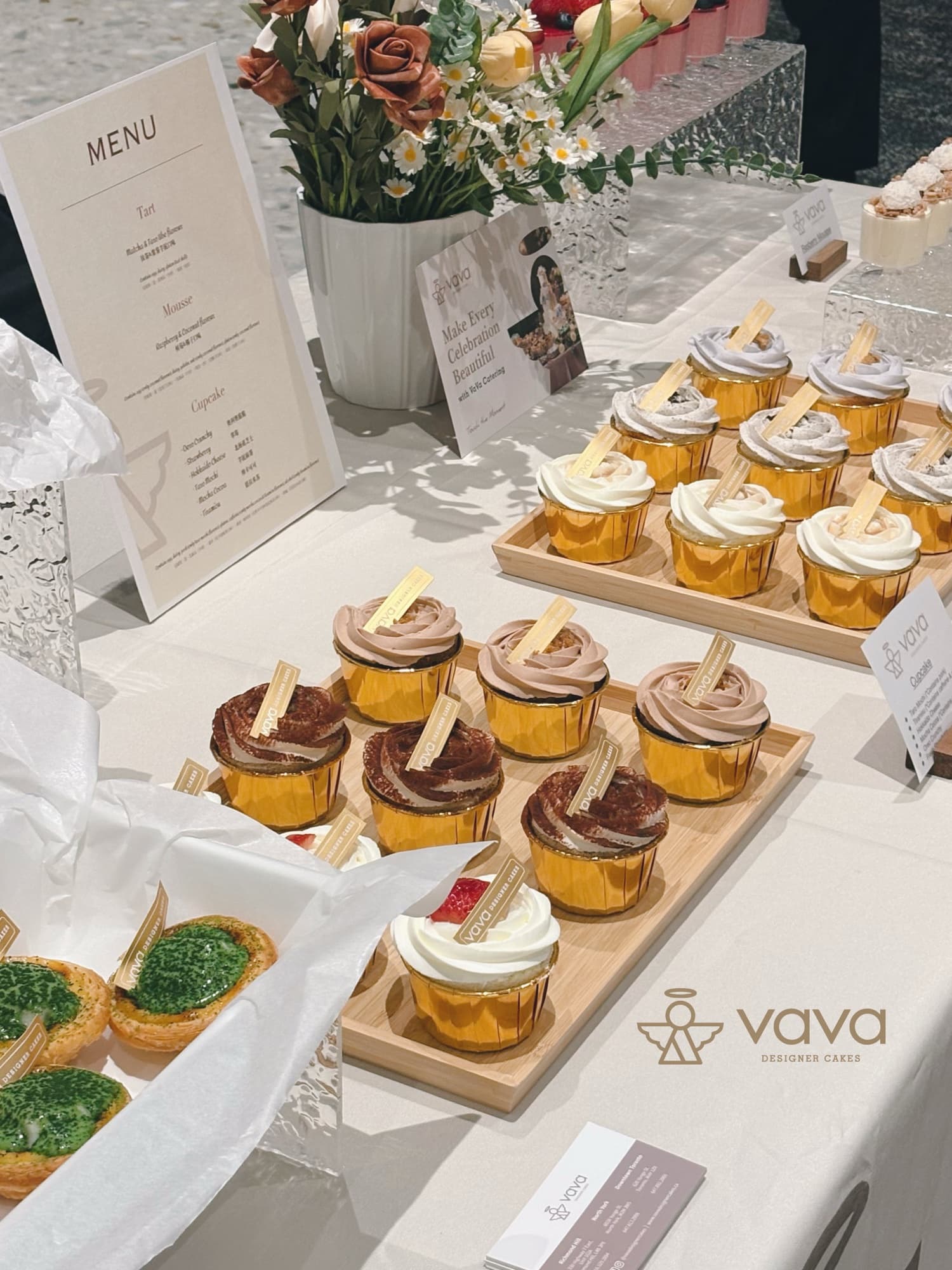
The most forgiving structure of the three, and the reason it is the default for birthdays and showers. A tiered tower empties tier by tier rather than patchily, so it still looks intentional when it is half gone — no other format on this page does that.
It is also the easiest to combine with a cake. A small cake on the top tier of a cupcake tower gives you the ceremonial cut and the serving volume in one object, which at a smaller party removes the need for a separate cake table entirely.
What the venue has to provide
This is the part that surprises people, because a tray of desserts needs nothing and a structure needs several things:
- A firm, level surface that will not be moved after setup. Not a folding table with a wobble, not something the venue plans to shift during dinner service.
- Clearance. Guests brushing past a tall structure is how it ends up on the floor. A wall format needs standing room in front of it as well.
- A position that is not a walkway. Self-serve displays create a small standing queue; put one in a doorway and it becomes the venue's problem.
- Setup access. These are assembled on-site, within the 60 to 90 minutes we are there before guests. They do not arrive built.
None of this is difficult, but all of it is worth confirming with your venue before the day rather than discovering at setup.
Which one suits your room
Rather than picking by preference, pick by what the room needs:
- A large room where the display has to be visible from far away — macaron tower. Height carries.
- A room where you want guests to move to a specific spot — donut wall. Self-serve draws people to it.
- A smaller room, or an event where the structure has to still look good late — cupcake tower. It ages best.
- A photo backdrop already exists — the wall, in front of it.
Whichever you choose, it is the centrepiece rather than the whole order: surround it with trays and risers at lower levels so the table has volume as well as height. See dessert tables for what a full styled setup includes, the gallery for real GTA setups, and weddings if the structure is going to sit alongside a cake.