Wedding Dessert Ideas: How to Build a Sweet Table That Guests Actually Remember
Most couples spend months on the wedding cake and about fifteen minutes thinking about everything else. That's the gap. Wedding dessert ideas that stretch across a full styled spread — macarons, mousse cups, mini chiffon cakes, fruit tarts, all colour-matched to the event palette — are what guests are still talking about at 10 p.m. when they're on their third piece. The cake is one moment. The table is the whole evening.
What Makes a Wedding Dessert Table Work as a Design Object?
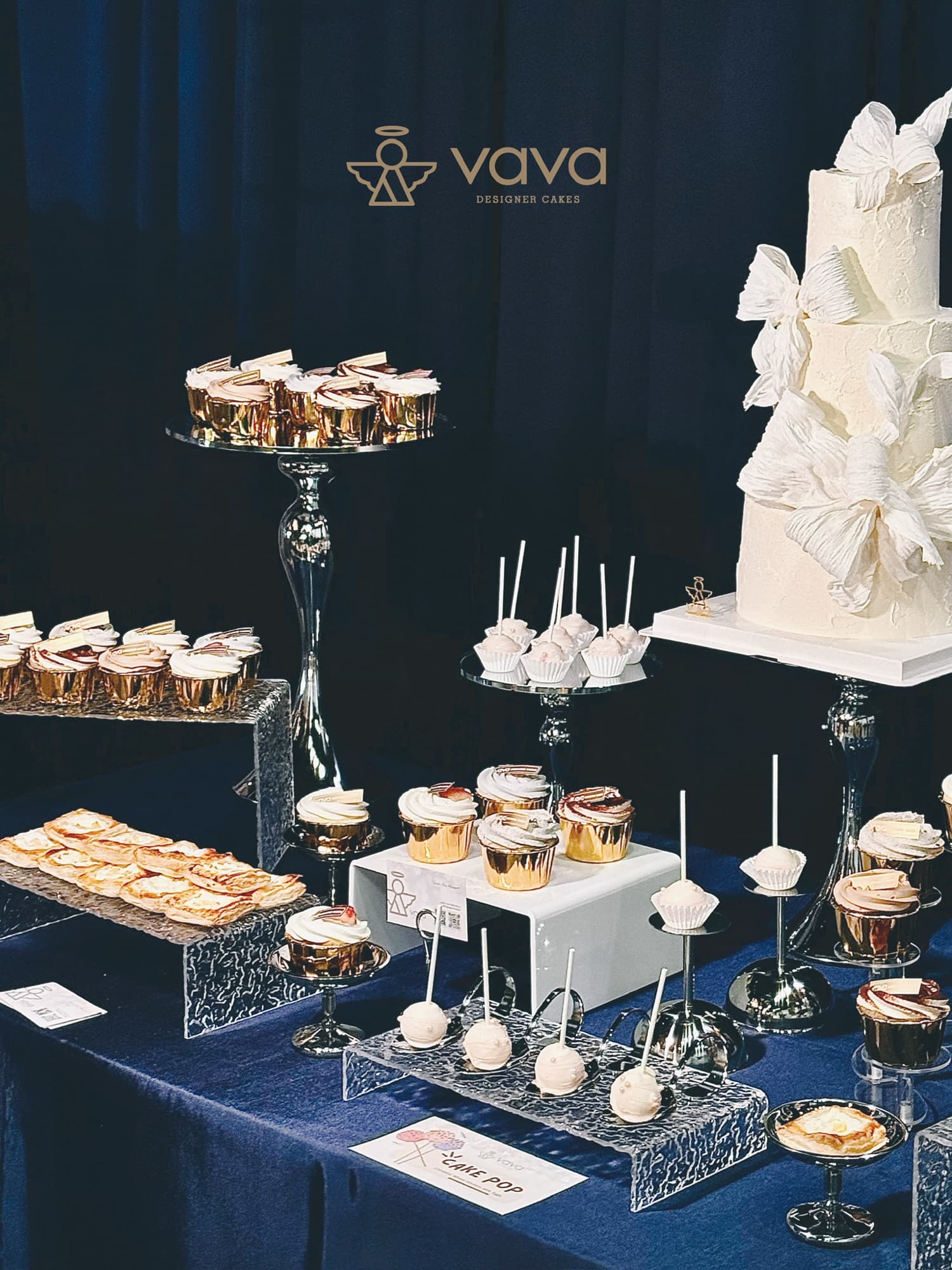
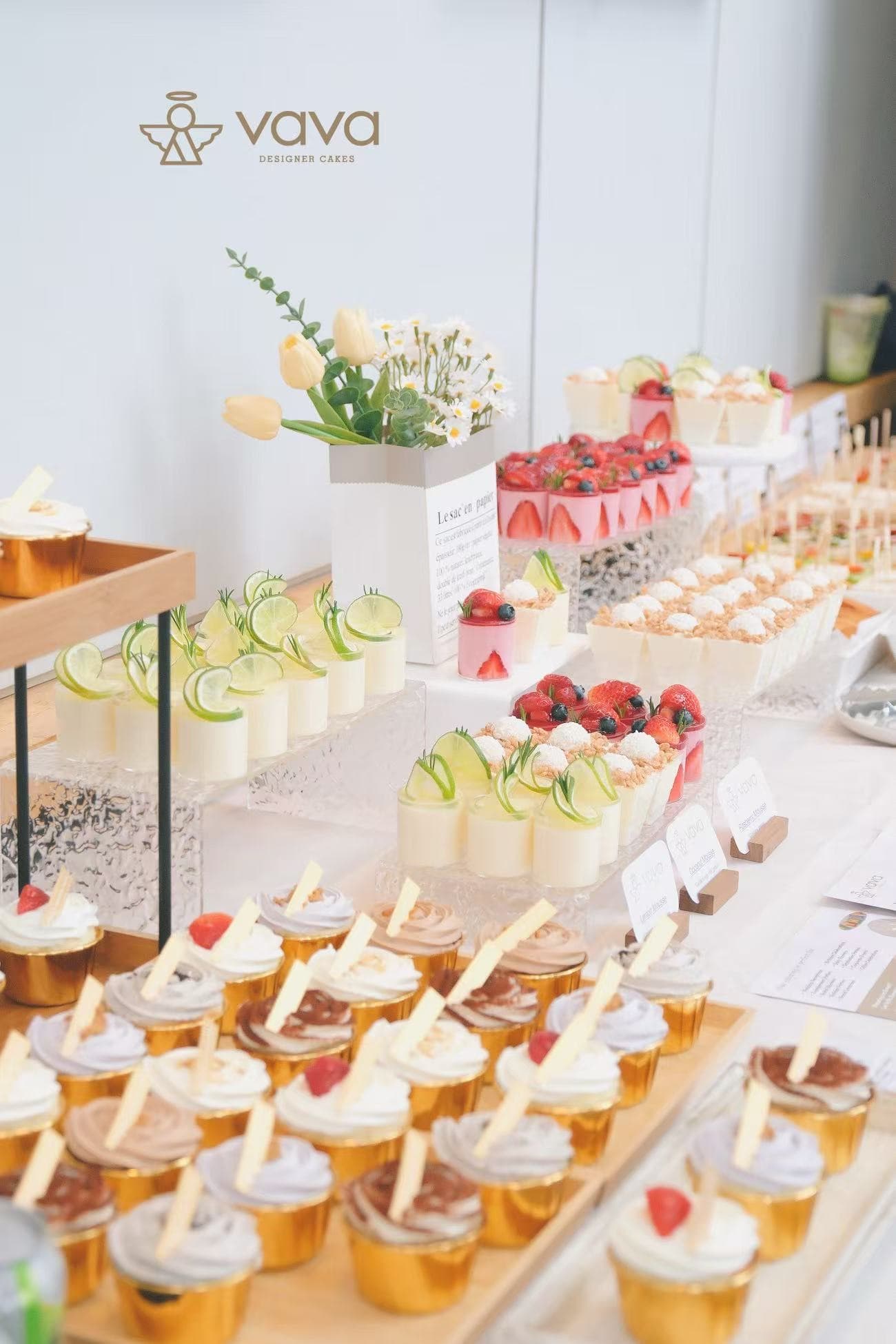
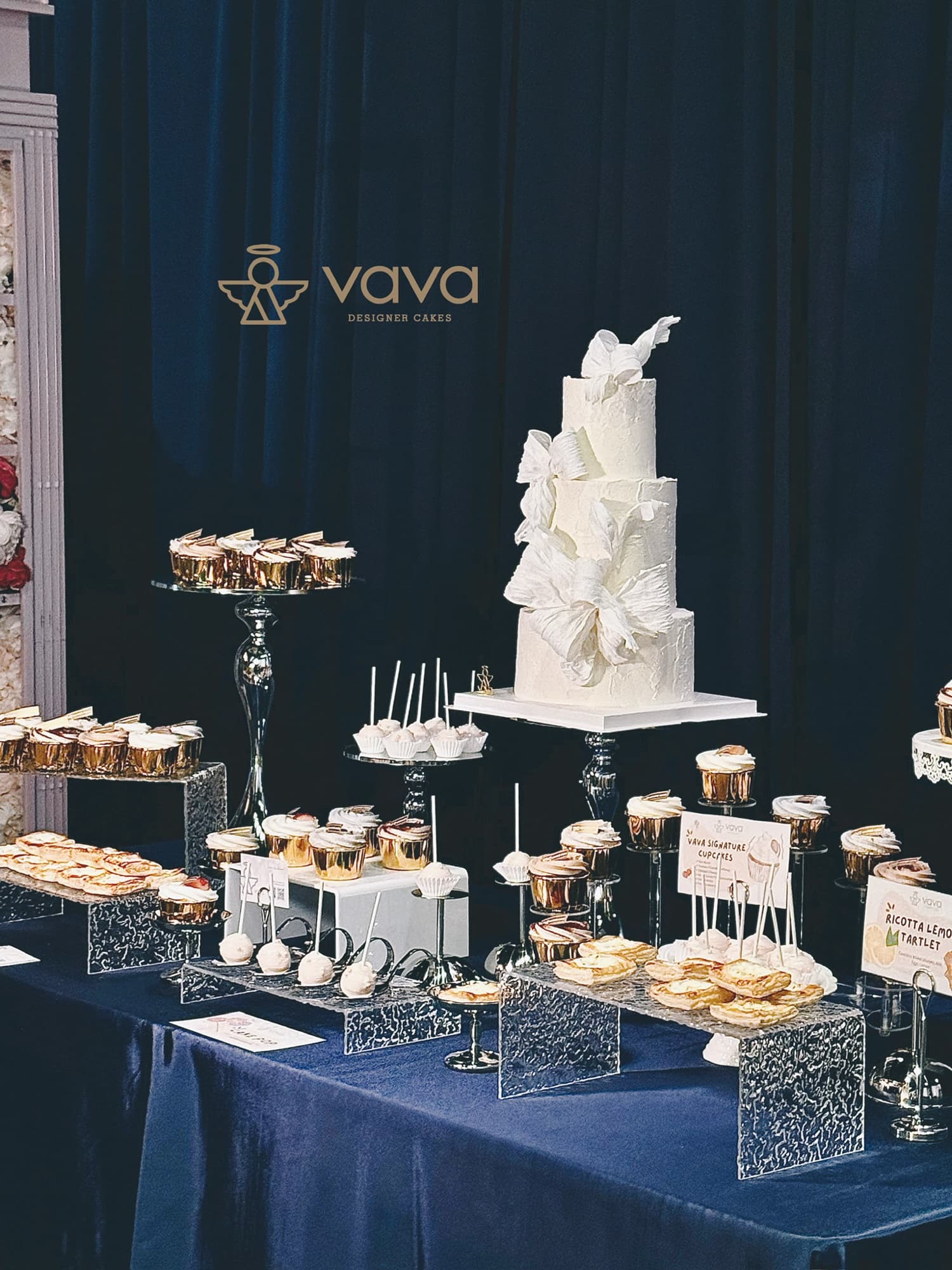
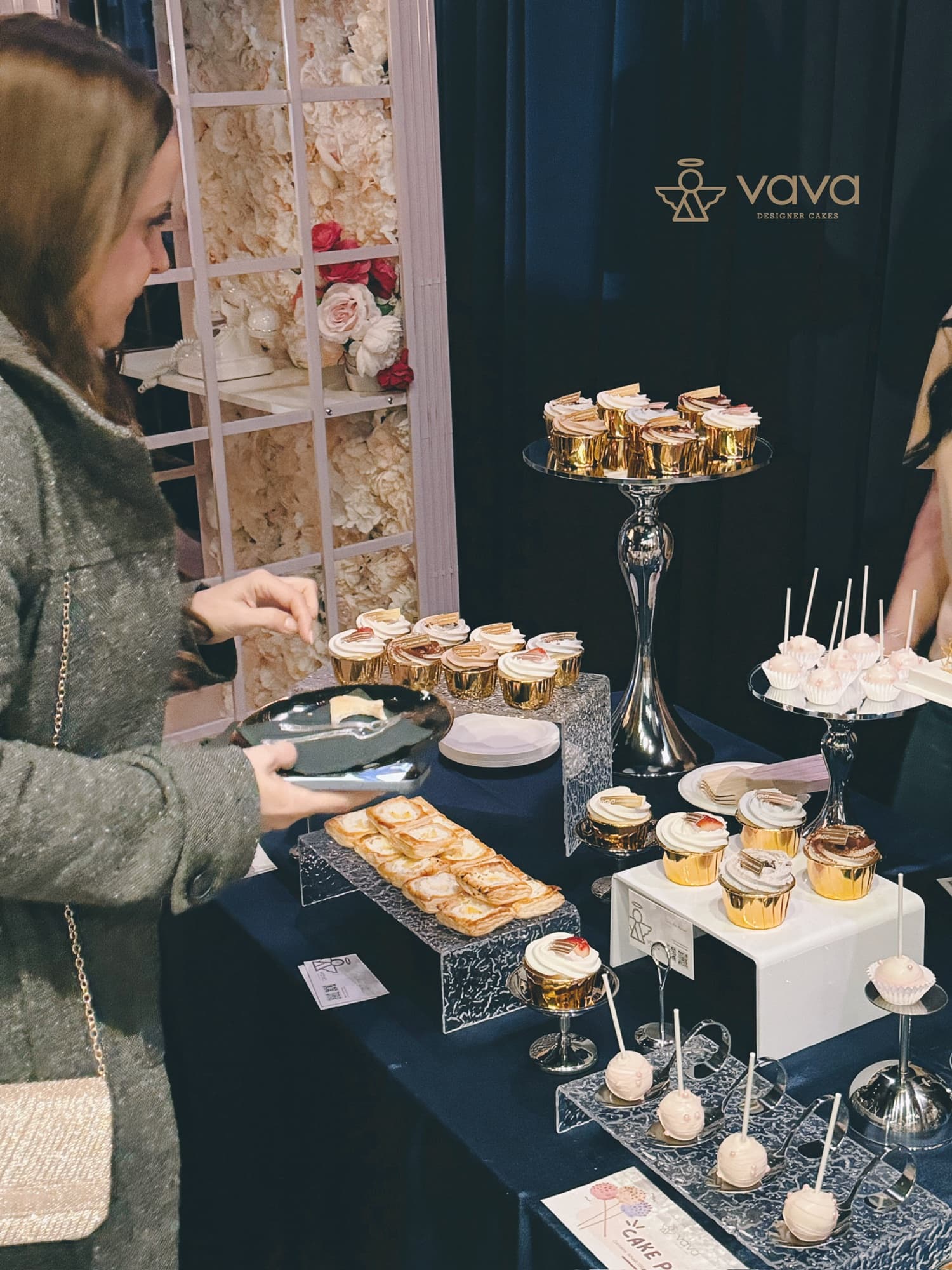
A wedding dessert table succeeds as a design element when every component reads as one composed scene rather than a collection of things sourced separately. The desserts are only part of it. The palette, the risers, the linens, the signage — all of it has to cohere. When the macarons echo the dusty rose in the florals and the mousse cups are piped in ivory to match the linen, guests stop and photograph the table before they even reach for anything. That's a visual decision as much as a culinary one, and it's the difference between a catered station and a real styled dessert table.
One angle most wedding blogs skip entirely: the mid-reception refresh. Dessert tables that sit untouched for two hours look tired by the time guests reach them. A team that re-styles and replenishes the spread between dinner service and dancing keeps everything looking intentional all night. The table at 9 p.m. should look as considered as it did at 6 — that's something we build into how we run wedding dessert service for every event.
The other thing worth saying plainly: the wedding cake and the dessert table work better when they're designed together. When the cake comes from our sister brand VaVa Designer Cakes and the table comes from us, both pieces share a palette and a design language from the first sketch. That cohesion is genuinely hard to achieve when you're sourcing from two unrelated vendors who have never spoken.
Wedding Dessert Ideas Other Than Cake — What Actually Works for Guests
The single most practical question couples ask is what to serve alongside — or instead of — a traditional wedding cake. The answer depends less on trend and more on three things: your guest count, your venue's service setup, and how you want the dessert moment to feel. Mini formats are the most guest-friendly choice at a reception. A 4-cm tart is easy to eat standing up. A mousse cup requires only a small spoon and no plate-balancing. For a 100-guest wedding, a spread of four or five mini dessert varieties at roughly 3–4 pieces per person gives everyone options without overwhelming the table.
Here's the thing about skipping the cake entirely: the best spreads usually still include something cake-adjacent. A macaron tower, a croquembouche, or a tier of mini chiffon cakes satisfies the visual and ceremonial function of a cake without requiring a formal cutting moment. If you want to drop the cutting, that's a valid choice — but consider what replaces the focal point on the table.
Some formats that consistently work well for GTA weddings, woven into a full sweet table setup:
- Mini chiffon cakes — light, individually portioned, easy to colour-match with seasonal fruit or edible florals. They give each guest a full cake experience in a single serving.
- French macarons — stackable, palette-friendly, and practical for guests with dietary restrictions when flavours are clearly labelled.
- Mousse cups — elegant, no cutlery needed beyond a small spoon, and easy to pre-portion for large guest counts.
- Fruit tarts — visually striking, naturally colourful, and a welcome counterpoint to richer items on the table.
- Cannoli or sfogliatelle — particularly resonant for Italian and Portuguese communities in the GTA, where the sweet table tradition carries deep cultural weight.
- Churro bites or donut walls — interactive, casual, and popular for receptions with a younger guest profile or a relaxed venue.
- Panna cotta or crème brûlée cups — refined, make-ahead friendly, and easy to style with a garnish that matches the table palette.
The variety depth — how many distinct formats you include — is one of the biggest variables in how a table reads, and also in how the quote is built. More on that below.
How to Choose Wedding Dessert Ideas That Fit Your Guest Count and Venue
Guest count is the most direct driver of how a dessert table is structured — not just how much you order, but which formats make sense logistically. A 40-person micro-wedding can support a curated table of three or four varieties with generous portions. A 200-person ballroom reception needs formats that move quickly, hold well over a two-hour window, and don't require individual plating by staff. Those are different problems with different solutions.
Venue logistics matter more than most couples realise. A venue with a full catering kitchen can handle formats that need last-minute assembly. A tent wedding or a rooftop venue in July needs items stable at ambient temperature — mousse cups and chiffon cakes with fresh cream need refrigeration staging that not every venue provides. Ask your venue coordinator what cold-holding capacity exists before you commit to a menu. Honestly, this one question saves a lot of last-minute scrambling.
The table footprint is another practical constraint. A 6-foot table styled with risers and a backdrop can hold a visually full spread for up to 80 guests. Beyond that, you're either adding table length, adding a second station, or editing the variety to focus on fewer formats in larger quantities. There's no single right answer — it depends on the room layout and how central the dessert table is to the reception flow.
For couples planning dessert catering at a venue outside Toronto — Markham, Vaughan, Richmond Hill, Mississauga — delivery and setup logistics add a layer to the planning. We serve across the GTA, and the setup window at the venue is something we confirm well in advance, especially for peak-season Saturdays when load-in times are tight.
What's the right number of dessert varieties for your guest count? A useful starting point: three to four varieties for under 60 guests, five to six for 60–150, and seven or more only when the table is a centrepiece of the reception and the room has the footprint to support it. More variety means more sourcing, more styling coordination, and more setup time — which is why it moves the quote.
What Moves the Quote on a Wedding Dessert Table?
Most couples arrive having seen a beautiful dessert table on Instagram and wanting to understand what shapes the investment. Four layers stack together to build a quote, and each one can shift significantly depending on your choices. The table below shows how each layer works and what changes it.
| Layer | What it includes | What moves the quote |
|---|---|---|
| The desserts themselves | All food items: minis, tarts, macarons, mousse cups, chiffon cakes | Variety depth, total piece count, flavour complexity, dietary accommodations |
| Styling and rentals | Risers, linens, signage, florals, backdrops, serving vessels | Custom vs. standard styling, palette specificity, backdrop scale |
| Delivery and setup labour | Transport, on-site assembly, mid-reception refresh | Distance from base, venue access complexity, setup time required |
| On-site service | Staff present during reception to replenish and re-style | Reception length, whether a refresh is included, staffing hours |
Guest count is the multiplier across all four layers. A 50-person table and a 150-person table might share the same styling concept, but the piece count, the staffing hours, and sometimes the table footprint all scale with the number of people being served. Variety depth is the second-biggest variable. A table with eight distinct dessert types requires more sourcing, more styling coordination, and more setup time than a focused table of four.
If you're early in planning and want to understand what a quote would look like for your guest count and venue, the best step is to get in touch directly — we build every quote from scratch based on the actual event details.
When to Book and What the Planning Timeline Looks Like
Peak wedding season in the GTA runs May through October. For a Saturday in June or September, couples who wait until three months out often find their preferred dates are gone. We recommend reaching out at least four to six months ahead for peak-season weddings — not because the desserts themselves take that long to plan, but because the styling coordination, the VaVa Designer Cakes pairing, and the venue logistics all benefit from lead time. The planning conversation itself typically takes two or three touchpoints: an initial brief to understand the palette and guest count, a proposal with variety options and styling direction, and a confirmation call once the venue logistics are locked.
Off-peak weddings — November through April — have more flexibility, but holiday Saturdays in December book surprisingly fast. Don't assume availability is open if your date falls in that window.
For couples who are also ordering a wedding cake through VaVa Designer Cakes, we coordinate the two designs together so the cake and the table share a visual language from the first sketch. That coordination is something you simply can't replicate when you're managing two separate vendor relationships independently. The full picture of how wedding dessert planning works from brief to setup is on that service page.
FAQ
- How many desserts do I need per person at a wedding?
- The standard planning benchmark is 3–4 pieces per guest when a full dessert table is the primary sweet offering. If you're also serving a wedding cake, 2–3 pieces per person is usually sufficient. For a 100-guest wedding with five dessert varieties, that works out to roughly 300–400 total pieces across the spread — enough for guests to sample multiple items without the table running bare before the end of the night.
- How far in advance should I book a wedding dessert table in the GTA?
- For peak-season Saturdays — May through October — we recommend booking four to six months ahead. Popular dates in June and September fill quickly, and the lead time also gives us room to coordinate styling, confirm venue logistics, and align the dessert table design with any VaVa Designer Cakes wedding cake order. Off-peak dates have more flexibility, though December holiday weekends book faster than most couples expect.
- What can I do instead of a wedding cake?
- Popular alternatives to a traditional wedding cake include a macaron tower, a croquembouche, a tiered display of mini chiffon cakes, a donut wall, or a full dessert table with multiple mini formats. Each option can serve as a visual focal point without requiring a formal cake-cutting moment. The right choice depends on your reception format and how central the dessert moment is to your evening's flow.
- How do I make sure my dessert table matches my wedding theme?
- Colour-matching is the detail that separates a styled dessert table from a catered one. When the macarons echo the florals, the mousse cups are piped to match the linen, and the risers pick up the metallic in the centrepieces, the table reads as a designed object rather than an afterthought. Working with a provider who designs the desserts and the styling together — rather than sourcing them separately — is the most reliable way to achieve that cohesion.
- What desserts work best for a large wedding reception of 150 or more guests?
- For large guest counts, formats that move quickly and hold well over a two-hour window are the priority. French macarons, mousse cups, mini chiffon cakes, and fruit tarts all work well — they're easy to eat standing up, pre-portioned, and stable without last-minute assembly. A mid-reception refresh by the serving team keeps the table looking full and intentional throughout the evening, which matters more at scale than at a smaller, more intimate reception.
- Do I need a separate wedding cake if I have a dessert table?
- Not necessarily — but consider what replaces the focal point. A macaron tower or a tier of mini chiffon cakes can serve the visual and ceremonial function of a wedding cake without requiring a formal cutting moment. If you do want both, pairing the cake and the dessert table through a single design relationship (as we do with VaVa Designer Cakes) ensures the two pieces share a palette rather than competing visually.
Ready to put these wedding dessert ideas into a real plan? Tell us your date, your guest count, and a few words about your palette — we'll take it from there. Start the conversation here, and we'll come back with a proposal built around your specific event.