Mix formats, not flavours
The instinct when ordering a platter is to pick a spread of flavours: something chocolate, something fruit, something citrus. That is not the axis that matters.
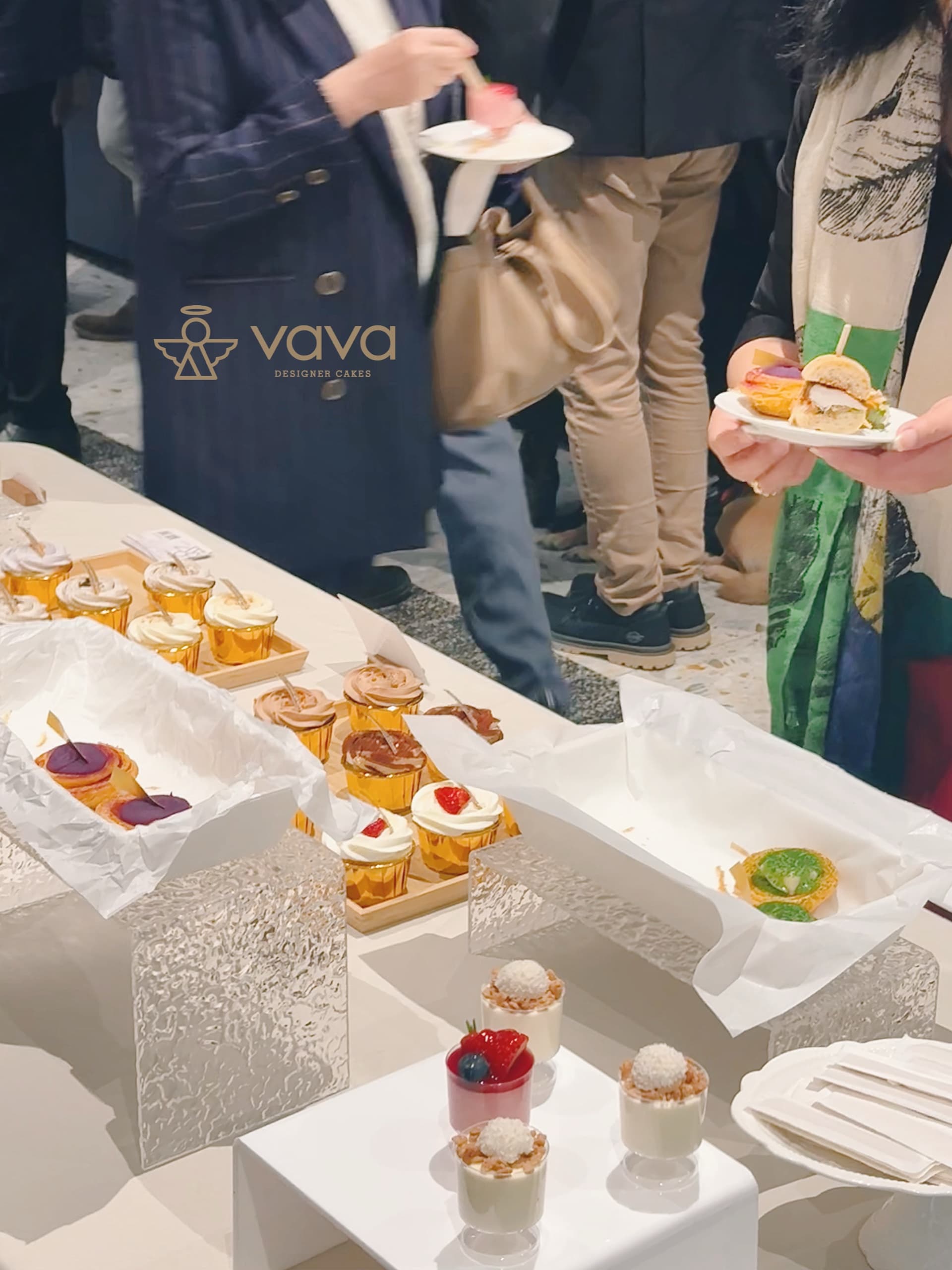
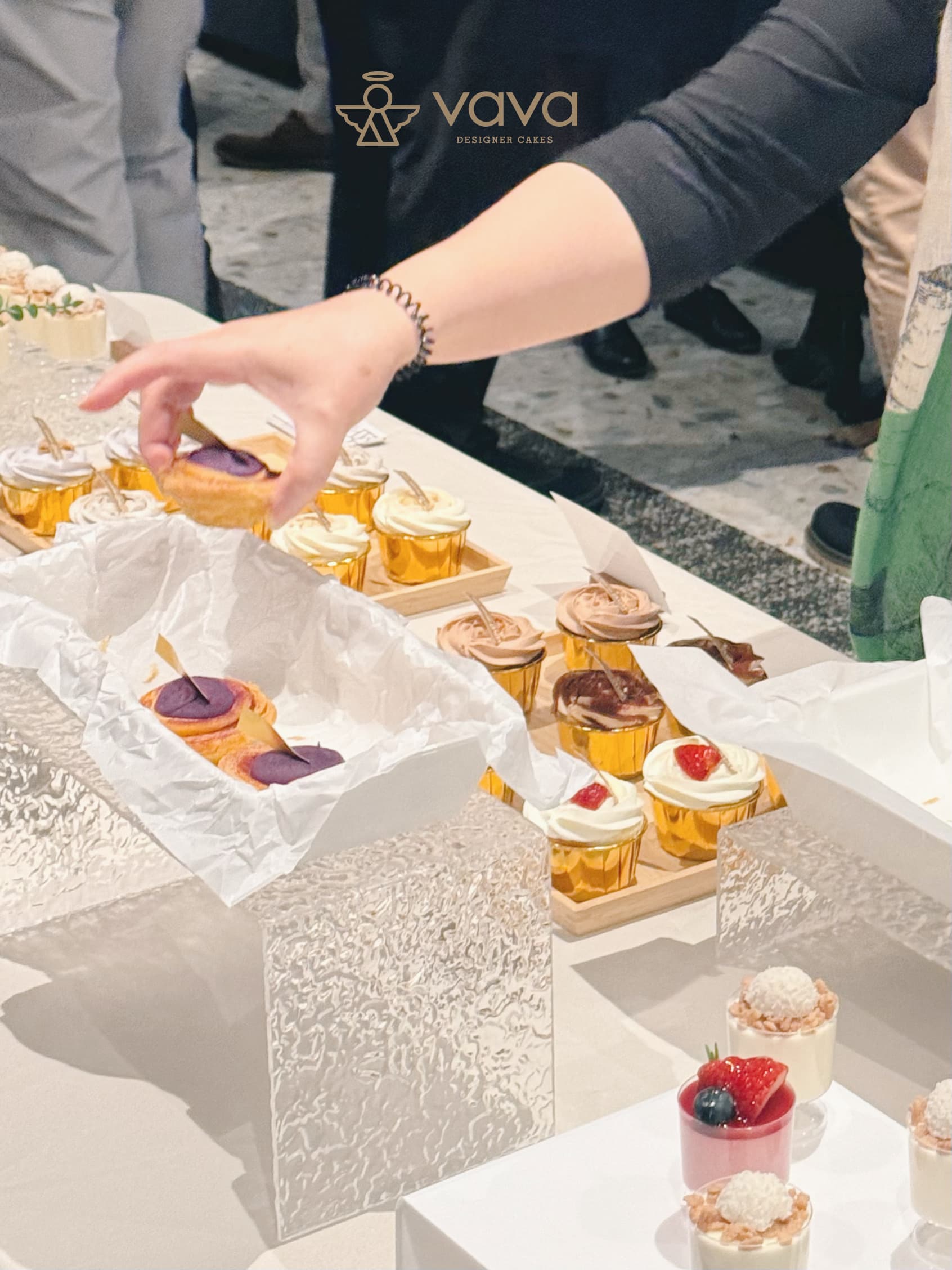
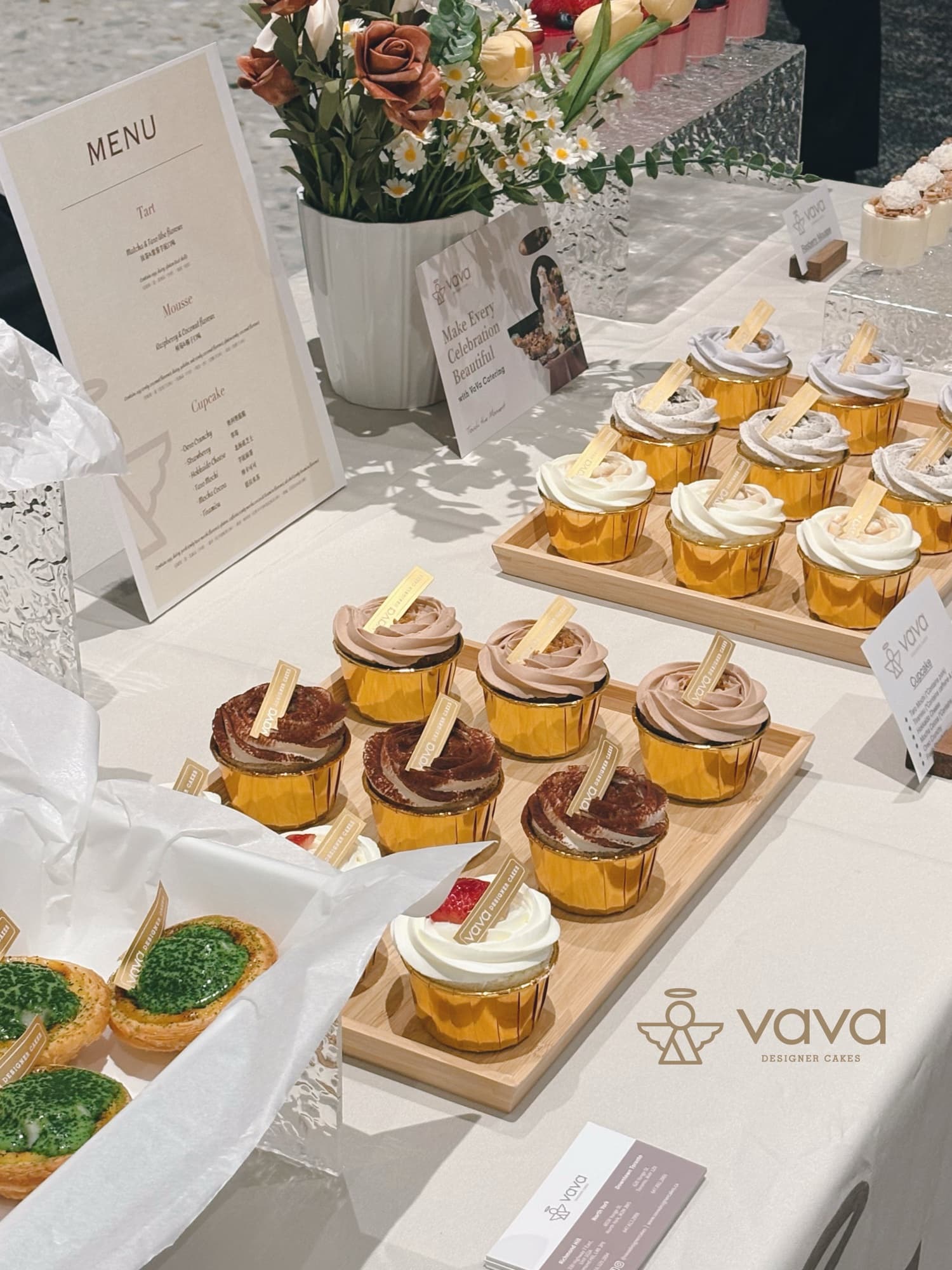
What decides whether a platter works is the mix of formats — because format determines how something is picked up, whether it needs a plate, and how it looks after fifty people have taken from it. A platter of six flavours in the same format empties unevenly and collapses visually. A platter of four formats holds its shape.
The three that cover most events:
- Something in a cup. Mousse cups, panna cotta, tiramisu cups. They travel without smearing, they hold their appearance, and they are the only format that survives being moved after setup.
- Something small and firm. Macarons, mini tarts, cheesecake bites. One hand, no plate, no decisions.
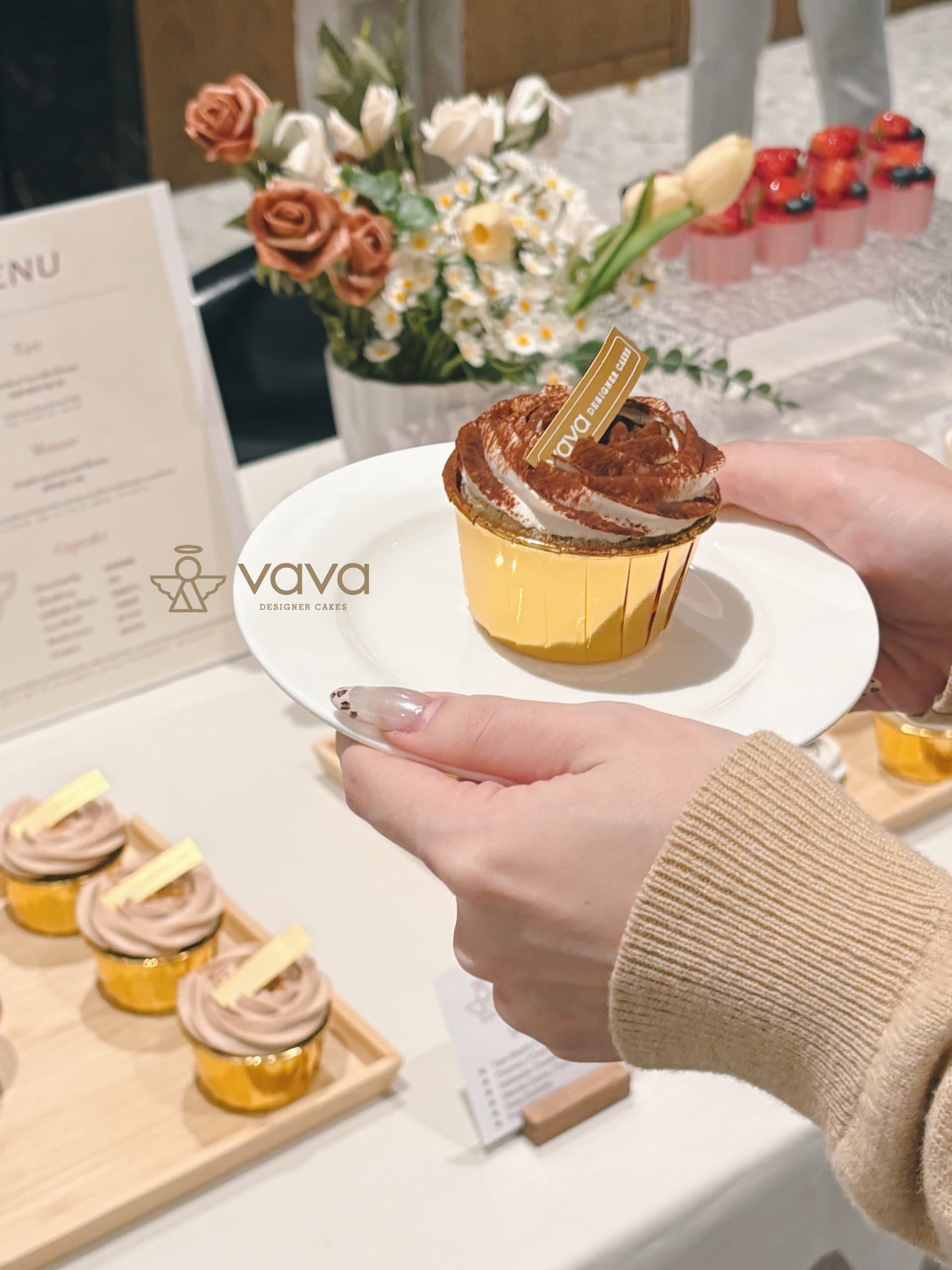
- Something with height. Cake pops, cupcakes. These are what stop a platter reading as flat, which matters more than it sounds when the platter is the only thing on the table.
Build for how people will actually eat it
The single most useful question when composing a platter is whether people will be standing.
At a standing event — an office afternoon, a reception, a launch — everything on the platter should be manageable with one hand, because the other hand is holding a drink or a phone. Anything needing a fork and a plate slows the queue and half of it gets abandoned mid-plate.
Seated events are the opposite: people have a surface, so richer and larger formats work, and you can afford fewer pieces per guest because they will finish what they take.
| Standing event | Seated event | |
|---|---|---|
| Format priority | One-hand items | Anything, including cups and slices |
| Piece size | Small, two bites | Larger is fine |
| Per guest | Nearer 3 — people graze | Nearer 2 — people finish |
| Varieties | More — guests take several | Fewer — guests choose one |
Why a small platter should have fewer types
Most items carry a minimum of 10 pieces. That single fact shapes small orders more than anything on the menu.
A 20-person order at two to three pieces each is 40 to 60 pieces. Spread that across six varieties and you are ordering 60 pieces minimum whether you need them or not, with ten of each sitting in quantities nobody finishes. Across three or four varieties, the same order is right-sized and the platter looks more deliberate — repetition reads as intentional, scarcity reads as an afterthought.
The rule of thumb: four to six varieties for 30 or more guests, three to four below that.
What looks worse an hour in
A platter is judged twice — when it arrives and when the last person reaches it. Most planning only accounts for the first.
- Dusted and powdered finishes lose definition as they sit. Fine at a one-hour reception, less so across an afternoon.
- Anything that needs to stay cold is a timing commitment, not just a menu choice.
- Tall soft toppings are the first thing to look tired, especially in a warm room.
- Cups and firm formats are what still look composed at the end, which is why they should be the backbone rather than the accent.
If your event genuinely runs in waves — hybrid office days, an open house, a long reception — individually boxed portions solve this outright, because nothing sits open long enough to change.
Ordering
Tell us the guest count, whether people will be standing, and roughly when the platter needs to look its best. That is enough for us to compose it — you do not need to pick items line by line unless you want to. Dessert catering covers the platter and drop-off formats, including what is included in delivery and the notice we need for each.
For corporate events and office orders, the same platter logic applies with one addition: allergen cards go out with the order, and dietary restrictions are worth flagging in the quote request rather than on the day.