Dessert Table Ideas for Wedding Guests: What to Serve, Style, and Remember
The dessert table is the moment most wedding guests photograph before they eat from it. Dessert table ideas for wedding guests have exploded across planning boards and social feeds, but the gap between a pretty mood board and a table that actually works for 120 hungry people at 9 p.m. is wider than most couples expect. Here's what we've learned styling colour-matched dessert tables across the GTA — from Markham banquet halls to Vaughan vineyard receptions — about what guests genuinely eat, what photographs well, and how those two lists are not always the same.
What to Put on a Wedding Dessert Table That Guests Will Actually Eat
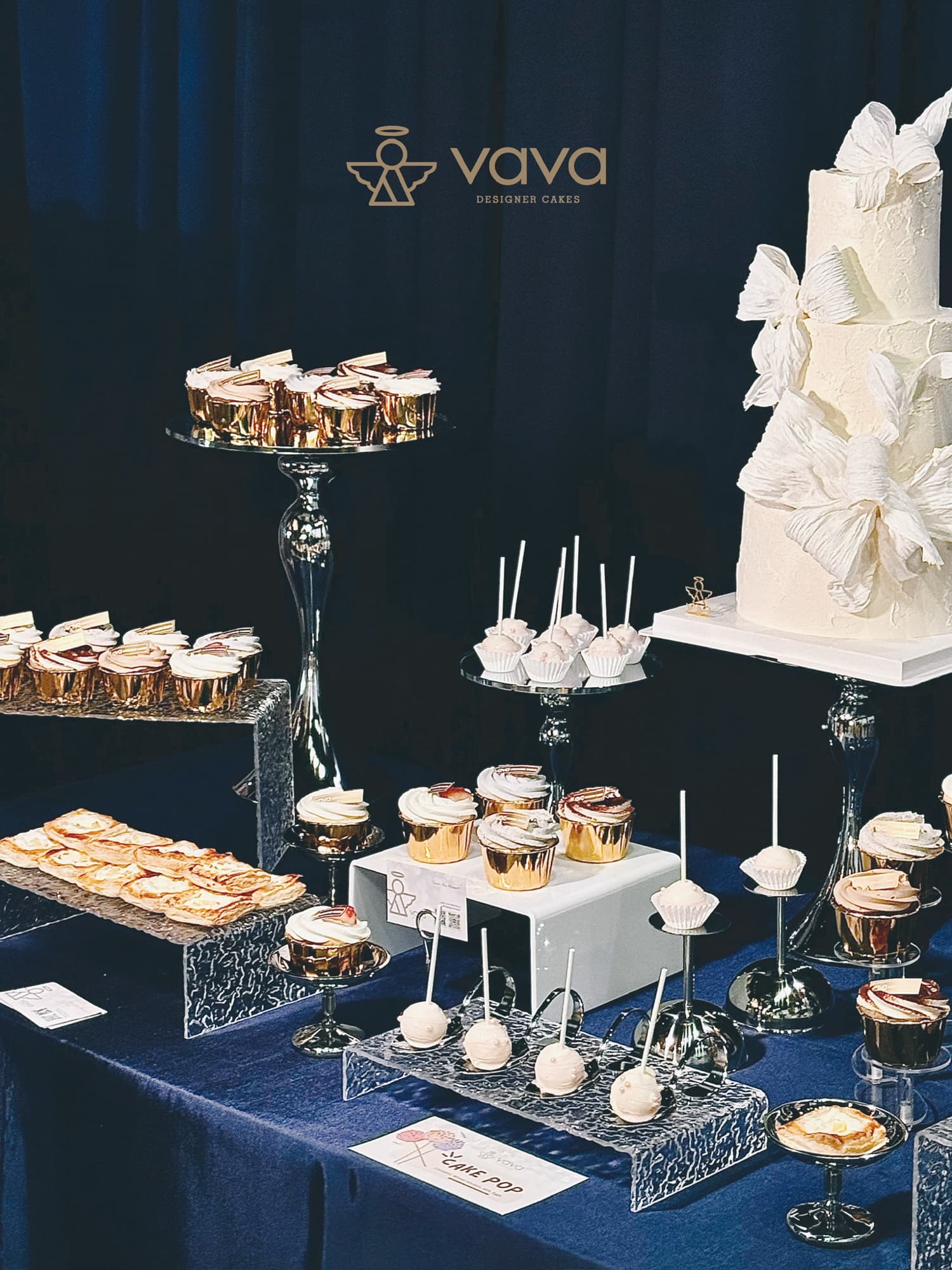
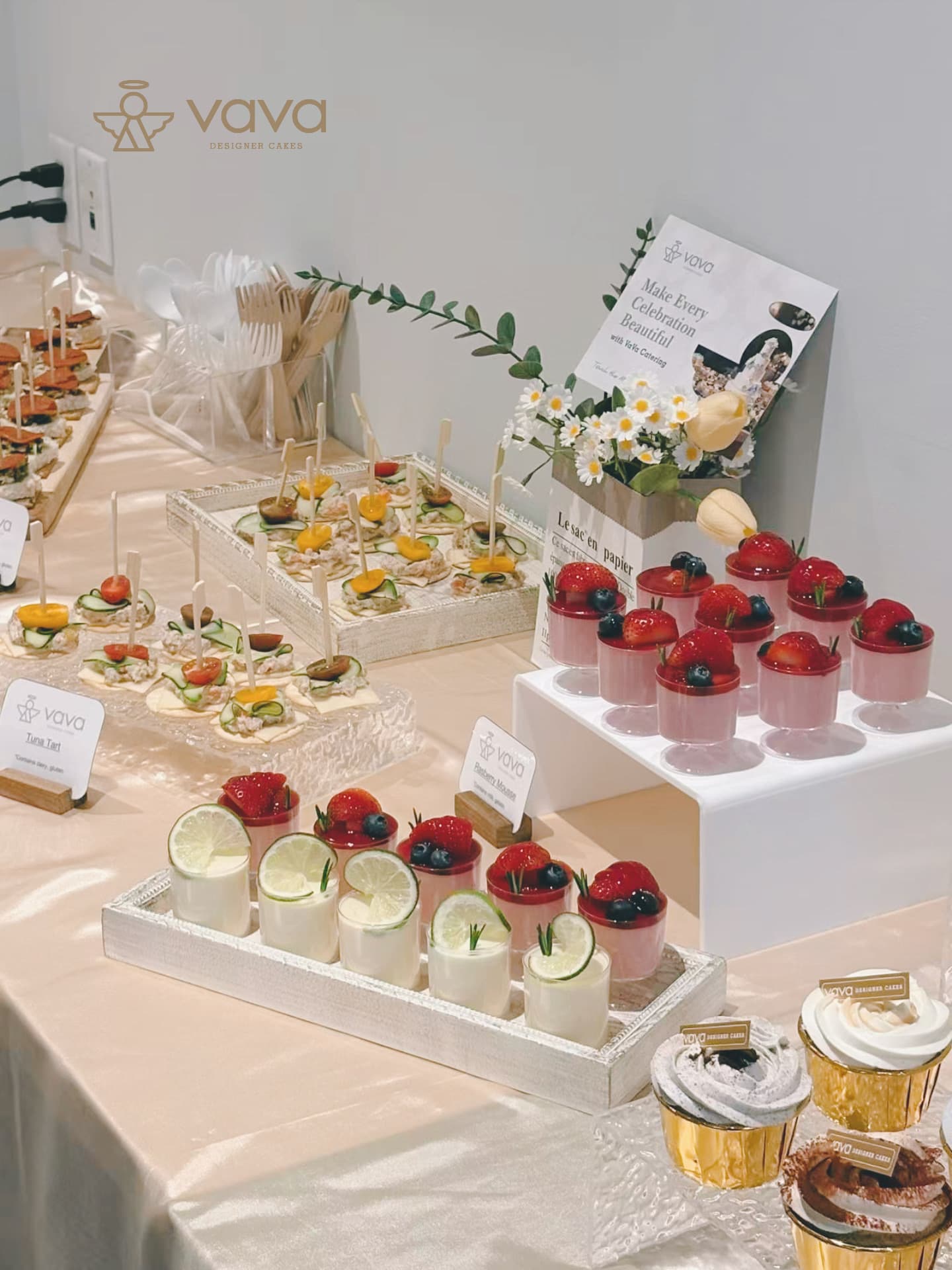
The single most reliable wedding dessert table format pairs one statement centrepiece with four to six bite-sized formats, because guests at a reception are standing, talking, and holding a drink — they need one hand free. A full-sized slice of layer cake requires a plate, a fork, and a flat surface; a mini chiffon cake or a two-bite tart requires none of those things. That's not a style preference, it's a logistics observation we see play out at almost every event we work.
Start with your anchor. Most couples use the wedding cake — designed with our sister brand VaVa Designer Cakes — as the visual centrepiece, then build the surrounding spread to complement rather than compete. Around that anchor, a well-balanced table typically includes:
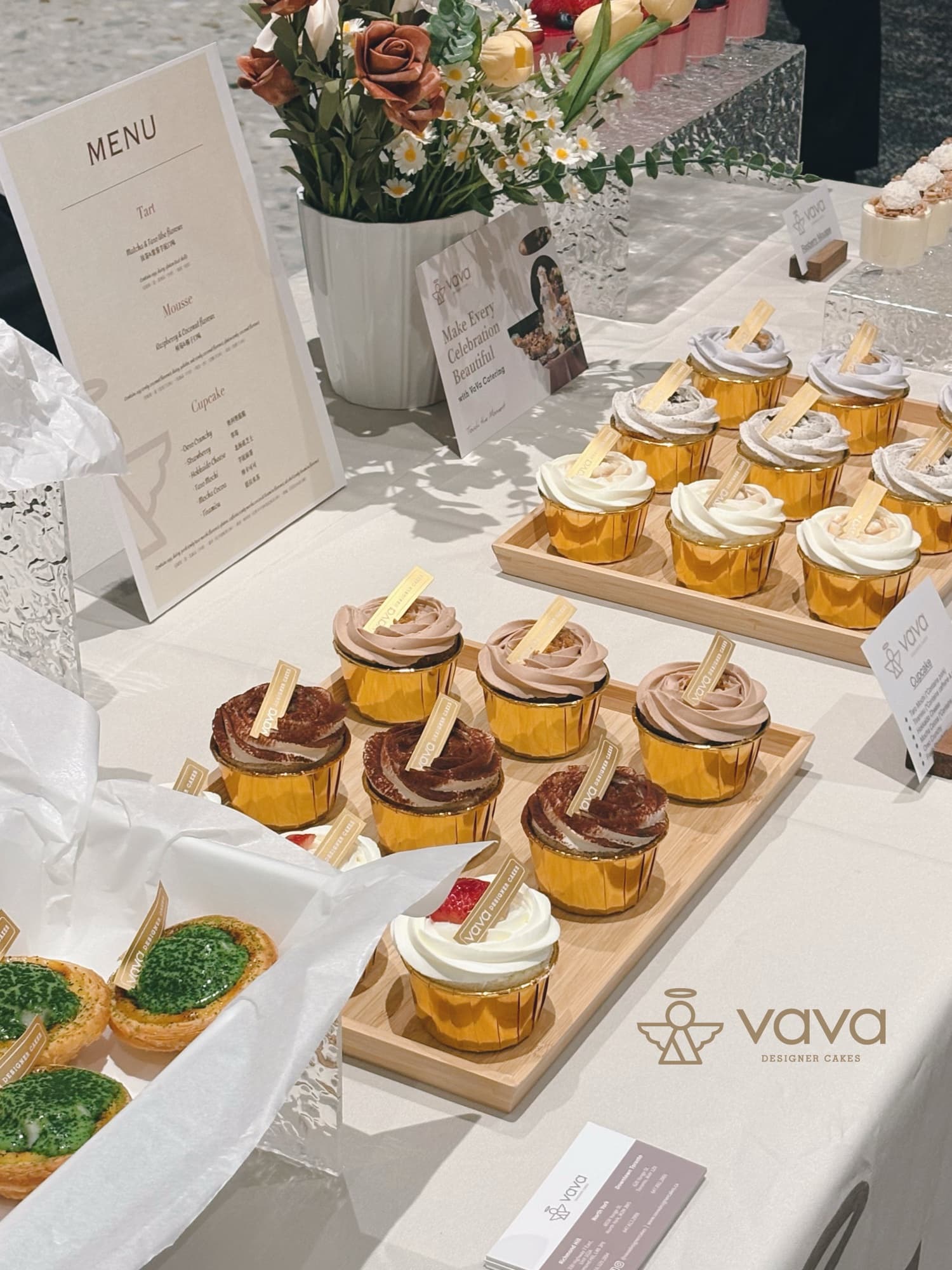
- Mini chiffon cakes — light, airy, and individually portioned; we refresh these mid-reception so the last guest gets the same quality as the first.
- Filled tarts — lemon curd, passionfruit, or seasonal berry; they hold their shape for hours and look polished on a riser.
- Mousse cups — chocolate, salted caramel, or matcha; individual cups mean zero serving logistics for guests.
- Macarons — colour-matched to the event palette; they're the most photographed item on nearly every table we style.
- Shortbread or butter cookies — a crowd-pleasing, allergy-friendly buffer that fills the table without overwhelming the flavour story.
- One interactive element — a small candy jar station or a favour-bag station gives guests a reason to linger and something to take home.
Honestly, the ratio matters more than the item list. For a 100-guest wedding, we typically plan 2.5 to 3 pieces per person across the spread, weighted toward the bite-sized formats. That math means roughly 250 to 300 individual pieces before the wedding cake is factored in. Running short at 10 p.m. is a much worse outcome than having a few extra macarons to send home with the bridal party.
How to Style a Wedding Dessert Table That Feels Designed, Not Just Catered
Three factors compound to make a dessert table look cohesive rather than assembled: colour discipline, height variation, and negative space. Most DIY tables fail on the third one — every inch gets filled, and the result looks crowded rather than curated. Professional styling leaves deliberate gaps between risers so the eye has somewhere to rest.
Colour discipline means choosing a palette of two to three tones and applying it to everything on the table — the linens, the risers, the dessert casings, the macarons, and the florals. We match the dessert palette directly to the couple's event colours, which is why a consultation starts with the invitation suite or the floral brief, not a flavour list. A blush and sage wedding shouldn't have a table full of red velvet and chocolate brown, regardless of how much the couple loves those flavours. The fix is simple: choose flavours that can be finished in the right colours, or use garnishes (dried flowers, edible gold, fresh fruit) to bridge the gap.
Height variation is the other structural rule. A flat table — everything at the same level — reads as a buffet. A styled table uses three or four riser heights to create a skyline. Tall acrylic or mirrored risers at the back, medium pedestals in the middle, flat platters at the front. The wedding cake sits highest, framed by the spread below it. This is the difference between a dessert table and a dessert display.
For couples planning a colour-matched dessert table in Toronto, Mississauga, or the surrounding GTA, the styling conversation is just as important as the flavour conversation. Both need to happen before the order is placed.
What Are the Best Dessert Formats for a Wedding Reception?
The best dessert to serve at a wedding reception is one that travels well from the table to the guest's hand without falling apart, melting, or requiring utensils. That constraint rules out more options than most couples expect, and it's why certain formats dominate real-world wedding spreads even when they're not the most exciting thing on a mood board.
Here's how the most common wedding dessert formats compare across the factors that matter most at a live reception:
| Dessert Format | Handheld? | Holds 4+ Hours? | Colour-Matchable? | What Moves the Quote |
|---|---|---|---|---|
| Mini chiffon cakes | Yes | Yes (with mid-reception refresh) | Yes — garnish and wrap colour | Quantity, flavour variety, refresh service |
| French macarons | Yes | Yes | Highly — shell colour matches palette | Colour count, flavour count, quantity |
| Filled tarts (3-inch) | Yes | Yes | Partially — topping and garnish | Filling complexity, seasonal fruit |
| Mousse cups | Yes (cup format) | Yes (refrigerated until service) | Partially — topping colour | Flavour count, cup style, quantity |
| Cake pops | Yes | Yes | Yes — coating colour | Decoration detail, quantity |
| Full-size layer cake slices | No — requires plate and fork | Yes (if pre-sliced) | Yes | Tier count, decoration hours, flavour |
| Cheesecake bites | Yes | Moderate — needs cool temp | Partially | Topping variety, temperature logistics |
The formats at the top of that table — chiffon minis, macarons, tarts, mousse cups — dominate our wedding dessert orders for a reason. They photograph beautifully, they survive a four-hour reception without quality loss, and guests can grab one mid-conversation without breaking stride. The tricky part is that couples often arrive at the planning process with a list of their favourite desserts rather than a list of what works at a standing reception. Both conversations need to happen.
Simple Wedding Dessert Table Ideas That Still Look Elevated
Most buyers assume a visually impressive table requires a long item list. Two formats done exceptionally well — say, macarons in four colours and mini tarts in two flavours — will outperform a table of eight mediocre options every time. The simpler approach also tends to be easier to keep stocked throughout the night, which matters more than most couples anticipate when they're planning months in advance.
What does "simple" actually mean in practice? It means fewer SKUs, not fewer pieces. A simple wedding dessert table might have only three or four dessert types, but each type is executed with high-quality ingredients, finished in the event palette, and displayed on thoughtfully chosen risers. The restraint is the point. Guests read a curated table as intentional; they read an overstuffed table as chaotic, even if the individual items are beautiful.
For couples working with a tighter planning timeline — we see a lot of late bookings in the July-to-September Toronto wedding season — a focused menu also means faster production and a more reliable result. A table built around macarons, mousse cups, and one signature chiffon flavour can be planned, confirmed, and produced in a shorter window than a spread with twelve different items.
The sweet table tradition in Italian and Portuguese communities across the GTA has always understood this. Classic Italian sweet tables are built on a handful of formats — cannoli, biscotti, torrone, amaretti — repeated in abundance. The visual impact comes from volume and colour, not variety. That's a principle that translates directly to modern wedding dessert table design, regardless of the couple's background.
How the Quote for a Wedding Dessert Table Is Built
A question we get weekly is some version of: "what does a wedding dessert table cost?" The honest answer is that the quote is built in layers, and understanding those layers helps couples make smarter decisions about where to focus their budget and where to simplify.
Understanding what drives your dessert table quote lets you make those decisions deliberately rather than reactively.
The layers that build the quote:
- The desserts themselves — item count, flavour complexity, and quantity per guest. A macaron costs more to produce than a shortbread cookie; a mousse cup with a seasonal fruit topping costs more than one with a standard ganache. Piece count multiplied by per-unit production cost is the base.
- Styling and rentals — risers, linens, signage, florals, and any custom elements (personalized favour bags, custom-printed labels). Styling is where the "designed" feeling comes from, and it's a real line item.
- Delivery and setup labour — transporting a fully styled table to a venue in Markham or Richmond Hill, setting it up before guests arrive, and breaking it down after. Distance and setup complexity both factor in.
- Venue logistics — some venues require a certificate of insurance, charge a vendor fee, or have specific load-in windows that require additional labour hours. These are real costs that vary by venue.
- On-site service — if you want the team present during the reception to refresh the table mid-event (restocking mini chiffons, restyling the display after the initial rush), that's a separate service layer.
What moves the quote up or down: guest count is the biggest lever. Variety depth is second — a five-item menu is simpler to produce than a ten-item menu at the same piece count. Styling complexity (custom florals vs. standard risers) is third. On-site service adds the most to the total but also delivers the most visible difference in guest experience. Reach out through our contact page and we'll walk through each layer with you based on your specific event details.
FAQ
- What to put on a dessert table for a wedding?
- A well-balanced wedding dessert table pairs one statement centrepiece — usually the wedding cake — with four to six bite-sized formats that guests can grab without a plate or fork. Mini chiffon cakes, macarons, filled tarts, mousse cups, and shortbread cookies cover most flavour preferences and hold up well over a four-hour reception. Plan roughly 2.5 to 3 pieces per guest across the spread, weighted toward handheld formats.
- What are some easy dessert table ideas?
- The easiest approach is to choose two or three formats you love and execute them in high volume rather than trying to cover every dessert category. Macarons in two or three palette-matched colours, mini tarts in one or two fillings, and a simple mousse cup make a cohesive, manageable table. Add height variation with risers and a linen that matches your event colours, and the result looks far more intentional than a longer list of mediocre options.
- How to make a sweet table for a wedding?
- Start with your palette, not your flavour list — the visual story needs to be decided first. Choose a linen colour, riser finish (acrylic, wood, mirrored), and two to three accent colours. Then select dessert formats that can be finished in those colours through shell colour, garnish, or packaging. Build at three height levels: tall risers at the back, medium pedestals in the middle, flat platters at the front. Refresh the table at the halfway point of the reception to keep the display looking full and fresh.
- What is the best dessert to serve at a wedding?
- For a standing reception, the best dessert is one that's fully handheld, holds its quality for four or more hours without refrigeration, and can be colour-matched to the event palette. Mini chiffon cakes and French macarons consistently top that list. Both are individually portioned, visually flexible, and guest-friendly in a cocktail-hour or dancing-reception context. Full-size cake slices are beautiful but require a plate and fork — they work better at a seated dinner than a standing reception.
Ready to plan a custom dessert spread for your wedding guests? We work with couples across Toronto, Vaughan, Markham, North York, Scarborough, and the broader GTA to design colour-matched tables that feel like a natural extension of the wedding aesthetic — not an afterthought. Send us your event details and we'll put together a proposal built around your guest count, your palette, and your timeline.