Dessert Table vs Wedding Cake vs Dessert Bar: Which Is Right for Your Wedding?
Every couple planning a wedding eventually hits this fork in the road: do you go with a single, stunning wedding cake, build out a full dessert table, or set up a dessert bar guests can graze from all evening? The dessert table vs wedding cake vs dessert bar question comes up in almost every consultation we have — and honestly, there is no universal right answer. What there is, though, is a clear way to think through it. The format you choose shapes your guest experience, your styling options, your logistics, and how your quote gets built. So let me walk you through each option as it actually works in practice.
What Each Format Actually Means
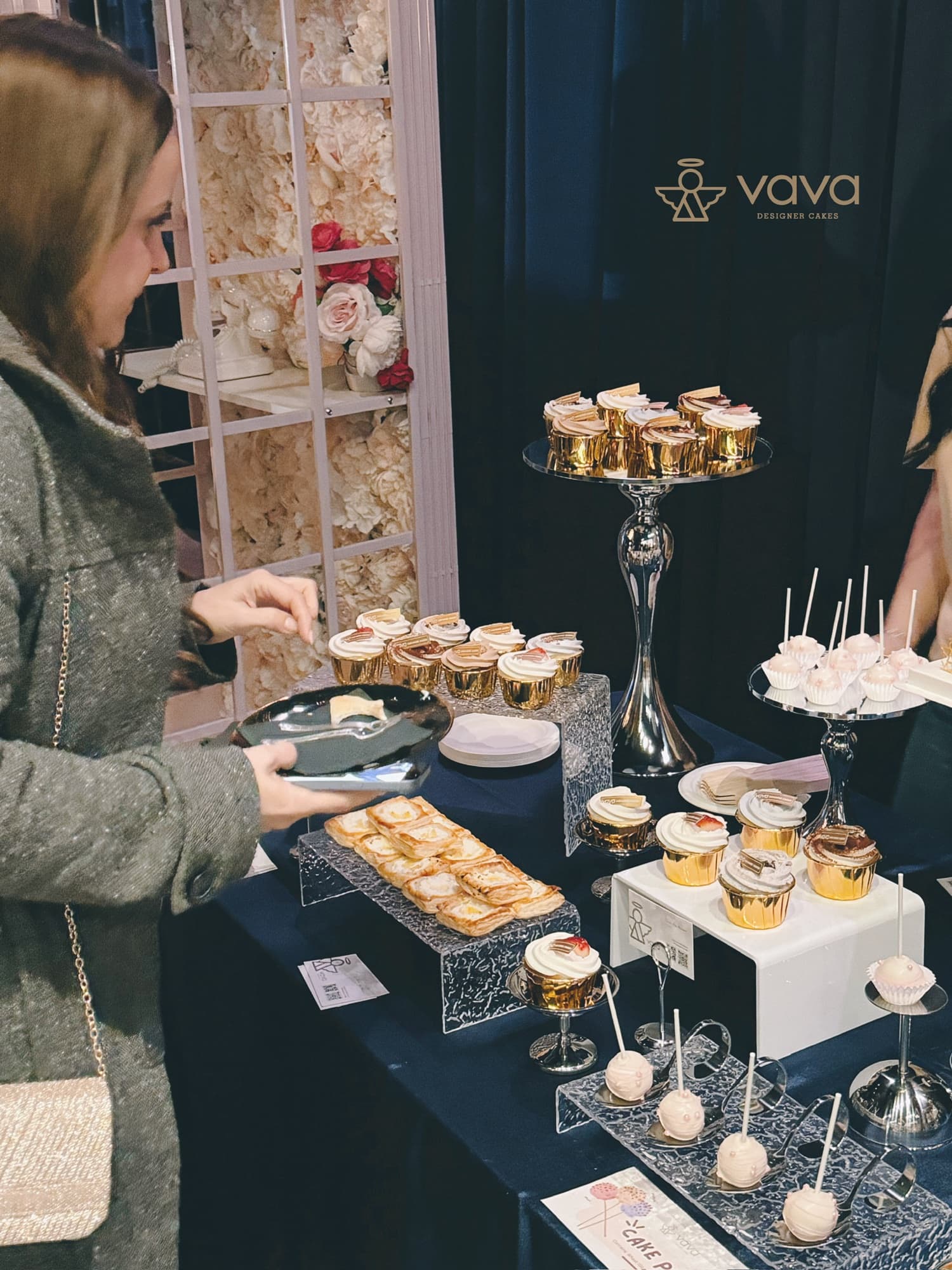
Three formats that share a name category — "wedding desserts" — can look completely different on the day. A wedding cake is a single focal piece, typically tiered, cut and served by staff at a defined moment in the reception. A dessert table is a styled spread of individual-portion sweets displayed on a decorated table, available for guests to enjoy at their leisure throughout the event. A dessert bar sits somewhere between the two: it usually implies a self-serve station with a narrower range of items, often with less formal styling than a full dessert table.
The distinction matters because each format carries different service requirements, different quantities of product, and a different visual footprint in the room. A custom dessert table is a designed installation — risers, linens, signage, florals, and colour-matched pieces all working together. A dessert bar is more utilitarian: a few trays of brownies and cookies beside a coffee station. Both are valid. They are not the same thing.
How Does a Dessert Table Compare to a Wedding Cake?
The single biggest functional difference between a dessert table and a wedding cake is what they ask of your guests. A wedding cake creates a moment — the cutting, the photographs, the ceremonial first slice. A dessert table creates a sustained experience, drawing guests back to the table between dances and conversations. Neither replaces the other by default, which is why many couples at GTA weddings we work with choose both: a VaVa Designer Cakes wedding cake as the centrepiece, surrounded by a coordinated dessert spread so the cake and the table feel like one cohesive design rather than two separate decisions.
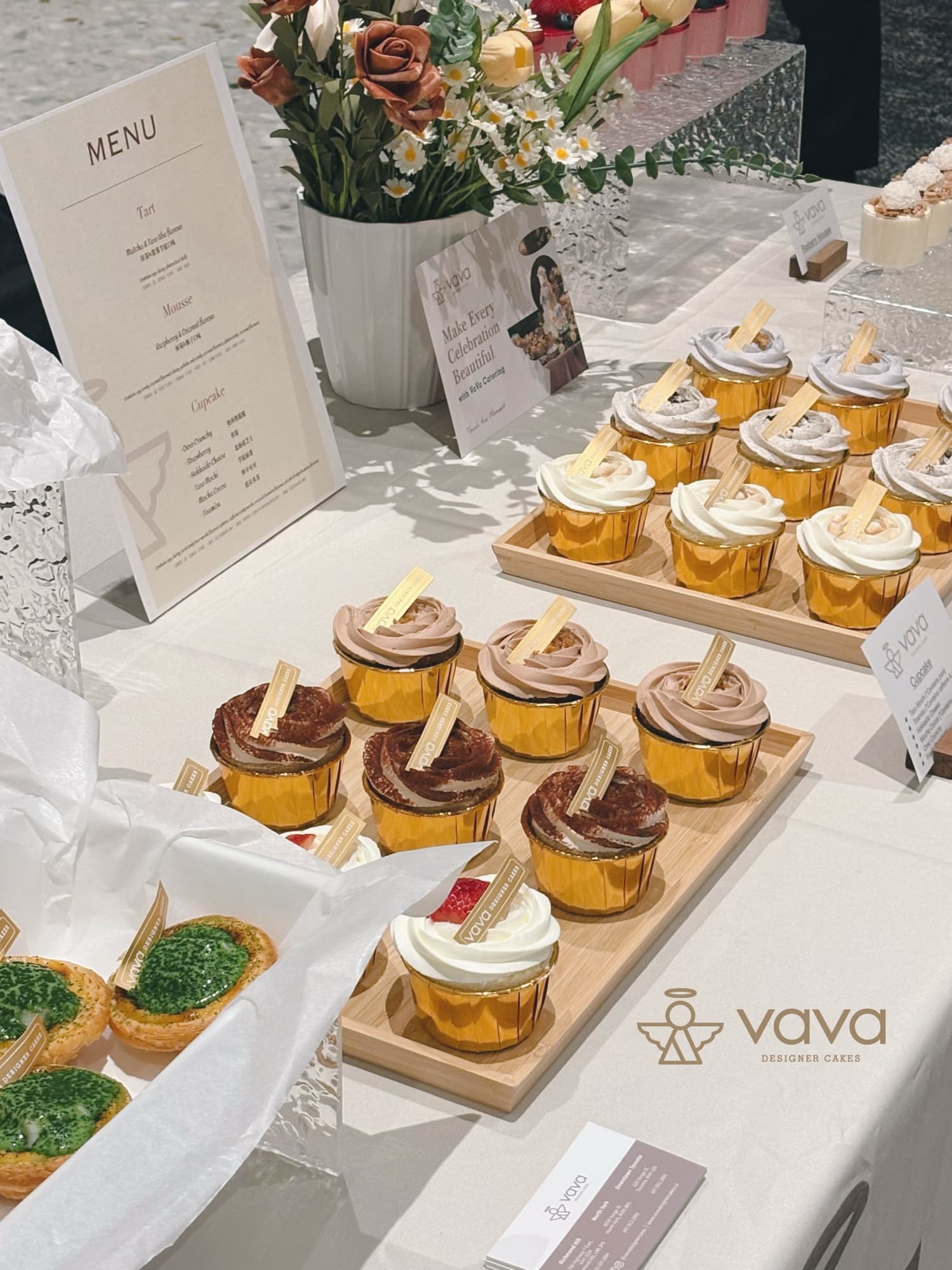
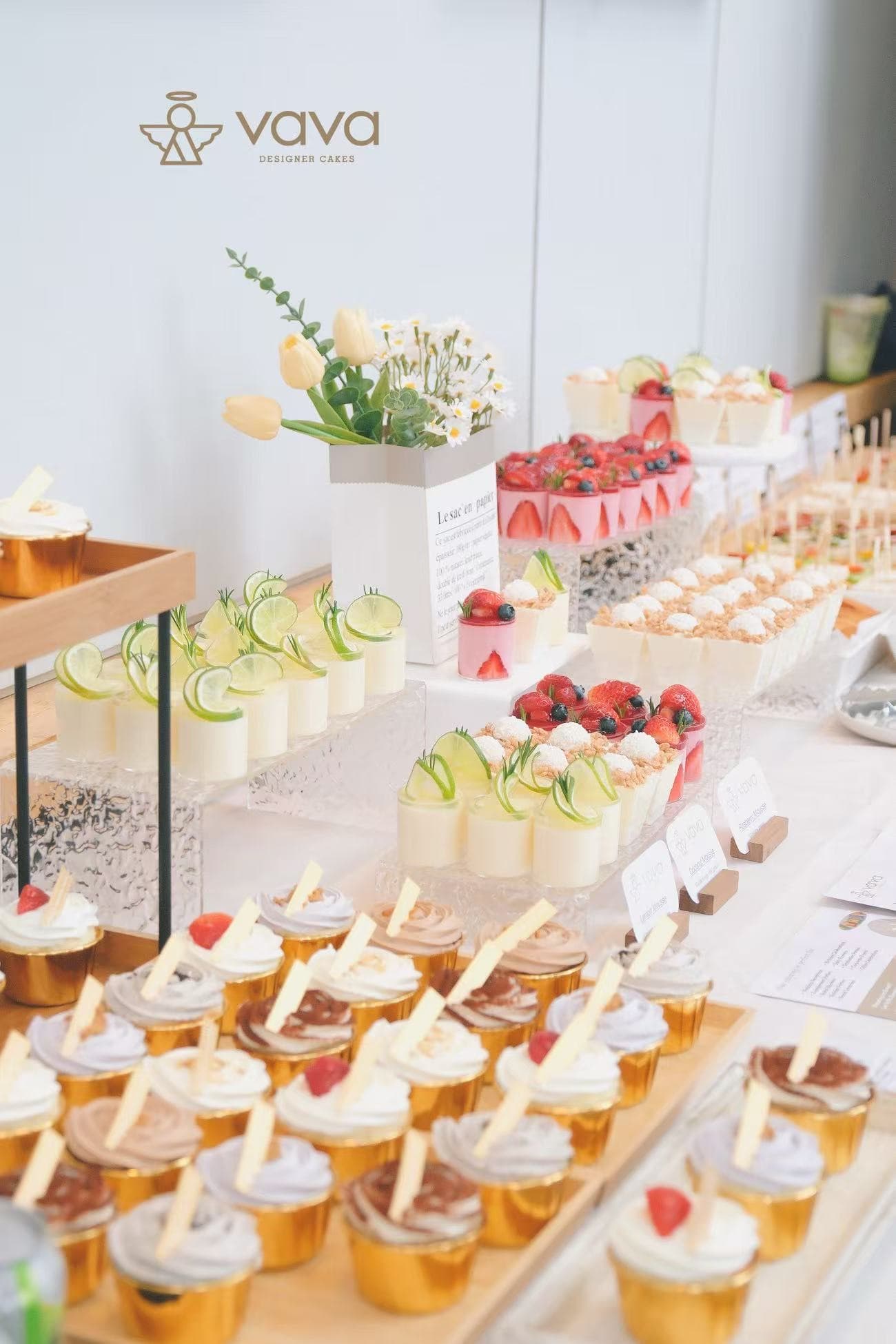
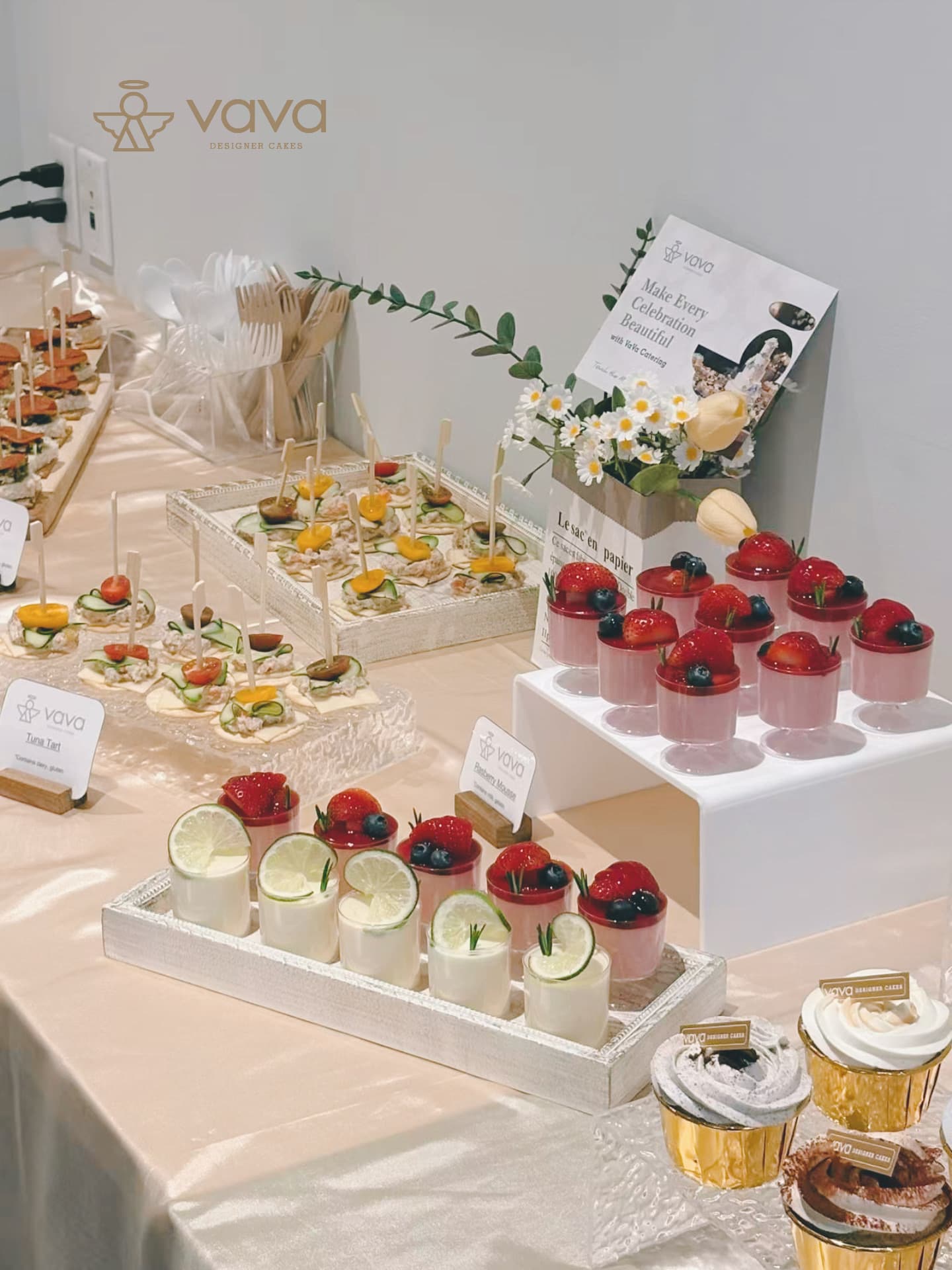
From a variety standpoint, a dessert table wins outright. A 100-guest wedding dessert table might include mini chiffon cakes, fruit tarts, mousse cups, macarons, and shortbread — each piece colour-matched to the event palette. A single wedding cake, no matter how elaborate, offers one flavour profile and one texture. That said, a wedding cake carries visual weight that a spread of minis cannot replicate. The tiered silhouette reads differently in a photo than a horizontal table arrangement.
What moves the quote on each side? For a wedding cake, it is tier count, decoration complexity, and the hours required for sugar work or hand-painting. For a wedding dessert table, the drivers are variety depth (how many different items), total piece count, styling complexity, delivery and setup labour, and whether the team stays on-site to refresh and re-style mid-reception. A table that gets refreshed at the two-hour mark — so it looks full and intentional again after the first wave of guests — requires staffing that a drop-and-go setup does not.
Is a Dessert Table Cheaper Than a Wedding Cake?
Most buyers assume a dessert table costs more than a wedding cake, and for a fully styled, staffed table serving 100 or more guests, that assumption is often correct. But the comparison is more layered than it looks. A highly sculpted, multi-tiered wedding cake with sugar florals and hand-painted detail can carry a quote that rivals a mid-range dessert table for the same guest count. Meanwhile, a dessert bar with a limited selection and minimal styling can come in well below either.
Here is the thing: the right comparison is not cake vs table in isolation — it is cake-plus-dessert vs table-plus-nothing. Many venues require a cake for the cutting ceremony regardless of what else you serve. If you are already budgeting for a cake, the question becomes whether the dessert table replaces your plated dessert course (which it often does, saving on per-head catering costs) or adds to it. When couples fold the dessert table into the catering plan as a replacement for a plated dessert, the net addition to the overall event budget is often smaller than they expected.
What builds the quote for a dessert table? Think in layers: the items themselves (product cost per piece × piece count), styling and rentals (risers, linens, signage, florals), delivery and setup labour, venue logistics (elevator access, load-in time, distance from our service area across the GTA), and on-site service if the team stays through the reception. Variety depth and guest count are the two levers that move the number most dramatically.
| Format | Guest experience | Visual role | Typical variety | What moves the quote |
|---|---|---|---|---|
| Wedding cake only | Single ceremonial moment | Strong focal centrepiece | 1–2 flavours | Tier count, decoration complexity, sugar-work hours |
| Dessert table | Grazing throughout the reception | Full styled installation | 5–10+ item types | Piece count, variety depth, styling complexity, on-site staffing |
| Dessert bar | Self-serve station, casual | Functional, minimal styling | 2–4 item types | Item count, tray count, any rental add-ons |
| Cake + dessert table combined | Ceremony moment + sustained grazing | Cohesive designed moment | 5–10+ plus the cake | All of the above — but the cake and table are designed together |
What Does a Dessert Table Actually Include — and Who Handles It?
A question we get regularly is what "a dessert table" actually covers when you book one. The answer depends entirely on the provider, which is worth understanding before you compare quotes. Some caterers drop off trays of pastries and call it a dessert table. A styled dessert table from a specialist is a different product: the items are made or curated to a colour palette, the display is designed with risers and linens that match your event aesthetic, and the team sets up, monitors, and refreshes the table during the reception.
At Vava Dessert Tables, the items we work with — mini chiffon cakes, tarts, mousse cups, macarons — are chosen partly because they hold beautifully on display and can be refreshed mid-reception without looking like leftovers. That mid-reception refresh matters more than most couples realise. A dessert table that looks full and styled at 7 PM and depleted and scattered at 9 PM tells a different story than one that gets a quiet reset between courses. Our team handles that reset on-site so the table photographs well throughout the evening, not just in the first hour.
If you are comparing a sweet table quote against a dessert bar quote, check whether the comparison includes setup time, teardown, and any on-site service. A quote that looks lower may not include the two hours of setup labour or the styled risers and linens — those are real costs that show up somewhere, either in the quote or in your own time and stress.
Which Format Works Best for Different Wedding Styles?
Format fit depends on three things: your guest count, your venue, and what you want the dessert moment to feel like.
- Intimate weddings under 50 guests — A wedding cake alone often works beautifully here. The room is small enough that one focal piece reads well, and a dessert table may feel oversized for the space. A small dessert bar with 3–4 items can supplement without overwhelming.
- Mid-size weddings of 80–150 guests — This is the sweet spot for a full dessert table. Enough guests to justify the variety depth, enough visual space in the room for a styled installation to land properly. Pairing a designer cake with a coordinated dessert table gives you both the ceremony moment and the grazing experience.
- Large weddings over 150 guests — A dessert table becomes almost logistically necessary. Cutting and plating a single cake for 180 people takes significant staff time. A dessert table lets guests serve themselves, reduces pressure on the catering team, and keeps the energy moving on the dance floor rather than pulling everyone to their seats for a plated dessert.
- Venue-specific constraints — Some Toronto and GTA venues have strict rules about outside dessert vendors, kitchen access, or setup windows. A dessert bar with minimal setup is easier to clear through venue logistics than a full styled table. Worth checking before you commit to a format.
- Cultural traditions — The sweet table tradition in Italian and Portuguese communities across the GTA carries real meaning. For these families, a full sweet table is not a trend — it is an expected part of the reception, and the variety and abundance of the spread signals hospitality. A dessert bar would read as underwhelming in that context.
Our dessert catering service covers everything from intimate milestone events to large corporate receptions, so the format question is one we work through with every client based on their specific room, guest count, and vision.
Can You Have Both a Wedding Cake and a Dessert Table?
Yes — and in the GTA wedding market, this combination is increasingly common. The cake handles the ceremony moment; the dessert table handles the guest experience for the rest of the evening. The key is making them feel designed together rather than sourced separately. When the cake and the dessert spread share a colour palette, a flavour direction, and a visual language, the whole dessert corner of the room reads as one intentional moment rather than two vendors who happened to show up at the same event.
This is exactly why we work closely with VaVa Designer Cakes — the cake and the table are designed in conversation with each other from the start. The cake's palette informs the macaron colours; the table's linen picks up the cake's accent tone. Couples who book both through coordinated vendors consistently tell us the result photographs better and feels more considered than when the cake and table are sourced independently.
If you are leaning toward this combination, the planning timeline matters. Peak wedding season in the GTA runs May through October, and both the cake and the dessert table need to be locked in 3–6 months ahead. Trying to add a dessert table four weeks before a June wedding is possible but puts real pressure on availability and design time.
FAQ
- What is the difference between a dessert table and a dessert bar?
- A dessert table is a fully styled installation — colour-matched items, designed risers, linens, and signage, often with on-site staff to refresh and maintain it through the reception. A dessert bar is typically a self-serve station with a narrower item selection and minimal styling. Both serve guests sweets, but the experience, visual impact, and service model are quite different.
- Is a dessert table cheaper than a wedding cake?
- Not usually, when you compare a fully styled table to a standard tiered cake. However, a highly decorated multi-tier cake can approach the cost of a mid-range dessert table. The more useful comparison is whether a dessert table replaces a plated dessert course — when it does, the net addition to the overall budget is often smaller than couples expect.
- Do you need a wedding cake if you have a dessert table?
- Not strictly, but many venues and traditions expect a cake-cutting moment. A dessert table does not replicate that ceremony. Many couples in the GTA choose both — a designer cake for the cutting, a coordinated dessert table for the reception — so neither function is missing and both feel designed together.
- How far in advance should I book a dessert table for a GTA wedding?
- For weddings between May and October — peak season across Toronto, Markham, Vaughan, and Richmond Hill — booking 3–6 months ahead is the practical minimum. Last-minute bookings are sometimes possible but limit design time and variety options. Corporate and off-season events typically have more flexibility.
- What factors affect the quote for a wedding dessert table?
- The quote is built from several layers: the items themselves (type and piece count), styling and rentals (risers, linens, signage), delivery and setup labour, venue logistics, and on-site service if the team stays through the reception. Guest count and variety depth are the two variables that move the number most significantly.
Ready to figure out which format fits your wedding? Reach out to us and we will walk through your guest count, venue, and vision together — no pressure, just a practical conversation about what actually makes sense for your day. You can also browse our wedding desserts service to see the range of formats we work with across the GTA.