Dessert Table Ideas for Wedding Reception: A Stylist's Guide to Getting It Right
The dessert table is the one part of a wedding reception that guests photograph before they eat from it. That single fact changes everything about how you should plan it. Dessert table ideas for wedding reception planning tend to fall into two camps: a curated, colour-matched spread that feels like an extension of the ceremony's design, or a generous pile of sweets that looks like it was assembled the morning of. The gap between those two outcomes isn't budget — it's intention. Here's how to close that gap, whether you're working with a full-service stylist or building something yourself.
What to Have on a Wedding Dessert Table: Building the Right Mix
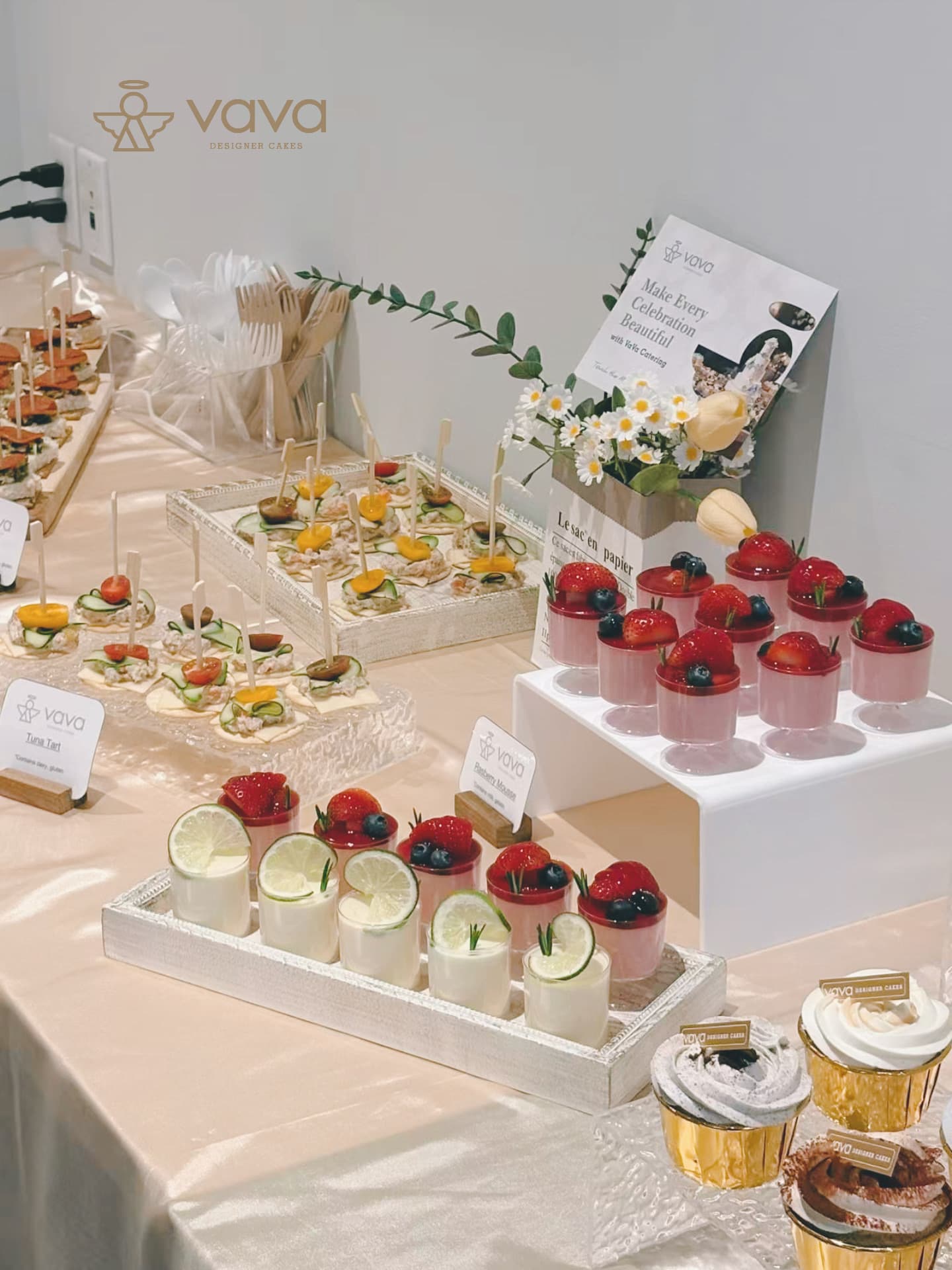
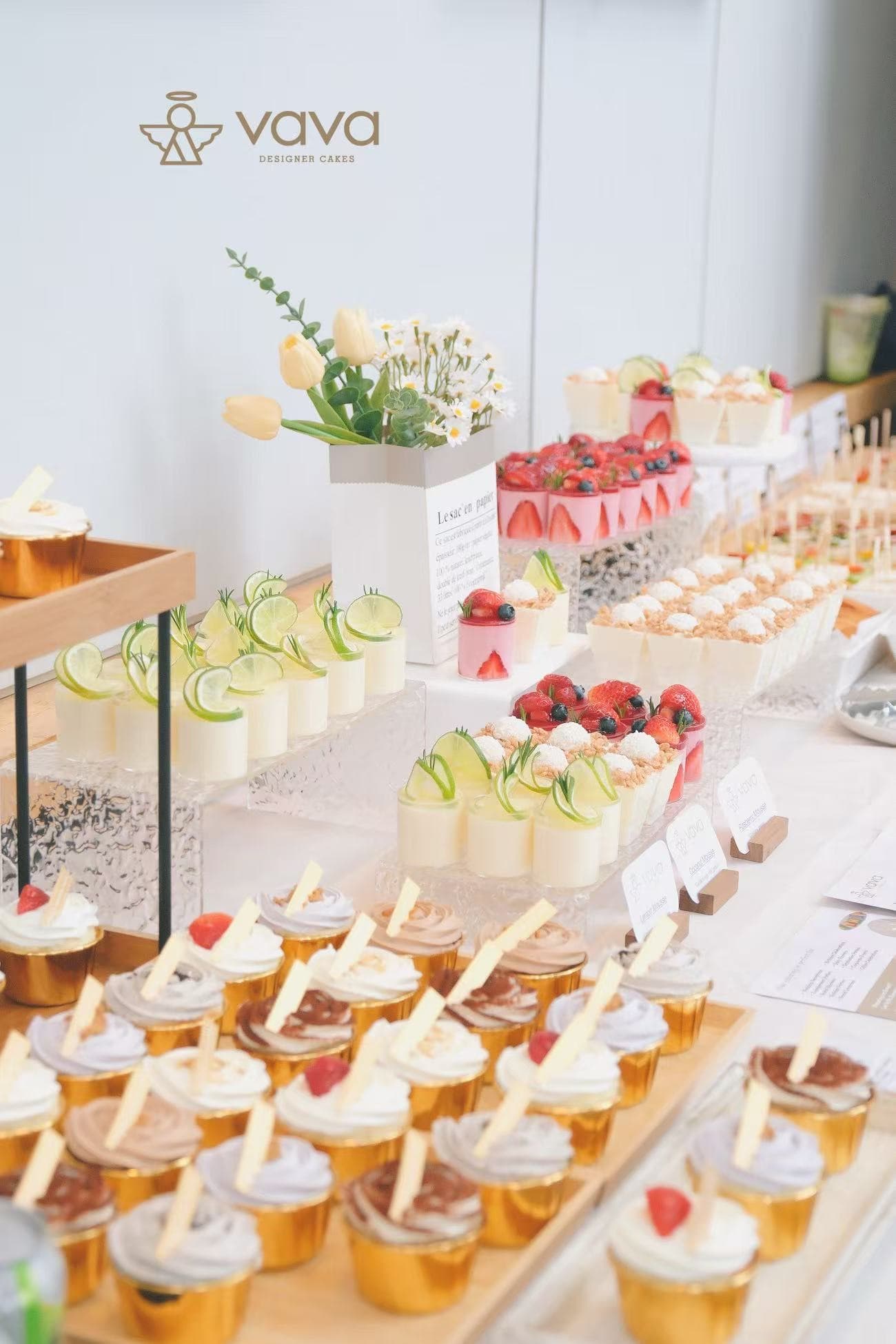
The single biggest mistake couples make is treating a wedding dessert table as a list of items rather than a composition. The items themselves matter, but the relationship between them — height, colour, texture, portion size — is what makes the table read as designed rather than catered. A well-built table pairs at least one showpiece item (typically the cake or a tiered display) with three to five supporting formats in two or three complementary flavours, all sized so guests can graze without committing to a full slice.
For a reception of 80 to 150 guests, we typically recommend building around five distinct dessert formats. Mini items are non-negotiable: they let guests try two or three things without guilt and they photograph beautifully at scale. Think mini chiffon cakes (individual, about palm-sized), tarts with seasonal fruit, mousse cups, macarons, and one or two bite-sized squares or bars. Each format serves a different textural role — the chiffon is airy, the tart is crisp, the mousse is cool and creamy — so the table has variety even if the colour palette is tightly controlled.
Honestly, the flavour pairings matter more than most guides admit. A lemon-raspberry chiffon beside a dark chocolate mousse cup beside a pistachio tart gives guests a genuine tasting experience. Sticking to one flavour family (all vanilla, all chocolate) feels safe but lands flat. We find that three flavour directions — one bright and citrusy, one rich and chocolate-forward, one floral or nutty — cover almost every guest's palate without the table feeling chaotic.
Our wedding dessert service is built around exactly this kind of mix — formats chosen for both visual and flavour balance, not just quantity.
The Cake-to-Table Relationship
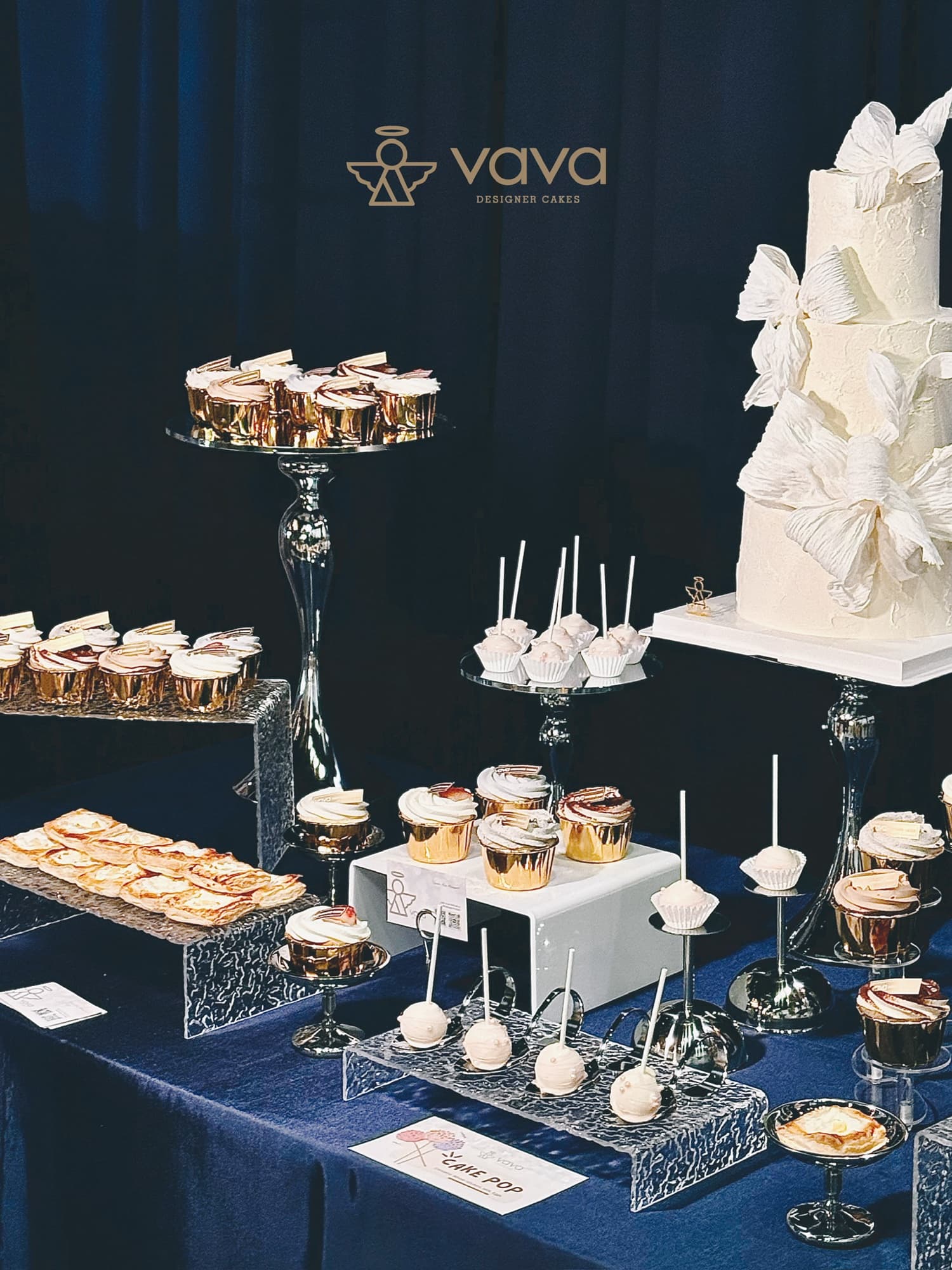
If you're having a wedding cake, it should anchor the dessert table, not compete with it. When we work alongside our sister brand VaVa Designer Cakes, the cake's palette, finish, and floral details are designed in tandem with the surrounding spread — same colour story, complementary textures. The result is one cohesive moment rather than a cake on a separate table with a dessert spread that happens to be nearby. That coordination is worth asking about explicitly when you're booking, because most venues and caterers don't think about it at all.
Dessert Bar Ideas for Wedding Reception: Formats That Actually Work
Three factors compound to make a wedding dessert bar work visually and operationally: format variety (what you're serving), height variation (how it's displayed), and mid-reception refresh (whether someone maintains it). Most inspiration boards on Pinterest nail the first, occasionally address the second, and almost never mention the third — which is the one that determines whether your table looks as good at 9 PM as it did at 6 PM.
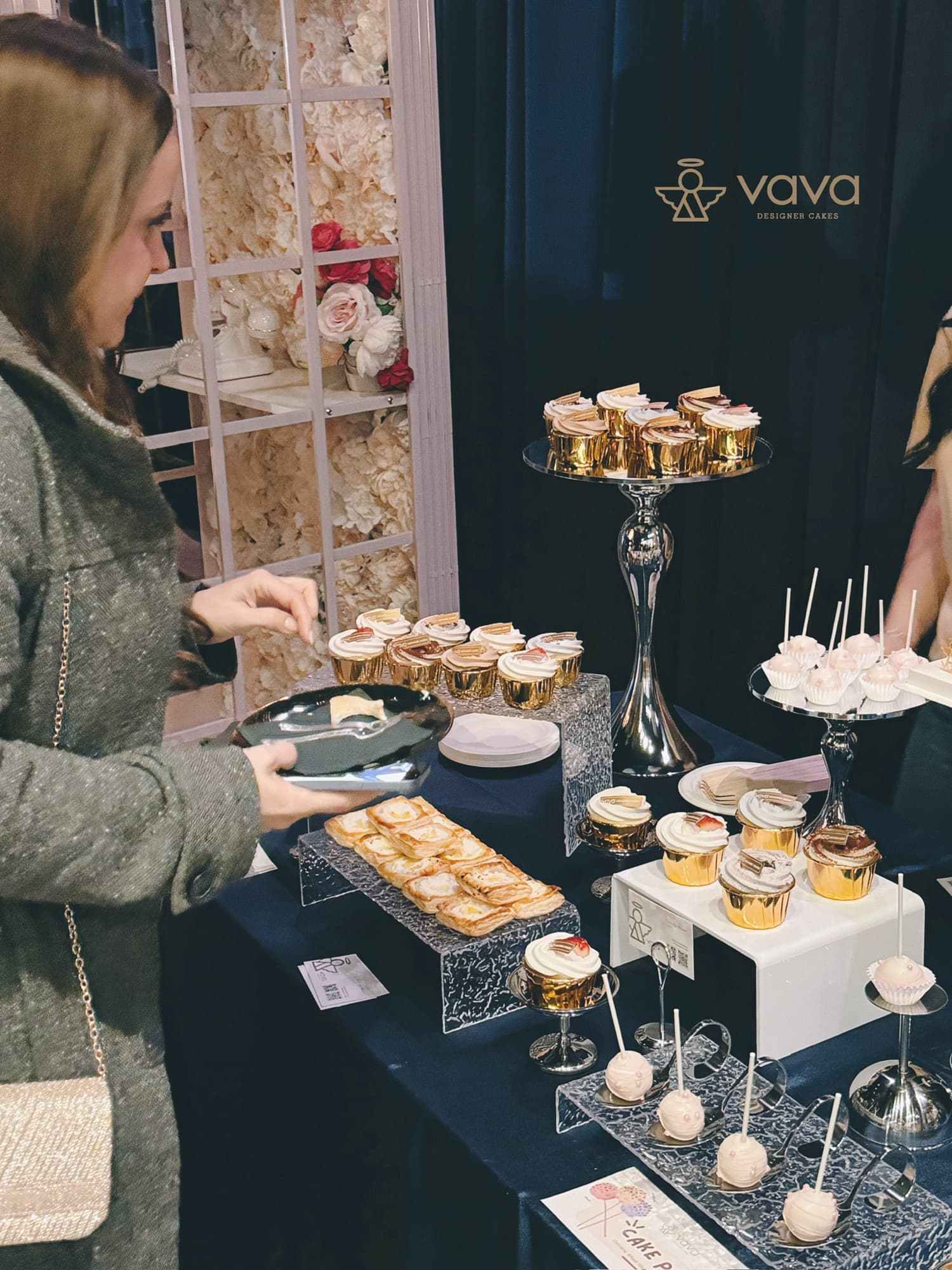
Height variation is achieved through risers, cake stands, and tiered trays. A flat table of identical plates reads as a buffet. A table with items at three different heights reads as a display. The practical rule: aim for at least three distinct height levels, with the tallest piece (usually the cake or a floral arrangement) sitting roughly at eye level for a seated guest. Risers don't need to be expensive — wrapped boxes, stacked books, and fabric-covered platforms all work — but they need to be consistent with the colour palette.
Mid-reception refresh is the detail that separates a professionally styled table from a DIY one. Macarons dry out. Mousse cups weep if left in a warm room. Chiffon cakes compress. At Vava Dessert Tables, our team stays on-site specifically to replenish and re-style the spread as the reception moves through cocktail hour into dinner and dancing. That's not a luxury add-on — it's the reason the table looks intentional in the 10 PM photos, not just the 6 PM ones.
For couples exploring the full range of formats and display options, our dessert tables service page walks through what a typical setup includes from arrival to strike.
Simple Dessert Table Ideas for Wedding Reception: Doing Less, Better
Restraint is underrated. A table with four formats executed perfectly — colour-matched, freshly plated, properly displayed — outperforms a table with twelve formats that are inconsistently presented. This is especially true for smaller receptions (under 60 guests) where the table doesn't need sheer volume to feel generous.
The simplest functional structure is: one anchor piece, two mini formats, one bar-style element (a macaron tower, a tart display, or a cookie stack), and one interactive element (a hot chocolate station, a s'mores kit, or a candy jar arrangement). Five elements. That's it. The styling — linen colour, riser material, signage font, floral accents — does the rest of the visual work.
What moves the quote on a simpler table isn't the number of items; it's the styling complexity and the delivery logistics. A minimal four-format table styled with custom-printed signage, fresh florals, and premium linen rentals can carry a higher quote than a larger table with generic presentation. Couples on tighter planning budgets often get better results by narrowing the item list and investing the difference in the visual framework around those items.
According to The Knot's 2024 wedding planning guide, dessert tables and dessert bars are now requested at more than half of all North American receptions — a 2024 figure that reflects how firmly the format has moved from trend to expectation. That shift means guests arrive with a mental template. Meeting that template with something genuinely well-styled is the bar.
For couples who want a curated, manageable spread, our sweet tables service is designed around exactly this principle — fewer formats, sharper execution.
Candy Table Ideas for Wedding Reception and Other Specialty Formats
Candy bars and candy tables occupy a specific cultural niche in the GTA wedding market, particularly within Italian, Portuguese, and broader European communities where the confetti-and-candy tradition has deep roots. A candy table done well isn't a bowl of wrapped sweets — it's a composed display of Jordan almonds, sugar-coated chocolates, and specialty confections in the wedding colours, arranged in apothecary jars and tiered stands with a take-home bag station. Done carelessly, it reads as an afterthought. Done intentionally, it's a meaningful cultural moment.
The practical question couples ask us most often about candy tables: does it replace the dessert table, or sit alongside it? Our answer is almost always alongside. Candy is a favour-format — guests take it home — while the dessert table is a consumption-format — guests eat from it during the reception. They serve different functions and different moments in the evening. Combining them into one table works only when the guest count is under 50 and the venue footprint is tight.
Donut bars and macaron towers are two other specialty formats that photograph exceptionally well and work as anchor pieces when a traditional cake isn't part of the plan. A macaron tower of 150 to 200 pieces serves roughly 75 to 100 guests as a primary dessert, depending on whether it's the only sweet offering or part of a broader spread. Donut bars work best when the donuts are fresh and the display is height-varied — a flat tray of donuts doesn't carry the same visual weight as a tiered stand or a pegboard display.
For corporate receptions and milestone events where a full dessert table isn't practical, our dessert catering format covers platters, grazing boxes, and individual-format options that travel and serve without a full setup crew.
What Moves the Quote: Understanding How Wedding Dessert Tables Are Priced
Most pricing guides for wedding desserts treat the quote as a single number. It isn't. A wedding dessert table quote is built from four distinct layers, and understanding each one helps couples make smarter decisions about where to invest and where to simplify.
| Quote layer | What it covers | What moves it |
|---|---|---|
| The desserts themselves | Ingredients, baking labour, portion count | Guest count, variety depth, premium ingredients (fresh fruit, real cream) |
| Styling and rentals | Risers, linens, stands, signage, florals | Custom vs. standard rentals, floral volume, printed vs. handwritten signage |
| Delivery and setup labour | Transport, table build, initial styling | Distance from our service base, venue access hours, setup complexity |
| On-site service | Mid-reception refresh, replenishment, strike | Reception length, whether full refresh is included or à la carte |
The tricky part is that couples often focus exclusively on the dessert layer and don't ask about the other three. A quote that looks lower because it excludes on-site service often results in a table that looks tired by the time the first dance ends. Ask explicitly: is mid-reception refresh included, and if not, what does it add?
Guest count is the most reliable lever. A table for 80 guests and a table for 160 guests with the same variety depth and styling complexity will carry meaningfully different quotes — not just because of ingredient volume, but because portion planning, display sizing, and replenishment cycles all scale with headcount. We plan on roughly 3 to 4 pieces per guest for a table that's part of a broader dessert offering (after dinner), and 5 to 6 pieces per guest when the dessert table is the primary sweet offering for the evening.
Ready to talk through what a table for your guest count and palette would look like? Reach out through our contact page — we're happy to walk through the options before you commit to anything.
FAQ
- What to put on a dessert table for a wedding?
- A well-built wedding dessert table includes one anchor piece (typically the cake or a tiered display), three to five mini formats (chiffon cakes, tarts, mousse cups, macarons, squares), and at least one bar-style element like a macaron tower or candy display. Aim for variety in texture and flavour — one bright citrus option, one chocolate-forward, one floral or nutty — so every guest finds something they want. Height variation through risers and stands ties the visual composition together.
- What are some easy dessert table ideas?
- The easiest approach is to anchor around one strong centrepiece — a cake, a macaron tower, or a tiered tart display — and build outward with two or three mini formats that require no on-site assembly. Pre-portioned mousse cups, individually wrapped macarons, and bite-sized chiffon cakes are all low-maintenance formats that hold well and look polished without constant attention. Keep the colour palette tight (two or three tones) and use height variation through simple risers to make even a small selection feel designed.
- What should a dessert table include?
- Beyond the desserts themselves, a complete table includes: a linen or runner that matches the event palette, risers or stands at three distinct heights, signage (flavour labels at minimum, custom signage if the budget allows), serving tools for each format, and napkins or small plates for guests. If the reception runs longer than two hours, a plan for mid-reception refresh is essential — macarons and mousse cups don't hold indefinitely in a warm room, and a table that looks depleted by 9 PM undermines the whole investment.
- How many desserts do I need for 100 guests?
- For 100 guests, plan on 300 to 400 pieces if the dessert table is a secondary offering after a plated dinner, or 500 to 600 pieces if it's the primary sweet course for the evening. That works out to 3 to 4 pieces per guest in the first scenario and 5 to 6 in the second. Spread across five formats, you're looking at roughly 60 to 80 pieces per format — enough to keep the table looking full through two replenishment cycles without significant waste.
If you're planning a wedding reception in the GTA — whether in Markham, Vaughan, North York, Mississauga, or Toronto proper — and want a dessert table that's designed to your palette rather than assembled from a standard package, start a conversation with us here. We work through the details together: guest count, variety depth, styling direction, and whether a cake from VaVa Designer Cakes makes sense as the anchor. The earlier you reach out, the more flexibility we have to get it right — peak season bookings (May through October) fill quickly, and the best results come from planning that starts three to six months out.