Simple Dessert Table Ideas for Your Wedding (That Actually Look Designed)
The most striking wedding dessert tables I've seen weren't the ones crammed with forty different items. They were the ones where someone made three smart decisions and stuck to them — a clear colour palette, two or three hero pieces, and enough negative space for guests to actually see what they were choosing. Simple dessert table ideas for weddings work precisely because restraint reads as confidence. Here's how to build a spread that looks intentional, not improvised.
What Makes a Wedding Dessert Table Feel "Simple" (Without Looking Sparse)?
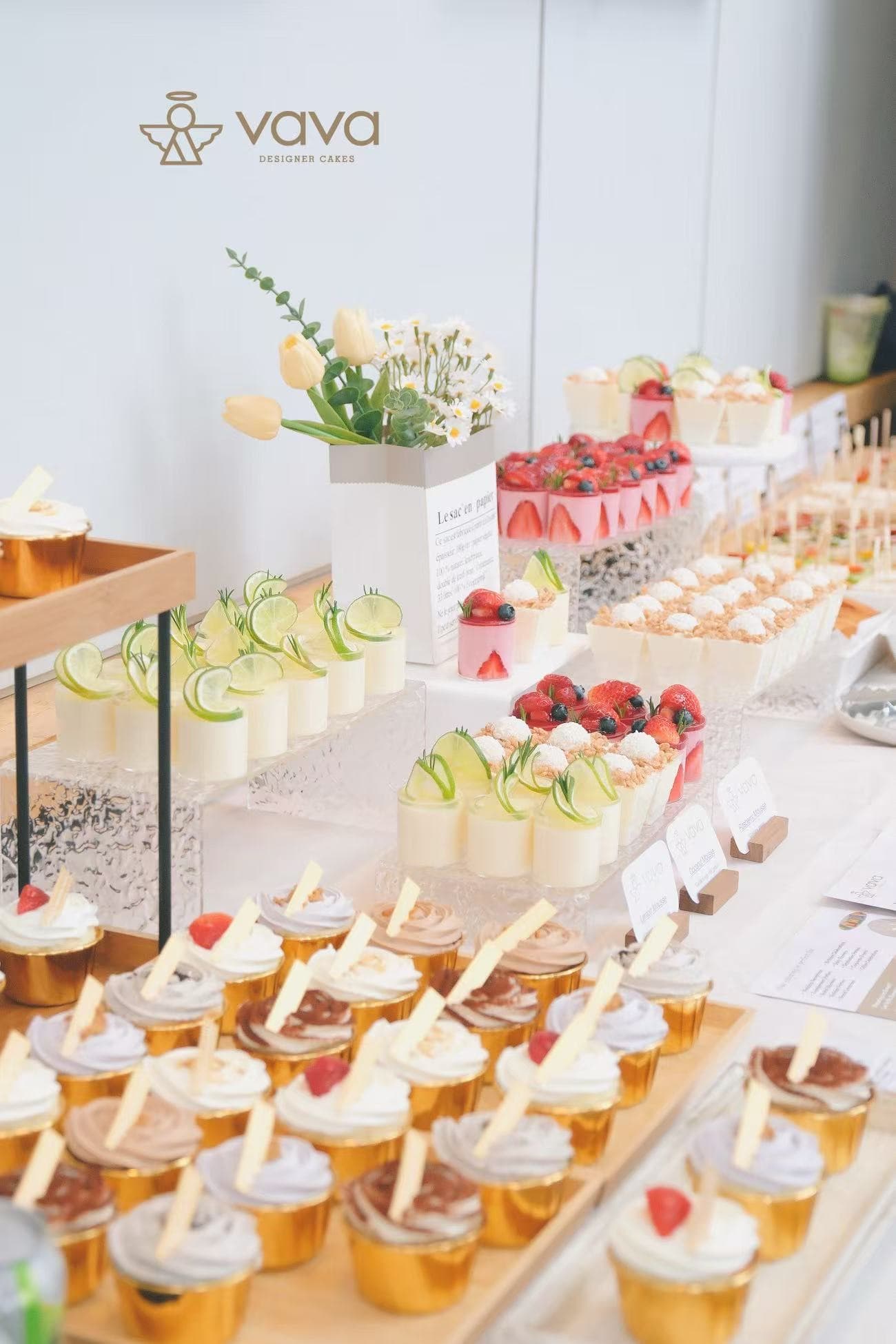
The single biggest mistake couples make is confusing simplicity with minimalism. A simple dessert table has a clear visual logic — everything on it belongs to the same colour family, the same height rhythm, the same mood. Three items that share a dusty rose and ivory palette will look more cohesive than ten items in ten different colours, even if the ten-item table technically offers more variety.
Start with your wedding palette and work backwards. If your florals are sage and warm white, your desserts should echo that: vanilla mousse cups with a sprig of fresh herb, lemon tarts with white chocolate drizzle, almond macarons in sage green. The desserts become part of the decor, not an afterthought sitting beside it. That's the core idea behind our colour-matched dessert tables — the risers, linens, and dessert finishes are all pulled from the same palette brief the couple gives us.
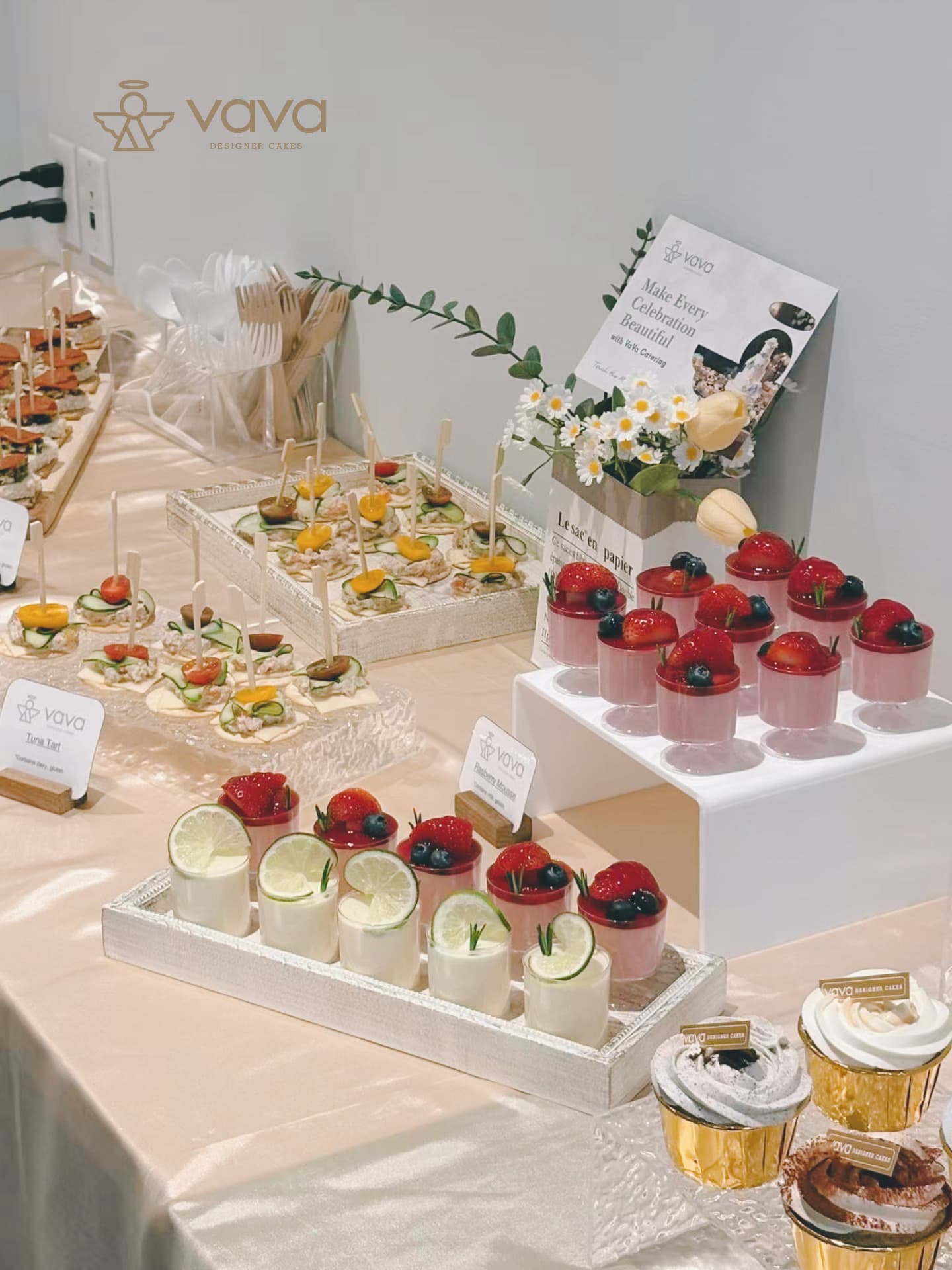
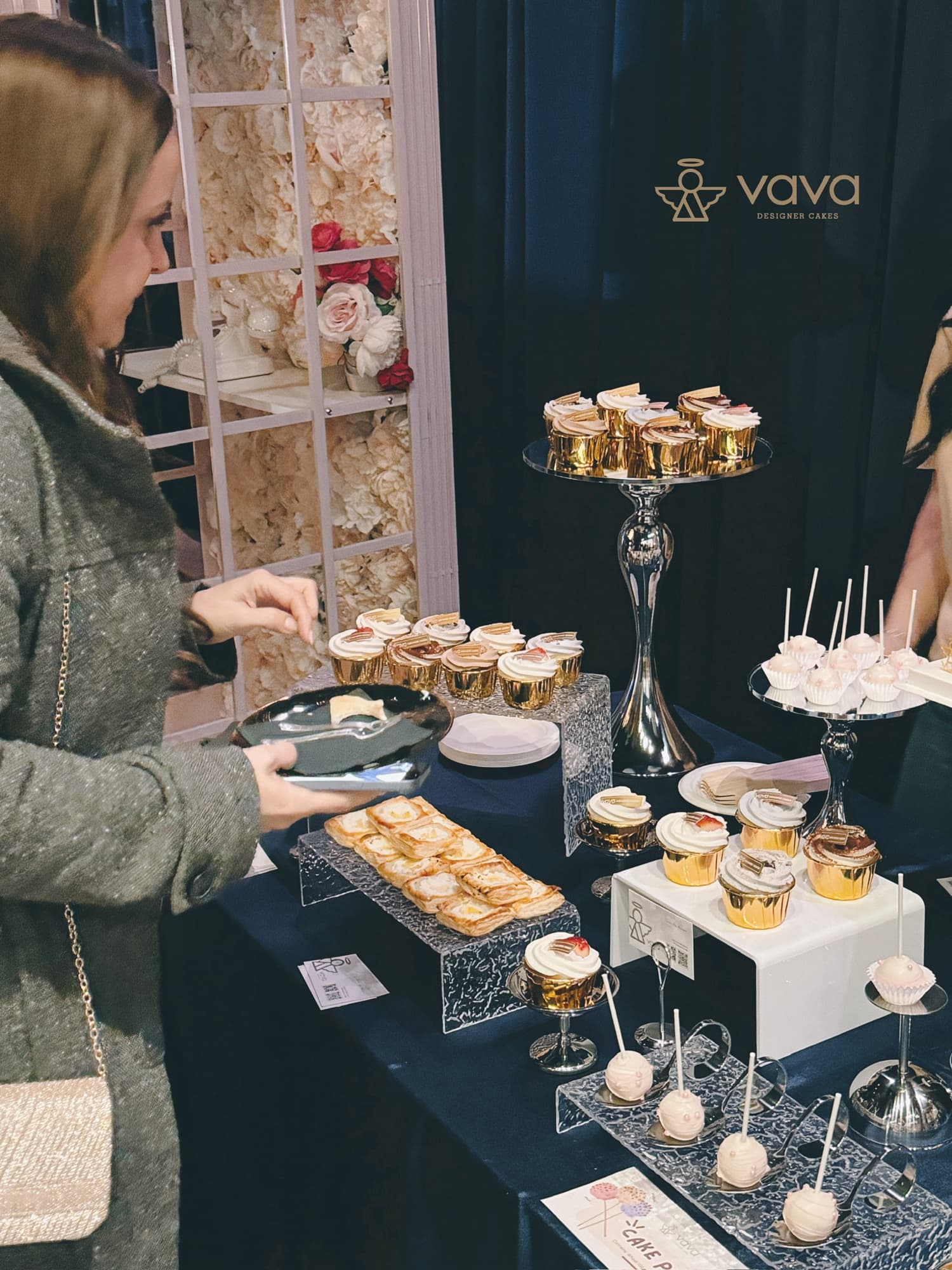
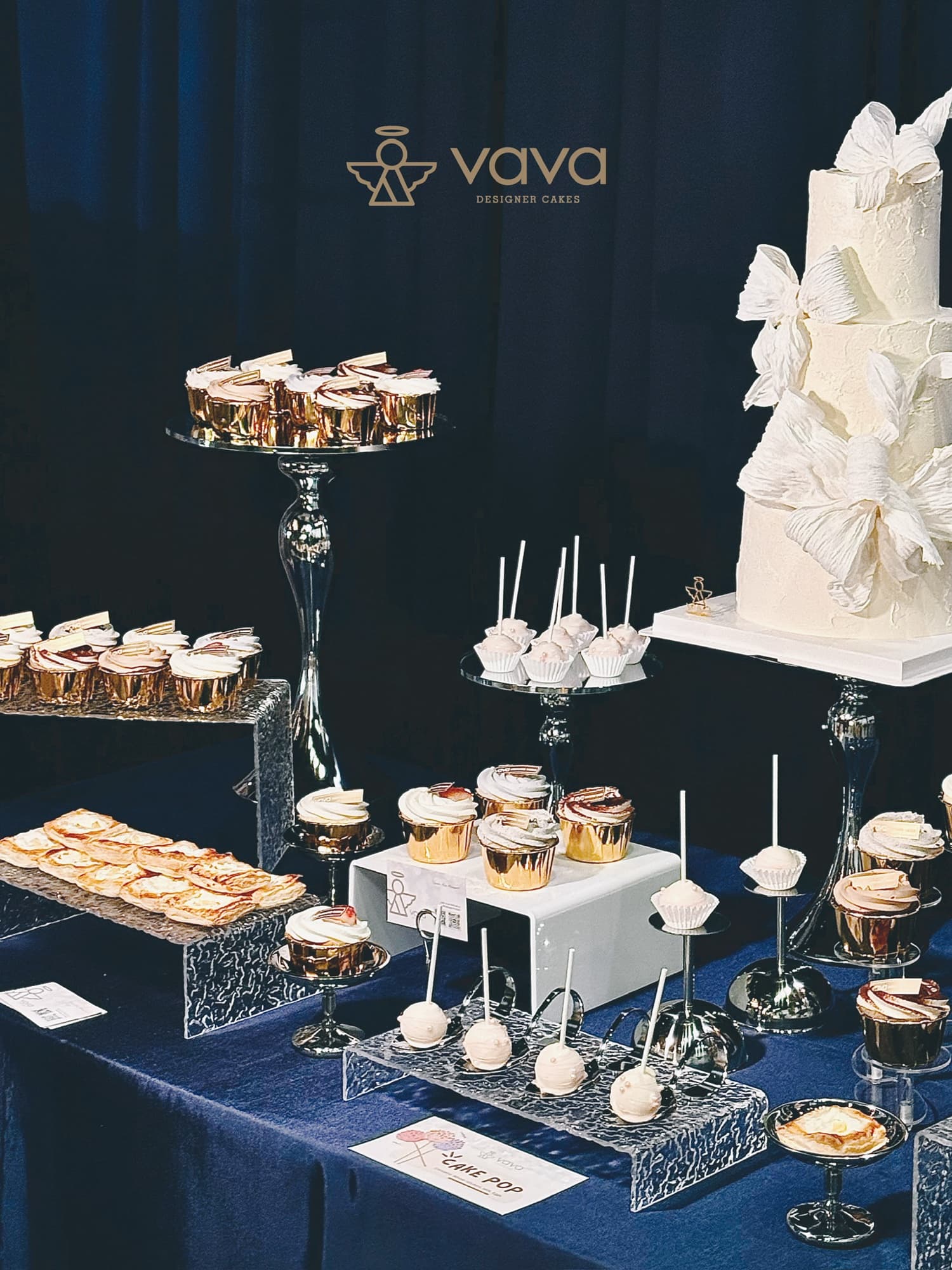
Height variation is the other structural move that makes a table look designed rather than dropped off. Three tiers — low, mid, and tall — give the eye somewhere to travel. A single flat row of cupcakes, however beautiful individually, reads as a buffet line. Add a riser under your centrepiece item, let smaller pieces sit at counter level, and tuck something petite (macarons, mini tarts) at the front edge where guests reach first.
Simple Sweet Table Ideas for Wedding Receptions: The 3-Tier Formula
Three dessert types, chosen deliberately, will carry a wedding sweet table for up to 80 guests without the spread looking thin. The formula: one centrepiece item, one mid-range item in moderate quantity, and one small bite in high quantity. Each tier serves a different visual and practical function.
Centrepiece tier: This is your statement piece — usually the wedding cake itself, or a cluster of mini chiffon cakes arranged on a tiered stand. When the cake comes from our sister brand VaVa Designer Cakes, we design it alongside the dessert table so both feel like one moment rather than two separate decisions. The cake anchors the back of the table at the tallest point.
Mid-range tier: Think tarts, mousse cups, or brownies — items with enough visual presence to hold their own on a riser but small enough that guests take one without deliberating. For a 60-person wedding, 70 to 80 pieces at this tier gives comfortable coverage with a little buffer for guests who circle back.
Small-bite tier: Macarons, chocolate truffles, or mini meringues. These sit at the front of the table, they're easy to grab while guests are mid-conversation, and they photograph beautifully because of their uniform shape. Plan for roughly 3 to 4 pieces per guest at this tier.
Honestly, this formula works because it gives guests a clear hierarchy. They see the centrepiece, they're drawn in, and then they notice the other options. Nobody stands there paralysed by choice.
Wedding Dessert Table Ideas on a Budget: Where to Simplify Without Losing Impact
What moves a dessert table quote is not, in most cases, the desserts themselves — it's the layers that surround them. Understanding those layers is the most useful thing a couple can do before they start comparing options.
| Table element | Simplification option | What moves the quote |
|---|---|---|
| Dessert variety | 3 types instead of 6–8 | Fewer SKUs = less prep labour; variety depth is one of the biggest quote drivers |
| Styling & rentals | Use venue linens; rent 2–3 risers only | Custom linen sets and full riser collections add to the rental component of the quote |
| Delivery & setup | Combine with cake delivery in one trip | Multiple delivery windows or complex venue logistics increase the labour component |
| On-site service | Self-serve after setup vs. staffed table | A staffed table with mid-reception refresh adds service hours to the quote |
| Guest count | Accurate RSVP count, not inflated estimate | Piece count scales directly with guest count — overbooking 30 guests adds meaningful volume |
The tricky part is that some simplifications look like savings but don't move the quote much — swapping one macaron flavour for another, for instance, changes almost nothing. The real levers are variety depth, guest count accuracy, and whether you need the team on-site for a mid-reception refresh. For wedding dessert setups, we walk through each of these layers during the quote conversation so there are no surprises.
How to Style a Simple Dessert Table That Photographs Well
Photography is worth thinking about separately because what looks good in person and what reads well in a photo are slightly different problems. A table that's perfectly arranged in real life can photograph flat if everything is the same height and the same finish — matte tarts next to matte brownies next to matte cookies, all at the same level, all the same tone.
Three things fix this without adding complexity. First, mix finishes: pair something glossy (a mirror-glazed mousse cup) with something matte (a naked tart) and something textured (a macaron shell). Second, add one element with height that catches light differently — a small floral cluster tucked between risers, or a clear acrylic stand that lets the background show through. Third, use odd numbers. Five mousse cups in a cluster photograph better than six in a row because the eye doesn't find a natural stopping point in odd groupings.
Colour discipline matters here too. If your palette is blush and ivory, a single rogue chocolate-brown element at the front of the table will pull focus in every photo. Either commit to including chocolate tones across the whole table or swap that piece for something in the palette. Our sweet table styling process starts with the couple's mood board precisely because we're designing for the camera as much as for the guests.
What about the backdrop? A simple fabric panel or a greenery wall behind the table gives photos a clean anchor. Venues across the GTA — from Vaughan banquet halls to restored heritage spaces in downtown Toronto — vary enormously in what their walls look like, so it's worth asking your venue coordinator whether they allow a temporary backdrop before you plan around one.
Elegant Dessert Table Ideas That Start Simple and Scale Up
One of the questions we hear most often is whether a simple table can look elegant — or whether elegance requires a full elaborate spread. It doesn't. Elegance in a dessert table comes from finish quality and palette discipline, not from quantity.
A table with 4 dessert types, all finished to a high standard, in a tight two-colour palette, on quality linens, will read as more elegant than a table with 12 dessert types in mismatched colours on a paper tablecloth. The items our team produces — mini chiffon cakes, French-style tarts, mousse cups, and hand-piped macarons — are chosen partly because their finish quality photographs at a level that reads as elevated even in a simple arrangement.
Starting simple also means you have room to scale. A couple who books a 3-type table and then finds their guest count grows from 60 to 90 can add a fourth dessert type and a second riser without redesigning the whole table. Contrast that with a couple who starts with a maximalist brief and then needs to cut back — editing down is always harder than building up, and it's harder on the budget too.
For couples planning dessert catering for a larger reception — say, 120 guests across multiple tables — the same principle applies at scale. Two or three dessert types in very high quantity, all in the same palette, across multiple stations, creates a cohesive visual effect that a wider variety in smaller quantities would undercut.
FAQ
- What can you put on a dessert table?
- A wedding dessert table can hold almost any sweet item: mini cakes, tarts, mousse cups, macarons, brownies, meringues, chocolate truffles, cookies, and cake pops are all common. The most effective tables choose 3 to 6 types and keep them within a shared colour palette, rather than including every possible option. Variety depth is worth less than visual cohesion when it comes to the overall effect.
- What is the quickest and easiest dessert to make?
- For a DIY contribution to a wedding dessert table, no-bake items like chocolate truffles, dipped strawberries, or simple shortbread cookies require the least equipment and can be prepared a day or two ahead. That said, for a wedding where the table is a design feature rather than a casual buffet, professionally finished pieces — tarts, mousse cups, macarons — hold their presentation quality through a long reception in a way most home-baked items don't.
- How much is a dessert table for 100 guests?
- A dessert table quote for 100 guests is built from several layers: the desserts themselves (piece count scales directly with guest count), styling and rentals (linens, risers, signage), delivery and setup labour, venue logistics, and whether you need on-site service during the reception. What moves the quote most is variety depth, styling complexity, and whether the team stays on-site for a mid-reception refresh. We build every quote individually — reach out with your guest count and date for an accurate picture.
- What is a dessert table called at a wedding?
- The terms "dessert table," "sweet table," and "candy buffet" are all used, sometimes interchangeably. In practice, a sweet table typically includes a broader mix of confections and candy-style items, while a dessert table focuses on plated or individually portioned desserts like tarts, mousse cups, and mini cakes. In Italian and Portuguese wedding traditions — both well-established in the GTA — the sweet table (tavola dei dolci) is a formal part of the reception with deep cultural roots.
Ready to Plan Your Wedding Dessert Table?
Whether you're working with a tight guest list or a full banquet hall in Vaughan, the right starting point is a clear palette and an honest piece count. We serve couples across the GTA — Toronto, Markham, Richmond Hill, Mississauga, Scarborough, and beyond — and every table we build starts with the same conversation: what does your colour story look like, and how many guests are you actually feeding? If you're ready to talk through the details, get in touch with our team and we'll put together a quote built around your specific event.