What Should a Dessert Table Include?
A well-built dessert table includes at least 5 distinct item types — a focal centrepiece, 2 to 3 bite-sized sweets, a textural contrast piece, and a styled display structure — primarily because variety across format and flavour is what keeps guests returning to the table rather than grabbing one item and walking away. Knowing what to include (and what to skip) is the difference between a table that photographs beautifully and one that actually gets eaten.
The Core 5 Components Every Dessert Table Needs
Every dessert table — whether it's a 60-person baby shower in Markham or a 200-guest wedding reception in Vaughan — is built from the same 5 structural layers. Skip one and the table either looks sparse, eats too quickly, or fails to photograph as a cohesive display. Here is what each layer contributes and why it matters.
- A centrepiece moment: the visual anchor — a tiered cake, a tall macaron tower, or a styled mini chiffon cake cluster that draws the eye first.
- Bite-sized sweets (2–3 varieties): macarons, mini tarts, mousse cups, or petit fours — the items guests reach for most and that define the table's flavour range.
- A textural contrast piece: something crisp or chewy alongside the soft items — shortbread, biscotti, or a brownie bite — so every palate finds something.
- A fresh or fruit-forward element: mini chiffon cakes with seasonal fruit, berry tarts, or cream puffs — this prevents the table from reading as too heavy or too sweet.
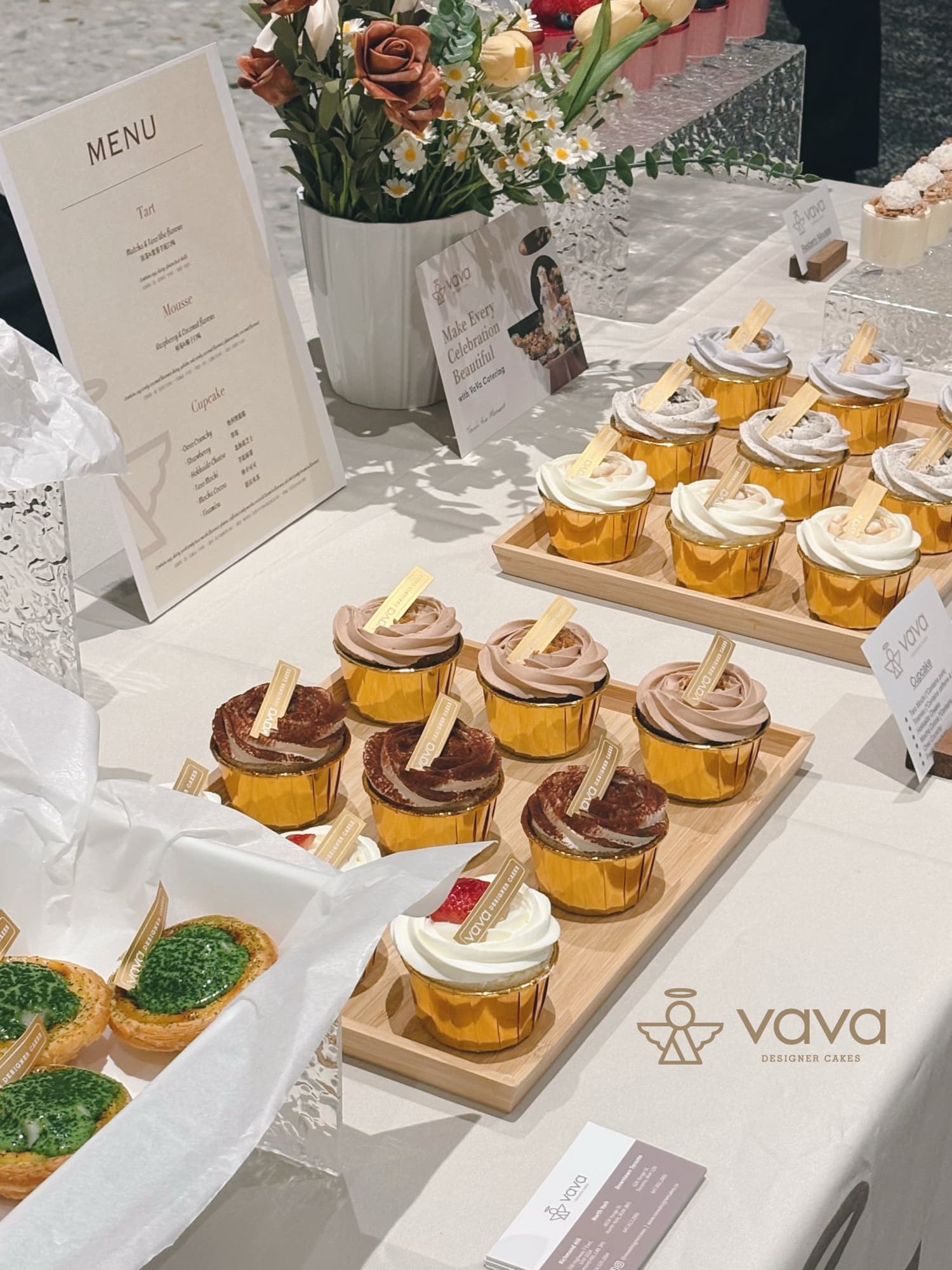
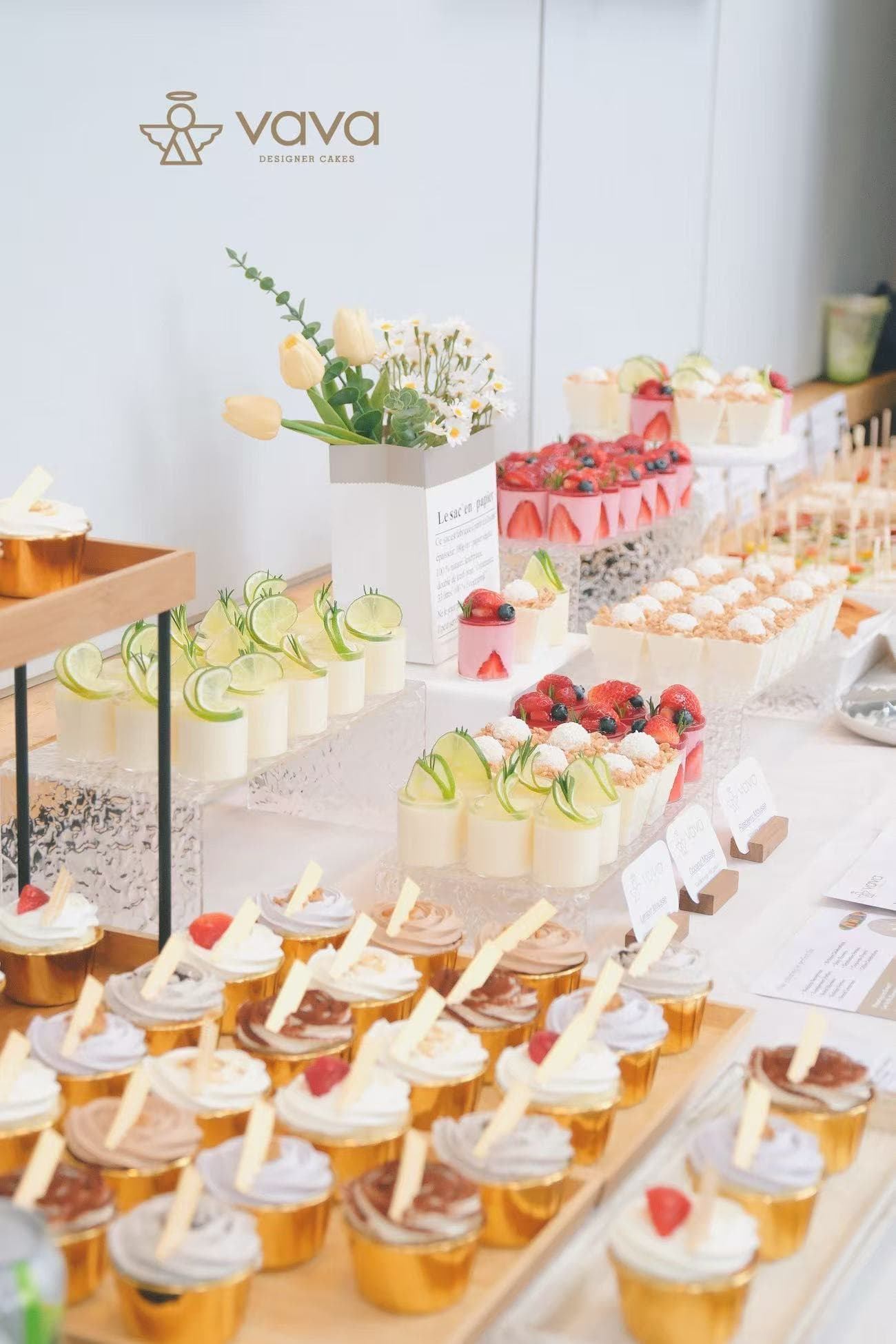
- Styled display structure: risers, pedestals, linen, and signage in the event's colour palette — the non-edible layer that makes the edible layer look intentional rather than catered.
That fifth layer is where most guides stop short. At Vava Dessert Tables, the display structure is designed before the menu is finalized — because the height, colour, and spacing of the table shape which items work and which get lost.
How Many Items and Servings Should You Plan Per Guest?
The standard planning rule is 3 to 5 pieces per guest when the dessert table is the primary sweet course, or 2 to 3 pieces per guest when it accompanies a plated dessert or wedding cake. A 100-guest wedding, for example, typically calls for 300 to 500 total pieces across all item types — distributed so no single item runs out before the second wave of guests reaches the table.
| Table role at the event | Pieces per guest | Recommended item variety | What moves the quantity |
|---|---|---|---|
| Main sweet course (no plated dessert) | 4–5 pieces | 5–7 item types | Cocktail-style receptions where guests graze longer |
| Alongside wedding cake | 2–3 pieces | 4–5 item types | Cake portion size; whether cake is served or self-serve |
| Party or shower (lighter event) | 2–3 pieces | 3–4 item types | Time of day; whether savoury food is also served |
| Corporate event or conference | 2 pieces | 3 item types | Standing-only format; shorter service window |
One thing we see consistently across wedding dessert setups in the GTA: underestimating variety depth is a bigger problem than underestimating total quantity. Guests stop returning to a table that only offers one or two options, even if those options are technically abundant.
What Item Types Work Best on a Dessert Table?
The strongest dessert tables balance 3 format dimensions: size (bite-sized vs. sliceable), texture (soft vs. crisp), and temperature tolerance (items that hold at room temperature for 2 to 3 hours without degrading). Every item you choose should pass all 3 checks, or it creates a service problem mid-reception.
- Mini chiffon cakes: hold structure for 3+ hours, photograph well on risers, pair naturally with seasonal fruit toppings.
- French macarons: colour-matchable to any event palette, bite-sized, low-mess — the most requested item on our sweet table builds.
- Mini tarts (fruit or custard): add a pastry texture the other items don't provide; work for both formal and casual events.
- Mousse cups: elegant presentation, portion-controlled, and visually striking in clear vessels — strong for weddings and corporate events.
- Shortbread or butter cookies: the reliable textural contrast; also the item guests with dietary hesitancy tend to gravitate toward.
- Brownie bites or blondies: crowd-pleasing, familiar, and useful for filling quantity gaps without overcomplicating the menu.
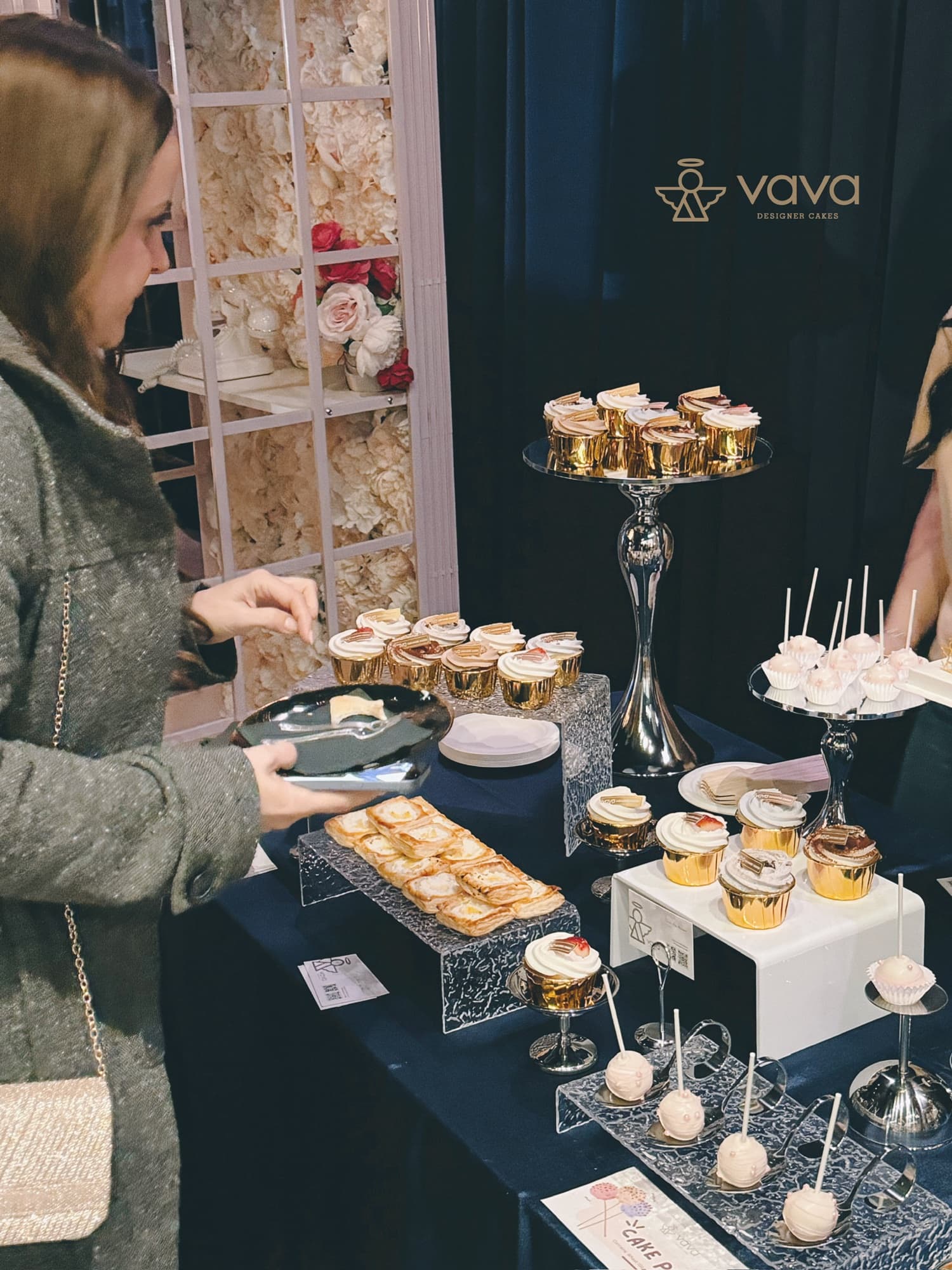
- Cake pops or chocolate truffles: easy to eat standing up; useful for cocktail-hour tables where guests don't have plates.
Honestly, the items matter less than the balance. A table with 7 varieties of chocolate will fatigue guests faster than a table with 4 varieties that span chocolate, fruit, vanilla, and citrus.
How Does Styling Fit Into What a Dessert Table Includes?
Styling is not decorative afterthought — it is a functional component of what a dessert table includes, because height variation, colour coordination, and negative space directly affect how guests interact with the food. A flat table with no risers reads as a buffet. A table with 3 height levels, colour-matched linens, and a clear focal point reads as a designed moment.
The items that benefit most from height: centrepiece cakes, macaron towers, and any item in a tall vessel (mousse cups, cake pops in a stand). Items that work best at table level: tarts, cookies, and brownie bites — they're easier to grab without disturbing the display. At Vava Dessert Tables, we match the riser colours, linen, and signage to the event palette before a single dessert is placed, which is why the table photographs as one cohesive moment rather than a collection of trays.
For wedding dessert tables paired with a VaVa Designer Cakes centrepiece cake, the styling conversation starts with the cake's design — the table palette flows outward from there. That coordination is something a standalone dessert caterer can't replicate, because the cake and the table are designed by separate teams with no shared brief.
What to Know Before You Finalize Your Dessert Table Order
A few planning details that don't make it into most guides — but matter significantly once you're 3 weeks from your event date.
Lead time is real. Peak GTA wedding season runs May through October. Most full dessert table bookings for that window close 8 to 12 weeks out, not 2 to 3 weeks as some guides suggest. Corporate and shower orders move faster, but even those benefit from 3 to 4 weeks of lead time for custom colour-matching and quantity planning.
Venue logistics change what's possible. Some venues — particularly older banquet halls in Scarborough and Mississauga — have restricted setup windows or no dedicated dessert table space. Knowing your venue's setup access time before you finalize item types prevents last-minute substitutions.
Mid-reception refresh is often overlooked. A 4-hour reception will see the table hit hardest in the first 45 minutes. Items that can be restocked and restyled mid-event — like macarons, mousse cups, and mini chiffon cakes — extend the table's visual life significantly. We build a refresh plan into every dessert catering order for events over 3 hours.
Allergen communication matters more than most clients expect. At minimum, label the 4 major allergens present on your table (nuts, gluten, dairy, eggs). Guests with restrictions will ask, and a labelled table prevents the awkward mid-reception conversation. We include printed labels as standard on all styled tables.
The tricky part is that most of these decisions compound — your venue's setup window affects your item choices, which affects your quantity plan, which affects your lead time. Starting the conversation early with your dessert table provider, rather than finalizing the menu last, is the single most effective way to avoid day-of stress. Reach out to our team to start building your table from the ground up.
Frequently Asked Questions
- What are the 5 C's of dessert?
- The 5 C's of dessert are a culinary framework: Colour, Contrast, Composition, Complement, and Creativity. For a dessert table specifically, they translate to palette cohesion, textural variety across items, intentional height and layout, flavours that pair with the main meal, and at least one unexpected or signature element that makes the table memorable.
- What are some examples of a simple dessert table?
- A simple dessert table might include 3 item types — macarons, mini tarts, and shortbread cookies — arranged on 2 height levels with a single linen and a small floral accent. For a 30-person shower, that format works well: roughly 90 to 120 pieces total, easy to set up, and visually clean without requiring elaborate styling infrastructure.
- What are some DIY ideas for a dessert table?
- For a DIY dessert table, focus on items that hold well at room temperature: store-bought macarons, homemade shortbread, and packaged truffles styled in matching vessels. Use cake stands and wooden crates from a dollar store for height variation. A single colour-coordinated linen and printed labels do most of the styling work at minimal cost.
- How to organize a dessert table?
- Start with the centrepiece at the back-centre of the table, then build outward in descending height. Place bite-sized items at the front and sides for easy reach. Group similar items together rather than alternating — it reads cleaner visually. Leave 20% of the surface as negative space so the table doesn't look overcrowded even when fully loaded.
- (common question we hear) How far in advance should I book a dessert table for a wedding in the GTA?
- For peak season weddings (May through October in the GTA), booking 8 to 12 weeks ahead is the practical minimum for full custom dessert tables. Colour-matching, quantity planning, and coordination with a wedding cake order all take time. Shower and corporate bookings can move faster, but 3 to 4 weeks is still the recommended floor.
Ready to build your dessert table from the first item to the last riser? Tell us about your event — guest count, date, venue, and palette — and we'll put together a table that's designed, not just catered. Start the conversation here.